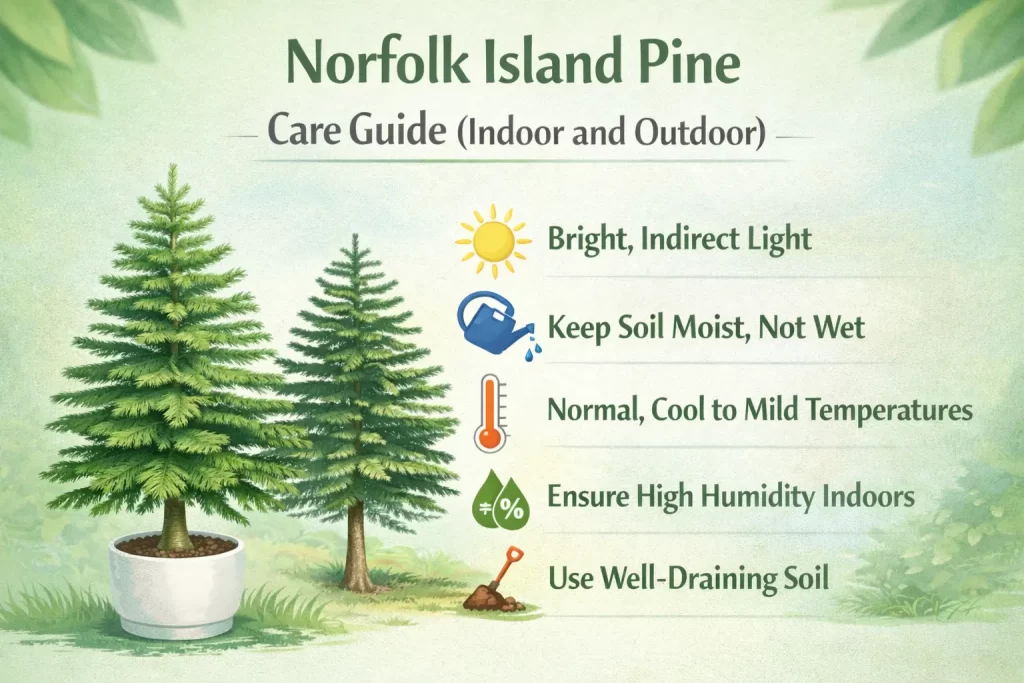

Norfolk Island Pine Care Guide (Indoor and Outdoor)
A practical, beginner-friendly guide to help you grow a healthy Norfolk Island pine without confusion, fluff, or generic advice.
Quick Summary
| Plant type | Norfolk Island pine is not a true pine. It is a tropical plant known as Araucaria heterophylla. |
|---|---|
| Best location | Usually grown indoors in most climates. |
| Light | Bright, indirect light is best. |
| Watering | Water when the top inch of soil feels dry. |
| Humidity | Prefers moderate to high humidity and struggles in very dry air. |
| Common problems | Brown tips, yellowing foliage, drooping branches, and uneven growth. |
| Best result | With proper care, it can remain attractive and healthy for many years. |
What This Guide Will Help You Do
If you are searching for information on Norfolk Island pine, you are probably trying to answer one of a few common questions. How do I care for it indoors? Why are the tips turning brown? Is it an easy plant for beginners? This guide is designed to answer those questions clearly and practically.
This article is written for beginners, casual plant owners, and anyone who wants website-ready information that is genuinely useful. By the end of this guide, you should know what your Norfolk Island pine needs, what mistakes to avoid, and how to respond when the plant starts showing signs of stress.
What Is Norfolk Island Pine?
Norfolk Island pine is a tropical conifer native to Norfolk Island in the Pacific Ocean. Even though it is called a pine, it is not a true pine tree. That distinction matters because many people care for it incorrectly by treating it like a cold-hardy outdoor pine instead of a tropical indoor plant.
Its soft needles, symmetrical branch layers, and upright form make it popular as a decorative indoor tree. It is also widely used during the holiday season as a living alternative to a cut Christmas tree. Its appearance is elegant and structured, but its care is more sensitive than many people expect.
Why It Stands Out
- It has a naturally balanced, layered shape.
- It works well as an indoor statement plant.
- It can live for years with proper care.
- It offers a softer, more refined look than many standard houseplants.
Light Requirements
Light is one of the biggest factors in whether your Norfolk Island pine stays healthy or slowly declines. This plant likes bright, indirect light. It can handle some gentle direct morning sun, but harsh afternoon sun can scorch the foliage, especially indoors behind glass.
If you place it in a room that is too dark, the plant may grow unevenly, lose lower branches, or become weak and stretched. A bright room near a window is usually the best choice. East-facing windows are often a good option, and bright north or filtered south exposure can also work well depending on your climate and home setup.
Best Light Setup
| Condition | Effect on Plant |
|---|---|
| Bright indirect light | Encourages healthy, balanced growth |
| Low light | Can lead to weak growth and branch thinning |
| Strong afternoon sun | May cause foliage stress or damage |
Rotate the plant every week or two so all sides receive light evenly. This helps maintain the plant’s symmetrical form and prevents leaning.
How to Water Norfolk Island Pine
Watering is where most owners make mistakes. Norfolk Island pine does not want constantly wet soil, but it also does not want to dry out completely for long periods. The safest approach is to check the soil before watering rather than following a fixed schedule.
Place your finger into the top inch of soil. If it feels dry, water thoroughly until excess water drains out from the bottom. If it still feels slightly moist, wait a little longer. This simple habit will prevent both overwatering and underwatering.
Watering Guide
| Soil Condition | What To Do |
|---|---|
| Top inch is dry | Water thoroughly |
| Top inch is still moist | Wait before watering again |
| Soil is soggy for long periods | Reduce watering and check drainage |
Signs of Overwatering
- Yellowing foliage
- Drooping branches
- Heavy, soggy soil
- Possible root damage
Signs of Underwatering
- Brown, crispy tips
- Dry soil pulling away from the pot edges
- Brittle or dry foliage
A pot with drainage holes is essential. Without proper drainage, even careful watering becomes risky.
Humidity Matters More Than Many People Realize
One of the most overlooked parts of Norfolk Island pine care is humidity. This plant prefers air that is not too dry. In many homes, especially during winter or in air-conditioned rooms, humidity levels drop low enough to stress the plant.
Brown tips are often caused not by serious disease or fertilizer issues, but by dry indoor air. If your plant looks mostly healthy but the tips keep browning, humidity is one of the first things to evaluate.
Ways to Improve Humidity
- Use a humidifier nearby
- Keep the plant away from heating vents and direct air conditioning
- Group it near other plants if possible
- Use occasional light misting if it suits your environment
Soil and Potting Needs
Norfolk Island pine performs best in well-draining potting soil that holds some moisture without becoming dense and waterlogged. A quality indoor potting mix is often enough, as long as the container drains properly.
This plant generally prefers to be slightly snug in its pot rather than over-potted in a container that stays wet too long. Repotting every two to three years is usually enough for indoor plants, depending on growth rate.
Potting Basics
| Need | Recommendation |
|---|---|
| Soil | Well-draining indoor potting mix |
| Pot | Container with drainage holes |
| Repotting frequency | Every 2 to 3 years, usually in spring |
| Pot size | Only slightly larger than the current root ball |
Temperature and Placement
Norfolk Island pine likes stable indoor temperatures. In general, if your room feels comfortable to you, the plant is likely to be comfortable too. What it dislikes most are sudden changes and strong drafts.
Keep it away from direct blasts of hot or cold air. Do not place it too close to heaters, radiators, AC units, or frequently opened exterior doors. Sudden stress from shifting temperatures can cause browning, drooping, or general decline.
Ideal Conditions
- Moderate indoor temperatures
- Stable environment
- No harsh hot or cold airflow
Common Problems and Practical Fixes
Even healthy plants can develop problems if one part of their care is off. The good news is that Norfolk Island pine often gives visible warning signs before serious damage happens.
Problem-Solving Table
| Problem | Likely Cause | What To Do |
|---|---|---|
| Brown tips | Dry air or inconsistent watering | Improve humidity and review watering routine |
| Yellowing foliage | Overwatering or poor drainage | Let soil dry slightly and make sure the pot drains well |
| Drooping branches | Water stress or environmental shock | Check soil moisture and placement conditions |
| Uneven growth | Light coming from one side | Rotate the plant regularly |
Indoor Styling and Decorative Use
One reason Norfolk Island pine remains so popular is that it is both functional and attractive. It brings height, softness, and structure to a room without looking too heavy. Its clean shape works well in living rooms, bedrooms, entryways, and home offices.
During the holiday season, many people decorate it with small lightweight ornaments or soft string lights. If you do this, keep decorations minimal so the branches are not bent or damaged. The goal is to enhance the plant, not overload it.
Mistakes Beginners Should Avoid
Most Norfolk Island pine issues come from a few repeated mistakes. Avoiding them will make care much easier.
- Treating it like a dry-climate plant
- Keeping it in a dark corner
- Watering too often without checking the soil
- Ignoring indoor humidity levels
- Placing it near heaters or strong cold drafts
- Repotting into a container that is far too large
A More Honest Take on Difficulty
Many articles describe Norfolk Island pine as easy, but that description is only partly true. It is not difficult once you understand what it needs, but it is less forgiving than some common houseplants. The biggest difference between success and failure is usually not fertilizer, rare tools, or advanced plant knowledge. It is simply giving the plant the right combination of light, watering, and humidity.
That is also what makes this plant worth writing about. It has enough personality and sensitivity that readers appreciate clear, real-world guidance instead of vague instructions.
Why This Plant Deserves a Human-First Care Guide
People searching for Norfolk Island pine care are usually not looking for complicated botanical language. They want practical answers. They want to know where to place the plant, how often to water it, what brown tips mean, and whether their plant can recover.
That is why a strong article on this topic should focus on real usefulness first. Search visibility matters, but genuine value matters more. When content clearly answers the reader’s actual question, explains the plant in simple terms, and helps them avoid mistakes, both readers and search engines respond well.
Final Thoughts
Norfolk Island pine is one of those plants that rewards steady, thoughtful care. You do not need a complicated routine to grow it well. You need bright indirect light, balanced watering, decent humidity, and a stable indoor environment.
If you keep those basics in place, this plant can remain healthy and attractive for years. It can function as a decorative focal point, a seasonal feature, or simply a calm, elegant houseplant that grows with your space over time.
Final Self-Check Before Publishing
- Does this content answer a real question clearly?
- Is it useful for beginners without talking down to them?
- Does it provide practical value instead of filler?
- Would a reader feel helped after finishing it?
- Is it something you would be comfortable putting your name on?
If the answer is yes, then this is the kind of article a real human would thank you for, and the kind of content search engines increasingly want to rank.