
Cacti Mix Care Guide: Golden Barrel, Bunny Ear and More
Quick Summary
- A cacti mix is a group of different cactus plants placed together in one pot.
- Most cacti die from overwatering, not neglect.
- Golden barrel prefers strong sunlight and very little water.
- Bunny ear grows faster but has tiny spines that can irritate skin.
- Always use well-draining soil and pots with drainage holes.
- Water only when the soil is completely dry.
- Bright light is essential, especially indoors.
- Avoid common beginner mistakes like using regular garden soil.
Buying a cacti mix feels like the safest choice for beginners. These plants look tough, low-maintenance, and almost impossible to kill.
Yet many people notice something frustrating within weeks. The cactus starts turning soft, discolored, or even rotting.
The reason is simple. Cacti are not “no care” plants. They are “correct care” plants.
This guide is for beginners who want to keep their cacti mix alive and actually thriving. By the end, you will know exactly how to water, where to place your plants, and what mistakes to avoid.
What Is a Cacti Mix?
A cacti mix is a decorative arrangement of different cactus species planted together in one container.
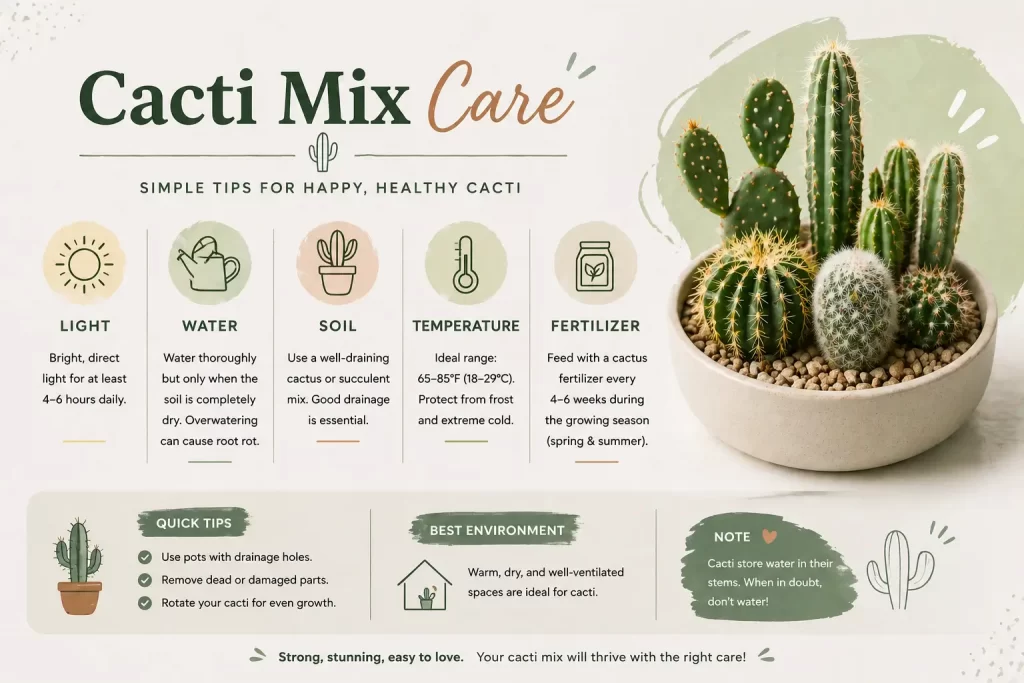
These mixes often include popular varieties like golden barrel cactus, bunny ear cactus, small columnar cacti, and mini globular cacti.
The problem is that while they look good together, their growth speed and water tolerance can vary slightly. That is why proper care becomes even more important.
Common Plants in a Cacti Mix
| Plant Type | Key Features | Care Tip |
|---|---|---|
| Golden Barrel Cactus | Round shape, thick ribs, golden-yellow spines, slow-growing | Needs strong sunlight and very little water |
| Bunny Ear Cactus | Flat pads, rabbit-ear shape, tiny hair-like spines | Keep in bright light and avoid touching directly |
| Columnar Cactus | Tall upright growth, narrow shape, decorative appearance | Rotate the pot occasionally for even growth |
| Mini Globular Cactus | Small rounded shape, compact size, slow growth | Use a small pot with excellent drainage |
Golden Barrel Cactus
The golden barrel cactus is one of the most recognizable cactus plants. It has a round shape, thick ribs, and golden-yellow spines.
It is slow-growing and prefers strong sunlight. This plant is extremely sensitive to overwatering. If it becomes soft, it is often already under serious stress.
Bunny Ear Cactus
The bunny ear cactus looks cute, but it can be tricky for beginners.
It has flat pads that resemble rabbit ears and tiny hair-like spines that can stick to skin. It usually grows faster than many other cacti and needs bright light to stay healthy.
Always avoid touching it directly. Those tiny spines can be irritating and difficult to remove.
Light Requirements: The Most Important Factor
If there is one thing you should get right, it is light.
Cacti naturally grow in bright, dry environments where sunlight is strong and consistent. When they do not get enough light, they become weak, pale, stretched, or tilted.
Ideal Lighting Conditions
- Place your cacti near a bright south or west-facing window.
- Give them at least 5 to 7 hours of bright light daily.
- Outdoor placement is helpful if the weather is dry and suitable.
- Avoid dark corners, bathrooms, and rooms with very little natural light.
If your cactus starts leaning or stretching, it is not growing beautifully. It is struggling for light. Move it to a brighter spot as soon as possible.
Watering Guide That Actually Works
Most beginners either water too often or follow a fixed schedule. Both approaches can cause problems.
The best way to water a cacti mix is to check the soil first. If the soil is still moist, do not water.
The Correct Way to Water
- Water only when the soil is completely dry.
- Use your finger or a wooden stick to check soil dryness.
- Water deeply until extra water drains from the bottom.
- Never let the pot sit in standing water.
- Reduce watering during winter or cooler months.
Simple Seasonal Watering Guide
| Season | Watering Frequency | Important Note |
|---|---|---|
| Summer | Every 10 to 14 days | Water only if the soil is fully dry |
| Winter | Every 3 to 4 weeks | Cacti need less water in cooler weather |
| Humid Weather | Less often | Soil dries slower in humidity |
| Very Hot Weather | Slightly more often | Check soil before watering |
A good rule is simple: if you are unsure, wait one more day before watering.
Soil and Pot Setup
Cacti do not survive well in regular heavy soil. They need a fast-draining soil mix that does not hold too much moisture around the roots.
Ideal Soil Mix
- Use cactus potting mix.
- Add perlite, pumice, coarse sand, or similar drainage material.
- Avoid heavy garden soil.
- Do not use soil that stays wet for many days.
Best Pot Type
- Choose a pot with drainage holes.
- Terracotta pots are a good option because they dry faster.
- Avoid decorative pots without drainage.
- Do not use oversized pots because they hold extra moisture.
Good drainage is not optional. It is one of the most important parts of cactus care.
Common Mistakes That Kill Cacti
| Mistake | What Happens | How to Fix It |
|---|---|---|
| Overwatering | Roots rot and the cactus becomes soft | Water only when soil is fully dry |
| Low light | Cactus becomes pale, stretched, or weak | Move it to a brighter spot |
| Wrong soil | Soil holds too much moisture | Use a cactus soil mix |
| No drainage hole | Water collects at the bottom | Use a pot with proper drainage |
| Touching bunny ear cactus | Tiny spines can irritate skin | Use gloves or tongs when handling |
Overwatering
Overwatering is the number one reason cacti die. Signs include a soft base, yellow or black spots, and a bad smell from the soil.
Low Light
Keeping cacti in a dim room leads to weak growth. The plant may stretch, lean, or lose its natural color.
Wrong Soil
Regular garden soil often traps too much moisture. This increases the risk of root rot.
Ignoring Plant Differences
In a cacti mix, one plant may grow faster than another. Bunny ear cactus, for example, may need more space over time than a slow-growing golden barrel cactus.
How to Tell If Your Cactus Is Healthy
Healthy cacti are easy to recognize once you know what to look for.
Signs of a Healthy Cactus
- Firm texture
- Natural bright color
- Upright growth
- No soft or mushy areas
- Soil dries between watering
Warning Signs
- Shriveling may mean underwatering.
- Softness usually means overwatering.
- Brown or black spots may indicate rot or stress.
- Stretching usually means low light.
Act early. Cacti recover slowly, so small problems are easier to fix than advanced damage.
Should You Separate a Cacti Mix?
This is something many beginners do not think about, but it matters.
A cacti mix may look perfect when you buy it, but over time the plants may become crowded. Some may grow faster than others, and their roots may compete for space.
When to Separate Your Cacti
- Plants are touching each other too closely.
- One cactus is growing much faster than the rest.
- The pot looks crowded.
- The soil dries unevenly.
- One plant looks unhealthy while others look fine.
Separating them into individual pots can improve airflow, reduce root competition, and make watering easier.
Indoor vs Outdoor Placement
Cacti can grow indoors or outdoors, but the placement must support their need for light and dry soil.
| Placement | Benefits | Things to Watch |
|---|---|---|
| Indoor | Easy to decorate, protected from rain, beginner-friendly | Needs strong natural light |
| Outdoor | Better sunlight, stronger growth, more natural conditions | Protect from heavy rain and extreme heat |
If you keep your cacti indoors, place them near the brightest window available. If you keep them outdoors, protect them from long periods of heavy rain.
Simple Care Routine for Beginners
If everything feels overwhelming, follow this simple routine:
- Check soil dryness once a week.
- Water only when the soil is completely dry.
- Keep the plant in bright light.
- Use a pot with drainage holes.
- Avoid touching bunny ear cactus directly.
- Remove dead or damaged parts carefully.
- Observe the plant regularly for color, shape, and firmness.
Consistency matters more than perfection. Cacti do not need daily attention, but they do need the right conditions.
Frequently Asked Questions
How long can a cacti mix survive without water?
Most cacti can survive for weeks without water. Some can last over a month depending on the weather, pot size, and soil condition.
Can I keep a cacti mix in my bedroom?
Yes, you can keep a cacti mix in your bedroom if the room gets enough bright natural light. If the room is dark, the cactus will become weak over time.
Why is my cactus turning brown at the base?
A brown or soft base is often a sign of overwatering or root rot. Stop watering immediately and check whether the soil is staying wet for too long.
Do cacti need fertilizer?
Cacti do not need frequent feeding. You can use a diluted cactus fertilizer once every 2 to 3 months during the growing season.
Can golden barrel and bunny ear cactus grow together?
Yes, they can grow together for some time if they receive bright light and are planted in well-draining soil. Over time, you may need to separate them if the bunny ear cactus grows faster or the pot becomes crowded.
Final Thoughts
Caring for a cacti mix is not complicated once you understand the basics.
If you remember just one thing, let the soil dry completely before watering again. That single habit will prevent most common problems.
Start simple, observe your plants, and adjust based on what you see. A well-cared-for cacti mix can last for years and become one of the easiest and most attractive plant arrangements in your home.