
Zebra Haworthia Care Guide: How to Grow and Care for Haworthia Fasciata
Quick Summary
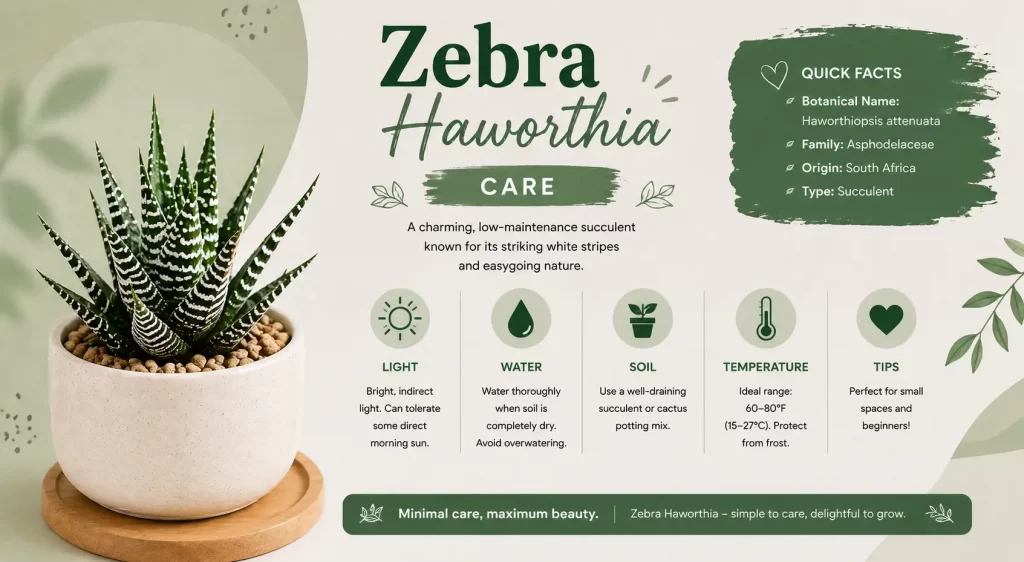
Zebra Haworthia is a small, low-maintenance succulent that is perfect for indoor spaces. It grows well in bright indirect light, needs watering only when the soil is completely dry, and is a great choice for beginners. The most common mistake is overwatering, which can lead to root rot. Use well-draining soil, choose a pot with drainage holes, and keep it away from harsh direct sunlight.
Introduction: Why Zebra Haworthia Is So Popular
If you are looking for a plant that is easy to care for, beautiful to look at, and suitable for small indoor spaces, Zebra Haworthia is one of the best choices.
This plant is known for its dark green pointed leaves and white raised stripes, which give it a zebra-like appearance. It is compact, slow-growing, and does not demand constant attention. That makes it especially useful for beginners, busy plant owners, apartment dwellers, and anyone who wants a reliable indoor succulent.
This guide will help you understand how to care for Zebra Haworthia in a practical way. You will learn how much light it needs, how often to water it, what soil works best, how to identify problems, and how to keep your plant healthy for years.
What Is Zebra Haworthia?
Zebra Haworthia, commonly known as Haworthia fasciata, is a small succulent plant native to South Africa. It grows in a rosette shape and has thick, pointed leaves with white horizontal markings on the outer surface.
Many people confuse Zebra Haworthia with Aloe because both plants have fleshy leaves and a similar shape. However, Haworthia is usually smaller, more compact, and better suited for indoor conditions.
| Common Name | Zebra Haworthia |
|---|---|
| Botanical Name | Haworthia fasciata |
| Plant Type | Succulent |
| Best For | Indoor spaces, desks, shelves, windowsills |
| Care Level | Beginner-friendly |
Who This Guide Is For
This guide is written for people who want simple and reliable plant care advice. You do not need to be an expert gardener to grow Zebra Haworthia successfully.
This article is especially helpful if you:
- Are new to indoor plants
- Want a low-maintenance succulent
- Often forget to water plants
- Live in an apartment or small home
- Need a desk plant or shelf plant
- Want to understand what your plant is telling you
By the end of this guide, you should feel confident about caring for your plant without guessing.
Zebra Haworthia Care at a Glance
| Care Factor | Best Practice |
|---|---|
| Light | Bright indirect light |
| Watering | Water only when soil is fully dry |
| Soil | Well-draining cactus or succulent mix |
| Pot | Pot with drainage holes |
| Temperature | 18°C to 26°C is ideal |
| Humidity | Normal indoor humidity is fine |
Light Requirements for Zebra Haworthia
Zebra Haworthia grows best in bright indirect light. It does not need strong direct sunlight like some outdoor succulents. In fact, too much direct sun can damage its leaves and cause brown, red, or dry patches.
The best place for this plant is near a bright window where it receives soft light. An east-facing window is usually a good choice because it provides gentle morning light. A north-facing window can also work if the space is bright enough.
Best Light Conditions
- Bright indirect sunlight
- Filtered light through a curtain
- Morning sun for a short period
- Bright indoor rooms
Light Problems to Watch For
If the leaves turn reddish, brown, or dry at the tips, your plant may be getting too much direct sun. Move it slightly away from the window or use a sheer curtain.
If the plant starts stretching, leaning, or becoming pale, it probably needs more light. Move it closer to a brighter spot, but avoid sudden exposure to harsh sunlight.
How Often Should You Water Zebra Haworthia?
Watering is the most important part of Zebra Haworthia care. This plant stores water in its thick leaves, so it does not need frequent watering. In most homes, watering too often is more dangerous than watering too little.
The best rule is simple: water only when the soil is completely dry.
General Watering Schedule
- Spring and summer: every 2 to 3 weeks
- Autumn and winter: once a month or less
- Very humid rooms: water less often
- Very dry rooms: check the soil more often
Do not water just because a certain number of days have passed. Always check the soil first. Push your finger into the soil. If it still feels damp, wait a few more days. If it feels dry all the way down, you can water.
How to Water Properly
- Check that the soil is fully dry.
- Water the soil deeply until excess water drains out.
- Let the pot drain completely.
- Never let the plant sit in standing water.
This method encourages healthy roots and reduces the risk of rot.
Signs of Overwatering and Underwatering
| Problem | Signs | What to Do |
|---|---|---|
| Overwatering | Soft leaves, yellow leaves, mushy base, bad smell | Stop watering, check roots, improve drainage |
| Underwatering | Wrinkled leaves, dry soil, shrinking appearance | Water deeply and monitor recovery |
| Too much sun | Brown, red, or dry leaf patches | Move to bright indirect light |
| Too little light | Stretching, leaning, pale growth | Move closer to a brighter window |
Best Soil for Zebra Haworthia
Zebra Haworthia needs soil that drains quickly. Regular garden soil or heavy potting soil can hold too much moisture, which increases the chance of root rot.
A cactus or succulent potting mix is usually the easiest option. You can also improve drainage by mixing in perlite, coarse sand, or pumice.
Good Soil Mix Options
- Ready-made cactus mix
- Succulent soil mixed with perlite
- Potting mix with added coarse sand
- Fast-draining soil with good airflow
The goal is to let water pass through easily while still giving the roots enough support.
Choosing the Right Pot
The pot matters almost as much as the soil. Always use a pot with drainage holes. Without drainage holes, extra water stays trapped at the bottom, and the roots may begin to rot.
Terracotta pots are a good choice because they allow moisture to evaporate faster. Plastic pots can also work, but you need to be more careful with watering.
Best Pot Features
- Drainage holes at the bottom
- Not too large for the plant
- Stable base
- Breathable material if possible
A pot that is too large can hold too much wet soil around the roots. Choose a pot that is only slightly bigger than the root system.
Temperature and Humidity
Zebra Haworthia prefers normal indoor temperatures. It does well in most homes, offices, and apartments as long as it is protected from extreme cold.
The ideal temperature range is around 18°C to 26°C. Avoid placing the plant near cold windows during winter, air conditioner vents, heaters, or areas with sudden temperature changes.
This plant does not need high humidity. Normal household humidity is enough. Misting is not recommended because extra moisture on the leaves can increase the risk of fungal issues or rot.
Growth Habits and What to Expect
Zebra Haworthia is a slow-growing plant. This is normal and should not be seen as a problem. It may produce new leaves slowly, especially indoors.
During spring and summer, you may notice more growth. During winter, the plant may slow down and need less water. Understanding this natural rhythm helps you avoid overwatering during cooler months.
If your plant looks healthy, firm, and compact, it is doing well even if it does not grow quickly.
Common Zebra Haworthia Problems
1. Leaves Turning Brown
Brown leaves can happen because of too much direct sun, underwatering, or root stress. Check the light first. If the plant is getting strong afternoon sun, move it to a softer light location.
2. Leaves Becoming Soft or Mushy
Soft or mushy leaves usually mean overwatering. Stop watering immediately and check whether the soil is staying wet for too long. If the roots smell bad or look black, root rot may have started.
3. Plant Stretching or Leaning
Stretching means the plant is searching for more light. Move it closer to a bright window. Rotate the pot occasionally so the plant grows evenly.
4. Leaves Wrinkling
Wrinkled leaves often mean the plant is thirsty. If the soil is completely dry, give it a deep watering and allow the extra water to drain out.
5. No New Growth
Slow growth is normal. However, if the plant has not changed for many months, check its light, soil, and pot size. It may need brighter indirect light or fresh soil.
How to Propagate Zebra Haworthia
The easiest way to propagate Zebra Haworthia is through offsets, also called pups. These are small baby plants that grow near the base of the main plant.
Propagation Steps
- Wait until the offset is large enough to handle.
- Gently remove the plant from its pot.
- Separate the offset from the parent plant with clean hands or a clean tool.
- Let the offset dry for one day.
- Plant it in dry succulent soil.
- Wait a few days before watering lightly.
Propagation takes patience, but it is a simple way to grow more plants from one healthy parent plant.
Is Zebra Haworthia Good for Indoor Spaces?
Yes, Zebra Haworthia is one of the best indoor succulents. Its compact size makes it easy to place on desks, shelves, windowsills, side tables, and small plant stands.
It also suits many interior styles because of its clean shape and bold leaf pattern. Whether your space is modern, minimal, cozy, or natural, this plant fits in easily.
Best Indoor Placement Ideas
- Office desk
- Bedroom shelf
- Kitchen windowsill
- Living room side table
- Study table
Just make sure the location receives enough indirect light and the plant is not exposed to constant moisture.
Beginner Care Mistakes to Avoid
Most Zebra Haworthia problems come from too much care rather than too little care. Beginners often water too often, use the wrong soil, or place the plant in direct harsh sunlight.
- Do not water on a fixed schedule without checking the soil.
- Do not use a pot without drainage holes.
- Do not keep the plant in dark corners for long periods.
- Do not mist the leaves.
- Do not use heavy garden soil.
- Do not place it in strong afternoon sunlight.
If you avoid these mistakes, your plant has a much better chance of staying healthy.
Frequently Asked Questions
How often should I water Zebra Haworthia?
Water only when the soil is completely dry. For many indoor homes, this means every 2 to 3 weeks in warmer months and less often during winter.
Can Zebra Haworthia survive in low light?
It can tolerate lower light, but it will grow better in bright indirect light. In very low light, the plant may stretch, lean, or become pale.
Why is my Zebra Haworthia turning brown?
Brown leaves are often caused by too much direct sunlight or watering stress. Check whether the plant is sitting in harsh sun or wet soil.
Does Zebra Haworthia need fertilizer?
It does not need much fertilizer. You can feed it lightly during the growing season with a diluted succulent fertilizer. Avoid fertilizing in winter.
Is Zebra Haworthia toxic to pets?
Zebra Haworthia is generally considered a safer choice than many common houseplants, but it is still best to keep all plants away from pets that like to chew.
How big does Zebra Haworthia get?
It usually stays small and compact, often under 6 inches tall. This makes it ideal for small spaces.
Final Thoughts
Zebra Haworthia is a beautiful, practical, and beginner-friendly succulent. It does not need daily attention, expensive tools, or complicated care routines. What it needs most is bright indirect light, dry soil between waterings, and a pot that drains well.
If you remember only three things, remember these:
- Do not overwater it.
- Keep it in bright indirect light.
- Use well-draining soil and a pot with drainage holes.
With these basics, Zebra Haworthia can stay healthy and attractive for years. It is a great plant for beginners and a reliable addition to any indoor plant collection.