
Ponytail Palm Care Guide for Beginners (2026)
Quick Summary: Ponytail palm is not a true palm. It is a drought-tolerant succulent known for its swollen trunk and long, curling leaves. It is one of the best low-maintenance houseplants for beginners because it needs bright light, well-draining soil, and very little water. The biggest mistake to avoid is overwatering.
If you are looking for a simple, reliable, and website-ready guide to caring for a ponytail palm, this article is designed to help. Whether you just bought one, received one as a gift, or want to save a struggling plant, this guide explains what you need to know in a practical and easy-to-follow way.
By the end of this article, you will understand how to care for a ponytail palm indoors, how often to water it, what kind of light it needs, how to avoid common problems, and how to keep it healthy for years.
What Is a Ponytail Palm?
The ponytail palm, scientifically known as Beaucarnea recurvata, is a popular ornamental plant that is often grown indoors. Despite its name, it is not actually a palm. It belongs to a group of drought-tolerant plants that store water in their trunk, which is why it behaves more like a succulent than a tropical palm.
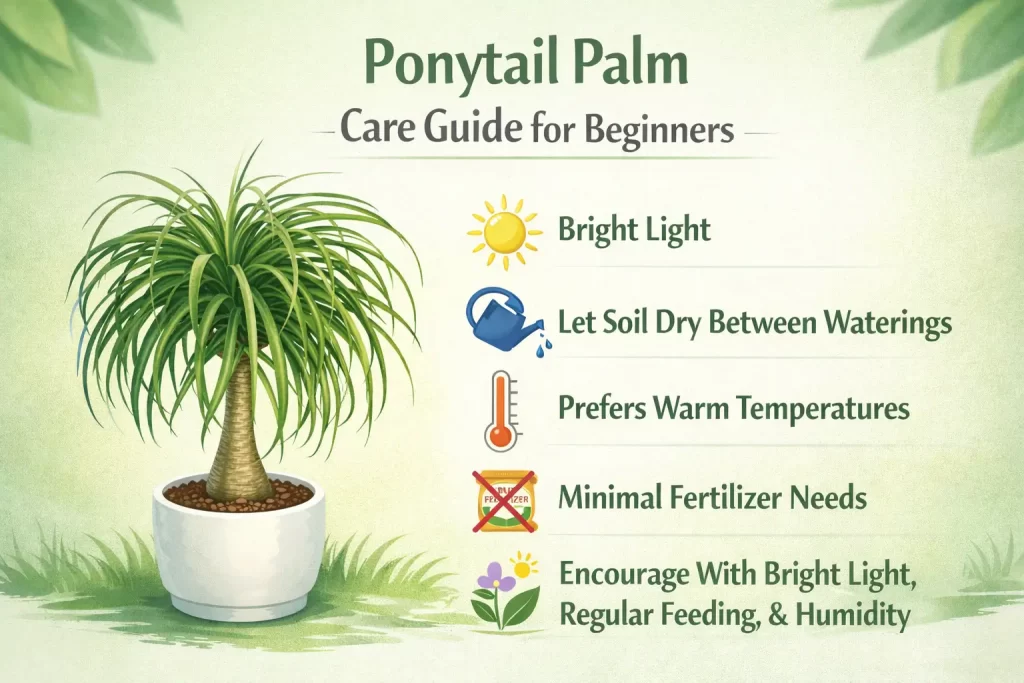
Its most noticeable feature is the thick, bulb-like base of the trunk. This base acts as a natural water reservoir. From the top, long green leaves spill outward in a fountain shape, creating the ponytail look that gives the plant its common name.
This unique structure is the reason the ponytail palm is so easy to care for. It can go longer without water than many other indoor plants, making it a great choice for busy people and beginners.
Why Ponytail Palm Is a Great Indoor Plant
Ponytail palm is widely loved because it is attractive, low maintenance, and forgiving. It works well in homes, offices, and apartments, especially for people who want a stylish plant without a demanding care routine.
| Benefit | Why It Matters |
|---|---|
| Low watering needs | Ideal for busy plant owners and beginners |
| Slow growth | Easy to manage indoors without frequent repotting |
| Decorative appearance | Adds texture and character to living spaces |
| Drought tolerance | More forgiving than many common houseplants |
If you have struggled with indoor plants before, the ponytail palm is one of the safest plants to start with.
Ponytail Palm Care Guide
1. Light Requirements
Ponytail palm grows best in bright light. It prefers a spot near a window where it can receive plenty of natural sunlight throughout the day. Bright indirect light is ideal, but it can also tolerate some direct sunlight, especially in the morning.
A south-facing or west-facing window is usually a good placement indoors. If your home does not get strong natural light, the plant may survive, but it will not grow as well. In low-light conditions, the leaves may become weaker, paler, or less full.
If you move your ponytail palm outdoors during warmer months, make the transition gradually so the leaves do not scorch from sudden exposure to strong sun.
2. How Often to Water Ponytail Palm
This is the most important part of ponytail palm care. Because the plant stores water in its trunk, it does not need frequent watering. In fact, overwatering is the most common reason it becomes unhealthy.
The best rule is simple: only water when the soil is completely dry.
To check, place your finger about 2 to 3 inches into the soil. If it still feels moist, wait a few more days. If it feels dry, water thoroughly until excess water drains out from the bottom of the pot.
| Season | Typical Watering Frequency |
|---|---|
| Spring | Every 2 to 3 weeks |
| Summer | Every 2 to 3 weeks, depending on heat and light |
| Autumn | Every 3 to 4 weeks |
| Winter | About once a month or less |
Always adjust based on your indoor climate, pot size, and how quickly the soil dries out.
3. Best Soil for Ponytail Palm
Ponytail palm needs soil that drains quickly. Standard potting soil alone can hold too much moisture, which increases the risk of root rot. A cactus or succulent mix is a much better option.
You can also improve drainage by mixing regular potting soil with coarse sand or perlite. The goal is to create a loose soil that dries out efficiently after watering.
A pot with drainage holes is essential. Without drainage, water collects at the bottom and keeps the roots wet for too long.
4. Best Pot Type
Terracotta pots are often the best choice for ponytail palm because they help excess moisture evaporate faster. This supports a healthier watering balance and reduces the chance of soggy soil.
If you use a decorative planter, make sure the inner pot still has drainage holes. Never let the plant sit in standing water.
5. Temperature and Humidity
Ponytail palm prefers warm conditions and adapts well to average indoor temperatures. It usually does well in temperatures between 18 and 30 degrees Celsius.
Normal indoor humidity is generally fine. Unlike tropical plants, it does not need extra humidity to thrive. However, it should be protected from frost, cold drafts, and sudden temperature drops.
6. Fertilizer Needs
This plant does not need frequent feeding. During the growing season in spring and summer, you can use a balanced liquid fertilizer once a month at a diluted strength.
Do not fertilize heavily, and avoid feeding in winter when growth naturally slows down. Too much fertilizer can stress the plant rather than help it.
7. Repotting Ponytail Palm
Ponytail palm grows slowly, so it does not need frequent repotting. In many cases, repotting every 2 to 3 years is enough. It often does well when slightly root-bound, so there is no need to move it into a much larger pot too soon.
When repotting, choose a container just one size larger than the current one. Make sure the pot drains well, and keep the swollen base slightly above the soil line for a natural look and healthy airflow.
Common Ponytail Palm Problems and How to Fix Them
Even though this plant is easy to care for, it can still develop issues when its environment or watering routine is not right. The table below covers the most common problems.
| Problem | Likely Cause | What to Do |
|---|---|---|
| Brown leaf tips | Dry indoor air, underwatering, or mineral buildup | Water consistently when soil is dry and trim damaged tips if needed |
| Yellow leaves | Overwatering | Let the soil dry out fully and reduce watering frequency |
| Soft or mushy trunk | Root rot from excess moisture | Stop watering, inspect roots, and repot into dry, well-draining soil |
| Slow growth | Low light or natural slow growth habit | Move the plant to a brighter spot and be patient |
| Pale or weak leaves | Insufficient sunlight | Increase light exposure gradually |
How to Tell If Your Ponytail Palm Is Healthy
A healthy ponytail palm usually has firm leaves, a solid trunk, and a dry, well-aerated root zone. The trunk should feel sturdy, not soft. The leaves should be green and arching, though a few dry tips over time can be normal.
One useful detail many people miss is that the trunk can tell you a lot. If it looks very wrinkled and the soil is fully dry, the plant may be thirsty. If it feels soft or looks collapsed, too much water is often the problem.
Best Places to Keep a Ponytail Palm at Home
Placement matters more than people think. A ponytail palm will look better and stay healthier when kept in the right location.
- Near a bright window in the living room
- On a sunny office desk with good natural light
- In an entryway that receives strong daylight
- On a covered balcony in warm weather
Avoid dark corners, rooms with very little sunlight, or places where cold air blows directly onto the plant.
Is Ponytail Palm Safe for Pets?
Many plant owners want to know whether ponytail palm is safe around cats and dogs. It is generally considered a better option than many common houseplants, but it is still wise to prevent pets from chewing the leaves.
If you have a curious pet, place the plant on a stand, shelf, or other area where it is less likely to be disturbed. This also helps protect the leaves from damage.
Simple Care Tips That Make a Big Difference
Good plant care often comes down to a few small habits done consistently. These tips can help your ponytail palm stay healthy and attractive over time.
- Rotate the pot every few weeks so the plant grows evenly
- Wipe dust from the leaves occasionally so they can absorb light better
- Do not water on a strict calendar without checking the soil first
- Choose a smaller pot over a much larger one to avoid excess moisture retention
- Watch the trunk and leaves for early signs of stress
Frequently Asked Questions
How often should I water a ponytail palm?
You should water it only when the soil is completely dry. In many homes, this means every 2 to 3 weeks during warmer months and less often in winter.
Can ponytail palm survive in low light?
It can survive in lower light, but it will not thrive. Growth may slow down, and the leaves may become weaker or less vibrant.
Why is my ponytail palm turning yellow?
Yellow leaves are usually caused by overwatering. Check the soil, reduce watering, and make sure the pot drains properly.
Does ponytail palm grow fast?
No. It is a slow-growing plant, especially indoors. That slow growth is one reason it is easy to manage as a houseplant.
Can I grow ponytail palm outdoors?
Yes, in warm climates with plenty of light and no frost. In cooler areas, it is usually best kept indoors or moved inside during cold weather.
Final Thoughts
Ponytail palm is one of the easiest and most rewarding houseplants you can grow. Its sculptural shape, low watering needs, and forgiving nature make it perfect for beginners and plant lovers alike.
If you remember only a few basics, remember these: give it bright light, let the soil dry out before watering, and always use a pot with good drainage. These simple steps solve most problems before they begin.
With the right care, a ponytail palm can stay healthy and beautiful for many years, making it a smart and long-lasting addition to your indoor plant collection.