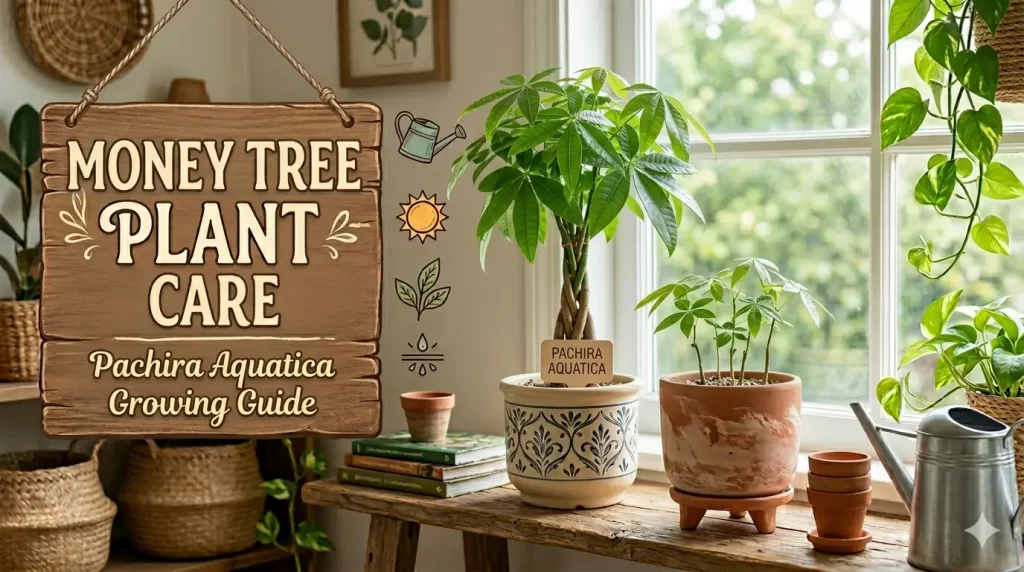

Money Tree Plant (Pachira Aquatica): Complete Care Guide, Benefits, and Common Problems (2026)
If you want a beautiful indoor plant that is beginner-friendly, easy to maintain, and linked with good luck, the money tree plant is one of the best choices. This guide explains what it is, how to care for it properly, the most common problems to watch for, and how to keep it healthy indoors.
Quick Summary
| Scientific name | Pachira aquatica |
|---|---|
| Common name | Money tree plant |
| Best for | Indoor spaces, home decor, offices, beginners |
| Light | Bright, indirect light |
| Watering | Water when the top 1 to 2 inches of soil feel dry |
| Common issue | Overwatering |
| Main benefit | Low maintenance, attractive, symbolically linked to prosperity |
Why the Money Tree Plant Is So Popular
The money tree plant has become one of the most popular indoor plants for a simple reason. It combines visual appeal, easy care, and positive symbolism in one plant. Many people buy it because of its braided trunk and lush green leaves, while others are drawn to the belief that it brings good luck and prosperity.
Still, a lot of people struggle after bringing one home. The leaves may start turning yellow, the plant may droop, or it may begin shedding leaves unexpectedly. In most cases, the issue is not that the plant is hard to care for. It is usually caused by a few common mistakes, especially with watering and placement.
This article is designed for beginners and indoor plant lovers who want a practical, clear, and useful guide they can actually follow.
What Is the Money Tree Plant (Pachira Aquatica)?
The money tree plant, scientifically known as Pachira aquatica, is a tropical plant native to Central and South America. In its natural environment, it can grow into a much larger tree. Indoors, however, it stays compact enough to work well in homes, apartments, and offices.
It is easy to recognize because of these features:
- A braided trunk, often created from multiple young stems
- Glossy green leaves with a hand-like shape
- A neat and decorative appearance that fits modern interiors
Many indoor plant owners do not realize that the braided trunk is often formed by intertwining several young plants together. This gives the plant its signature look and adds to its decorative value.
Why Is It Called a Money Tree?
The name “money tree” comes largely from cultural and feng shui associations. It is often believed to attract wealth, prosperity, and positive energy. Because of that, it is commonly placed in homes, offices, small businesses, and gift arrangements.
Even for people who do not follow feng shui, the plant remains popular because it feels meaningful, looks elegant, and is easier to care for than many other indoor plants.
Benefits of Keeping a Money Tree Plant
| Benefit | Why It Matters |
|---|---|
| Beginner-friendly | It does not require complex care routines, which makes it ideal for first-time plant owners. |
| Decorative appeal | The braided trunk and full green leaves make it a natural focal point indoors. |
| Symbolic value | Many people associate it with good luck, growth, and prosperity. |
| Versatile placement | It works well in living rooms, offices, entryways, and bedrooms with suitable light. |
| Low maintenance | It generally does well when basic light and watering needs are met. |
Complete Money Tree Care Guide
1. Light Requirements
The money tree grows best in bright, indirect light. This means it likes a well-lit room, but it should not sit in strong direct sunlight for long periods, especially during the hottest parts of the day.
Good placement options include:
- Near an east-facing window
- Near a north-facing window
- A few feet away from a bright south-facing window with filtered light
Avoid placing it in very dark corners. Low light may not kill it immediately, but growth can slow down, leaves can become weaker, and the plant may start leaning toward the nearest light source.
A helpful habit is rotating the pot every week or two so all sides of the plant get even light exposure.
2. Watering Schedule
Watering is the single most important part of money tree care, and it is also where most problems begin. The biggest mistake people make is watering too often.
The best rule is simple: water only when the top 1 to 2 inches of soil feel dry.
| Season | Typical Watering Pattern |
|---|---|
| Spring and summer | Usually once every 7 to 10 days |
| Autumn and winter | Usually once every 10 to 14 days |
These are general guidelines, not fixed rules. Your plant may need more or less water depending on humidity, indoor temperature, pot size, and the type of soil used.
Important watering tips:
- Never water on a strict calendar without checking the soil first
- Always use a pot with drainage holes
- Do not let the plant sit in standing water
- If you are unsure, it is usually safer to wait a little longer rather than overwater
3. Best Soil for a Money Tree
The money tree prefers soil that drains well. Heavy soil that stays wet for too long increases the risk of root rot.
A good soil setup may include:
- Standard indoor potting mix
- Perlite for drainage
- A small amount of sand if needed
The goal is to create a mix that holds some moisture without becoming soggy.
4. Pot Choice and Drainage
Your pot matters almost as much as your soil. Decorative containers can look great, but if they do not have drainage holes, they can trap excess water and harm the roots.
The safest option is to use:
- An inner nursery pot with drainage holes
- A decorative outer pot only as a cover
This gives you the best of both worlds: style and proper drainage.
5. Temperature and Humidity
The money tree enjoys warm indoor temperatures and moderate humidity. It generally does best in a range of 18 to 27 degrees Celsius.
Try to avoid:
- Cold drafts from doors or windows
- Direct blasts from air conditioners or heaters
- Sudden temperature changes
If your indoor air is very dry, occasional light misting or placing the plant in a naturally more humid room can help.
6. Fertilizer Needs
The money tree does not need heavy feeding. During the active growing months, usually spring and summer, you can use a balanced liquid fertilizer once a month.
In colder months, when plant growth slows, it is usually best to reduce or stop fertilizing.
Common Problems and How to Fix Them
Yellow Leaves
Yellow leaves are one of the most common signs that something is off. In many cases, overwatering is the cause. Poor drainage and sudden environmental changes can also contribute.
What to do:
- Check whether the soil is staying wet too long
- Reduce watering frequency
- Make sure the pot drains properly
Drooping Leaves
Drooping may happen when the plant is too dry, stressed by temperature changes, or adjusting to a new space.
What to do:
- Check the soil moisture before watering
- Keep the plant in a stable environment
- Avoid moving it too often
Brown Leaf Edges
Brown edges usually suggest dry air, inconsistent watering, or too much direct sun.
What to do:
- Move the plant away from harsh direct sunlight
- Maintain a more consistent watering routine
- Improve humidity if your room is very dry
Root Rot
Root rot is one of the most serious issues for a money tree. It usually happens when roots remain in wet soil for too long.
Signs of root rot:
- A bad smell from the soil
- Mushy or dark roots
- Persistent yellowing and decline
How to respond:
- Remove the plant from the pot
- Trim damaged roots with clean scissors
- Repot using fresh, well-draining soil
- Water less often going forward
Best Place to Keep a Money Tree at Home
Placement depends on both light and lifestyle. The best location is one where the plant gets bright, indirect light and is not exposed to harsh conditions.
Good indoor placement ideas include:
- A living room near a bright window
- An office desk with filtered daylight
- An entryway that receives enough natural light
Some people also choose a location based on feng shui, often placing the money tree in the southeast area of the home or workspace as a symbol of prosperity.
What Most Beginners Do Not Realize
There are a few practical details many first-time owners do not hear often enough:
- The braided trunk is usually made from multiple plants woven together while young
- Leaf drop after bringing the plant home can happen while it adjusts to a new environment
- Too much care can be worse than too little care, especially with watering
- The plant often does better when left in a stable spot instead of being moved often
These points matter because many people assume something is badly wrong when the plant is only reacting to a change in conditions.
Frequently Asked Questions
How often should I water a money tree plant?
Water it when the top 1 to 2 inches of soil feel dry. In many homes, that means about every 1 to 2 weeks, but actual timing depends on the environment.
Can a money tree grow indoors?
Yes. It is one of the most popular indoor plants because it adapts well to indoor conditions when given bright, indirect light and proper watering.
Why are my money tree leaves falling off?
Leaf drop can happen because of overwatering, low light, dry conditions, or sudden temperature changes. It may also happen briefly after moving the plant to a new location.
Is the money tree plant really lucky?
Many people believe it symbolizes prosperity, wealth, and positive energy. While that is a cultural belief rather than a scientific claim, it is one reason the plant remains so popular.
Final Thoughts
The money tree plant is a smart choice for anyone who wants a low-maintenance indoor plant with a strong decorative presence. It is suitable for beginners, attractive in almost any room, and simple to care for once you understand the basics.
The most important thing to remember is this: do not overwater it. Give it bright, indirect light, well-draining soil, a pot with drainage, and enough time to adjust to its environment. If you do that, your money tree has a strong chance of staying healthy and looking great for a long time.
Final Self-Check Before Publishing
- Does the article clearly solve the reader’s problem?
- Is the information practical, easy to follow, and useful?
- Does the structure make the content easy to skim?
- Would a real reader feel helped after reading it?
- Is this something you would proudly publish on your site?
Create content that a real human would thank you for, and Google will follow.