
“`html
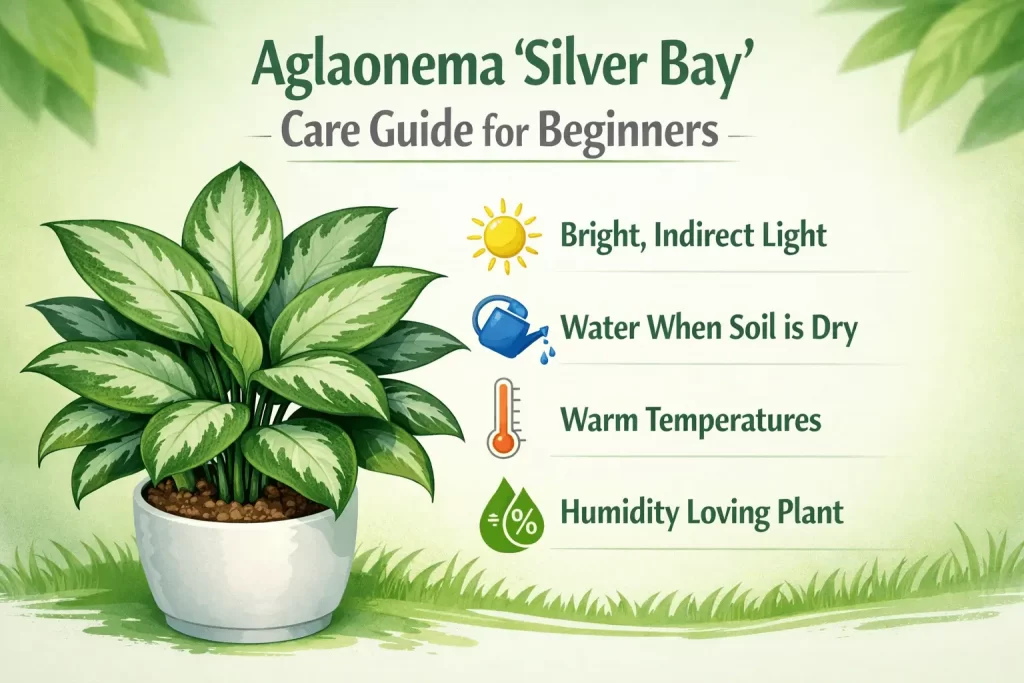
Aglaonema “Silver Bay” Care Guide for Beginners
If you have ever killed a plant and thought maybe plants just are not for you, Aglaonema “Silver Bay” might change your mind. This is one of those rare houseplants that does not demand constant attention. It handles low light, forgives missed watering, and still looks elegant in almost any room. The biggest reason people struggle with it is not because it is difficult, but because they follow generic plant advice that does not match how this plant actually grows indoors.
This guide is designed to help beginners and everyday indoor plant owners understand exactly how to care for Aglaonema “Silver Bay” in a practical way. By the end, you will know how to water it properly, where to place it, what kind of soil it prefers, how to solve common issues, and why it is one of the best indoor plants for low maintenance plant lovers.
Quick Summary
| Best for | Beginners, busy plant owners, indoor spaces |
|---|---|
| Light | Low to medium indirect light |
| Watering | Water when the top 2 to 3 inches of soil feel dry |
| Growth | Slow to moderate |
| Common issues | Yellow leaves, brown tips, drooping foliage, root rot from overwatering |
| Pet safety | Toxic if ingested |
| Why people love it | Beautiful foliage, low maintenance nature, easy indoor adaptability |
What Is Aglaonema “Silver Bay”?
Aglaonema “Silver Bay” is a popular variety of Chinese Evergreen known for its broad silver green leaves with darker green edges. It has a calm, clean look that works beautifully in homes, offices, and indoor corners that need a little life. Unlike many dramatic houseplants, this one does not ask for constant monitoring, which makes it a favorite for beginners.
What makes it especially appealing is its ability to adapt. It can live comfortably in low light, does not need frequent watering, and still maintains a lush appearance when cared for correctly. If you want a plant that looks refined without acting fussy, this is a strong choice.
Who This Plant Is Best For
Aglaonema “Silver Bay” is ideal for people who want a beautiful indoor plant without turning plant care into a full time hobby. It is especially suitable for beginners, apartment dwellers, office workers, and anyone who forgets to water their plants now and then.
| Type of Reader | Why This Plant Works Well |
|---|---|
| Beginners | Easy to care for and forgiving of small mistakes |
| Busy homeowners | Does not need daily care or strict routines |
| Indoor plant lovers | Offers strong visual appeal with manageable upkeep |
| Office plant owners | Performs well in filtered light and air conditioned spaces |
Light Requirements
One of the biggest reasons Aglaonema “Silver Bay” is so beginner friendly is its flexible light tolerance. It grows best in bright indirect light, but it can also handle medium and low light conditions surprisingly well. That makes it useful for rooms where sunlight is limited or filtered through curtains.
The main thing to avoid is direct harsh sunlight. Too much direct sun can scorch the leaves and leave them looking faded or burnt. A spot near an east facing window, a north facing window, or a bright room with sheer curtains usually works well. If your home does not get much natural light, this plant can also do reasonably well under indoor lighting, though growth may slow.
Best Placement Tips
- Place it near a bright window with filtered light
- Keep it away from strong afternoon sun
- Avoid very dark corners if you want fuller growth
- Rotate the pot occasionally for even leaf development
Watering Guide
Watering is where most plant owners get into trouble. Aglaonema “Silver Bay” does not like to sit in soggy soil, and overwatering is the fastest way to damage it. Instead of watering on a fixed calendar, it is much better to check the soil first. Wait until the top 2 to 3 inches feel dry before watering again.
In warmer months, this may mean watering every 5 to 7 days depending on your indoor conditions. In cooler months, watering may drop to once every 10 to 14 days. The exact timing depends on light, temperature, humidity, and pot size, so always let the soil guide you.
| Symptom | Likely Cause | What to Do |
|---|---|---|
| Yellow leaves | Overwatering | Let the soil dry more before the next watering |
| Mushy stems | Root stress or rot | Reduce watering and check drainage |
| Drooping leaves with dry soil | Underwatering | Water thoroughly and reassess routine |
| Bad smell from soil | Poor drainage and excess moisture | Repot if needed and improve soil mix |
Best Soil and Pot Setup
If you want this plant to stay healthy long term, the soil and pot matter more than many people realize. Aglaonema “Silver Bay” prefers a loose, well draining mix that holds some moisture without becoming waterlogged. A heavy compact soil can trap too much water and lead to root problems.
A simple indoor plant mix works well, especially if it includes cocopeat, perlite, coarse sand, or other ingredients that help with airflow and drainage. The pot should always have drainage holes at the bottom. Even a perfect watering routine becomes risky if excess water has nowhere to go.
Ideal Soil Mix
- Potting soil or garden soil as the base
- Cocopeat for moisture balance
- Perlite or coarse sand for drainage
Temperature and Humidity
Aglaonema “Silver Bay” grows well in normal indoor temperatures, usually between 18°C and 30°C. It does not need tropical greenhouse conditions to stay happy, which is another reason it is easy to manage indoors. Most homes already provide a suitable environment for it.
Humidity does help, especially if your room is very dry, but it is not a plant that constantly demands moisture in the air. If you notice brown leaf tips, the cause may be dry air, inconsistent watering, or both. A small increase in humidity, occasional misting, or grouping it with other plants can help improve the overall appearance.
Fertilizing Tips
Aglaonema “Silver Bay” does not need heavy feeding. A light application of balanced liquid fertilizer once a month during the active growing season is usually enough. Feeding too often can cause salt buildup in the soil and may damage the roots over time.
If your plant is already growing well and producing healthy leaves, do not feel pressured to fertilize aggressively. In many homes, simple consistent care matters more than extra feeding.
How to Propagate Aglaonema “Silver Bay”
The easiest and most reliable way to propagate this plant is by division. As the plant matures, it often forms separate clumps that can be gently divided during repotting. This is a simple way to create new plants without stressing the main plant too much.
Propagation Steps
- Remove the plant carefully from its pot.
- Examine the roots and identify natural sections or clumps.
- Gently separate the root sections by hand.
- Place each section into its own pot with fresh well draining soil.
- Water lightly and keep the new plants in bright indirect light.
Division is usually safer and easier than trying to propagate through stem cuttings, especially for beginners.
Common Problems and Easy Fixes
Even though Aglaonema “Silver Bay” is easy to care for, it can still show signs of stress when something is off. The good news is that most problems are easy to identify and fix once you know what to look for.
| Problem | Likely Reason | Solution |
|---|---|---|
| Yellow leaves | Too much water | Let the soil dry more between waterings |
| Brown leaf tips | Dry air or uneven watering | Improve consistency and raise humidity slightly |
| Slow growth | Low light or lack of nutrients | Move to brighter indirect light and feed lightly |
| Drooping leaves | Water imbalance | Check the soil before watering again |
| Root rot | Wet soil and poor drainage | Repot into fresh draining mix and trim damaged roots |
Is Aglaonema “Silver Bay” Good for Indoor Spaces?
Yes, it is one of the best houseplants for indoor growing. It has the kind of appearance that makes a room feel fresh and finished, but it does not demand advanced care knowledge. It works especially well in bedrooms, living rooms, offices, reading corners, and entryways with indirect light.
Because it can tolerate lower light than many other decorative houseplants, it gives you more flexibility when choosing a location. That makes it a practical option for real homes, not just perfectly lit plant studio spaces you see online.
Important Safety Note
Aglaonema “Silver Bay” is not pet safe if chewed or eaten. It can be toxic to cats, dogs, and small children if ingested, so it is best to place it out of reach if you have curious pets or kids in the home. This is an important part of responsible plant ownership and should not be overlooked.
A Simple Real Life Care Routine
If you want a no stress routine that actually works, keep it simple. Check the soil twice a week, water only when it feels dry a few inches down, keep the plant in indirect light, and feed lightly once a month during the growing season. Beyond that, let the plant settle and do its thing. Overhandling and overwatering usually create more problems than they solve.
Frequently Asked Questions
How often should I water Aglaonema “Silver Bay”?
Water it when the top 2 to 3 inches of soil are dry. In many homes, that is about once a week in warmer months and less often in cooler months.
Can Aglaonema “Silver Bay” survive in low light?
Yes, it can tolerate low light, which is one reason it is so popular indoors. Growth may be slower, but the plant can still do well.
Why are my Silver Bay leaves turning yellow?
The most common cause is overwatering. Check whether the soil is staying wet for too long and make sure the pot drains properly.
Is Aglaonema “Silver Bay” a good beginner plant?
Yes. It is one of the best options for beginners because it is adaptable, attractive, and relatively forgiving.
Does it need fertilizer to grow well?
It benefits from light monthly feeding during the growing season, but it does not need heavy fertilizing to stay healthy.
Final Thoughts
Aglaonema “Silver Bay” is one of those plants that proves indoor gardening does not have to be complicated. It looks elegant, handles everyday indoor conditions well, and does not punish you for every small mistake. As long as you avoid overwatering, give it decent indirect light, and use a well draining soil mix, it can stay healthy and attractive for years.
If there is one rule worth remembering, it is this: do not overcare for it. A steady, simple routine will usually give you better results than constant interference. For beginners and busy plant owners alike, that is exactly what makes Aglaonema “Silver Bay” such a rewarding plant to grow indoors.
“`