
Croton Plant Care Guide (2026): Everything You Need to Know to Keep It Healthy and Vibrant
If your croton plant is losing leaves, fading in color, or just not thriving the way you expected, you are not alone. Many people buy crotons for their stunning foliage but struggle to keep them healthy.
This guide is written for beginners and plant lovers who want clear, practical, and real-world advice on croton care. By the end, you will know exactly how to keep your plant vibrant, avoid common mistakes, and fix problems before they get worse.
Quick Summary
| Plant Type | Colorful tropical foliage plant |
|---|---|
| Best Light | Bright indirect light with some gentle morning sun |
| Watering | Water when the top inch of soil feels dry |
| Main Problems | Leaf drop, yellow leaves, fading color, brown edges |
| Best For | People who can provide consistent care and good light |
| Key Success Tip | Keep the environment stable and avoid sudden changes |
What Is a Croton Plant?
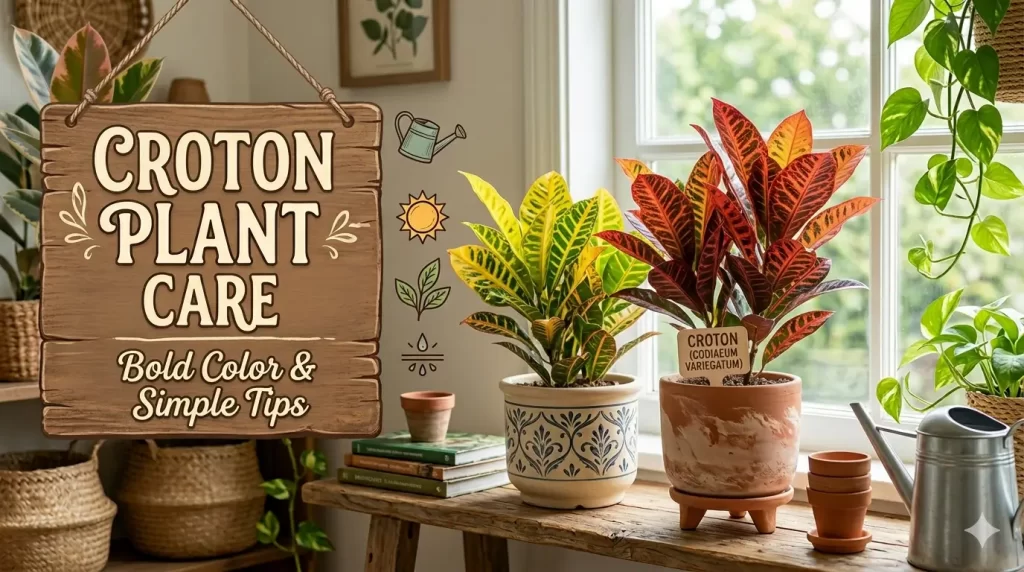
Croton, also known as Codiaeum variegatum, is a tropical plant famous for its bold, multicolored leaves. Depending on the variety, the foliage can feature shades of green, yellow, orange, red, and even purple.
It is one of the most decorative foliage plants you can grow at home. Many people choose croton because it brings strong visual impact without needing flowers to stand out.
Why people love croton
- It adds vibrant color to indoor and outdoor spaces
- It creates a tropical look instantly
- It works well as a feature plant in pots, balconies, and gardens
At the same time, croton is not a plant that likes constant change. It reacts quickly to poor light, watering mistakes, or temperature stress. That is why understanding its needs early makes a big difference.
Who Should Grow Croton?
Croton is ideal for plant lovers who enjoy caring for foliage plants and can give them a stable environment. It is especially good for people who have bright indoor spaces, covered balconies, or warm outdoor spots.
| Good Fit For | Not Ideal For |
|---|---|
| Beginners willing to learn basic plant care | People looking for a low-attention plant |
| Homes with bright natural light | Very dark rooms or corners |
| Plant owners who can keep care routines steady | Frequent travelers or irregular plant care schedules |
Croton Plant Care Basics
If you want a healthy croton, focus on the basics first. Most plant problems can be avoided by getting the light, water, temperature, soil, and feeding routine right.
1. Light Requirements
Croton thrives in bright light. This is one of the most important parts of care because strong light helps the leaves keep their rich, vibrant color.
- Place it near a bright window with filtered sunlight
- Morning sun is usually beneficial
- Avoid very low-light corners
If the plant does not get enough light, the leaves may lose some of their bold color and become more green than expected. A healthy croton usually looks brightest when the light conditions are right.
2. Watering the Right Way
Watering is where many croton owners make mistakes. The goal is to keep the soil lightly moist without making it soggy.
- Water when the top inch of soil feels dry
- Do not let the plant sit in standing water
- Reduce watering slightly in cooler months
Overwatering can cause root damage and yellow leaves. Underwatering can lead to drooping and leaf drop. A simple finger test works better than following a rigid schedule. If the top layer feels dry, it is time to water. If it still feels damp, wait a little longer.
3. Temperature and Humidity
Croton is a tropical plant, so it prefers warm and humid conditions. It does not like cold air, sudden shifts, or dry conditions for long periods.
- Ideal temperature range is about 18°C to 30°C
- Keep it away from cold drafts and strong air conditioning
- Moderate to high humidity helps the leaves stay healthy
One common issue with croton is stress after being moved from one place to another. Even a change in room conditions can cause leaf drop. Stability matters a lot with this plant.
4. Soil and Potting
Croton needs well-draining soil so that the roots can breathe properly. Dense, heavy, or waterlogged soil often leads to trouble.
A good mix can include garden soil, compost, and sand or perlite for drainage. Always use a pot with drainage holes. Without proper drainage, even careful watering can become risky.
5. Fertilizing
Feed your croton during active growth to support strong foliage and color. A balanced liquid fertilizer used every three to four weeks during the growing season is usually enough.
Avoid using too much fertilizer. Overfeeding can damage roots and reduce overall plant health instead of improving it.
Common Croton Problems and Solutions
This is the part most people search for because croton often shows stress quickly. The good news is that the plant usually gives visible signals, and those signals can guide you toward the fix.
| Problem | Likely Cause | What To Do |
|---|---|---|
| Leaves falling off | Sudden change in location, watering stress, temperature shock | Keep the environment stable, avoid moving the plant often, correct watering gradually |
| Leaves turning yellow | Overwatering or poor drainage | Let the topsoil dry slightly before watering again and check pot drainage |
| Leaves losing color | Insufficient light | Move the plant to a brighter location |
| Brown leaf edges | Low humidity or inconsistent watering | Improve humidity and maintain a steadier watering routine |
| Drooping leaves | Water stress or environmental shock | Check soil moisture and keep conditions consistent |
Why croton leaves fall after buying
This is one of the most common concerns. In many cases, the plant is reacting to a new environment. A change in light, humidity, watering habits, or temperature can trigger leaf drop. That does not always mean the plant is dying. Often, it is adjusting.
The best response is patience and consistency. Avoid moving it repeatedly, and give it a stable place with bright light and proper watering.
Indoor vs Outdoor Croton Care
Croton can do well both indoors and outdoors, but the care approach changes slightly depending on where you grow it.
| Indoor Croton Care | Outdoor Croton Care |
|---|---|
| Keep near a bright window | Choose a spot with bright filtered light or partial sun |
| Protect from air conditioning and cold drafts | Protect from harsh afternoon heat if the climate is very hot |
| Monitor humidity more carefully | Watch soil moisture during hot weather |
| Rotate only if needed and not too often | Keep placement stable once the plant adapts |
In warm climates, croton often grows very well outdoors in balconies, patios, or gardens with some protection from intense sun. Indoors, the biggest challenge is usually getting enough light.
Simple Weekly Croton Care Routine
If you want a practical system, this routine is easy to follow and works well for most home growers.
| Frequency | What To Check |
|---|---|
| Daily | Make sure the plant is getting enough bright light |
| Every 2 to 3 days | Check soil moisture with your finger |
| Weekly | Look for yellow leaves, drooping, pests, or dryness |
| Monthly | Feed with balanced fertilizer during the growing season |
This kind of simple routine is often enough to prevent most croton issues before they become serious.
Helpful Tips That Make a Real Difference
Many articles cover the basics, but these small details often matter just as much in real homes.
- Do not move the plant too often once it settles in
- Clean the leaves gently from time to time so dust does not block light
- Do not assume every dropped leaf means the plant is dying
- Pay attention to patterns instead of reacting to one single leaf
- Prioritize consistency over constant adjustments
A lot of croton care success comes from observation. If you watch how the plant responds over time, you will learn what works in your space much faster.
Frequently Asked Questions
Is croton a good indoor plant?
Yes, croton can be an excellent indoor plant if you have bright light and can maintain stable conditions. It is especially popular for adding strong color to living spaces.
How often should I water croton?
Water when the top inch of soil feels dry. The exact frequency depends on the season, pot size, light, and indoor temperature.
Does croton need direct sunlight?
Croton usually does best in bright indirect light, though gentle morning sun can help. Too little light may reduce leaf color, while very harsh direct sun can stress the plant in some settings.
Why is my croton losing leaves after I brought it home?
This is often caused by environmental change. Give it time to adjust, keep care steady, and avoid shifting it from place to place.
Can croton grow outdoors?
Yes, croton can grow well outdoors in warm climates. It usually prefers bright filtered light or partial sun and protection from extreme conditions.
Final Thoughts
Croton is not the hardest plant to grow, but it is a plant that rewards consistency. If you give it the right light, careful watering, warm conditions, and a stable environment, it can become one of the most beautiful foliage plants in your space.
Most croton problems come from sudden changes, poor drainage, or incorrect watering. Once you understand that, caring for it becomes much easier. Instead of chasing quick fixes, focus on steady care and observation.
If your goal is vibrant leaves and a healthy plant that keeps looking impressive over time, croton is absolutely worth the effort.
Final Self Check Before Publishing
- Does this article solve real croton care problems?
- Is the advice clear enough for a beginner to follow?
- Does it feel genuinely helpful instead of generic?
- Would a reader leave with more confidence than they had before?
Create content that a real human would thank you for, and strong search performance is far more likely to follow.