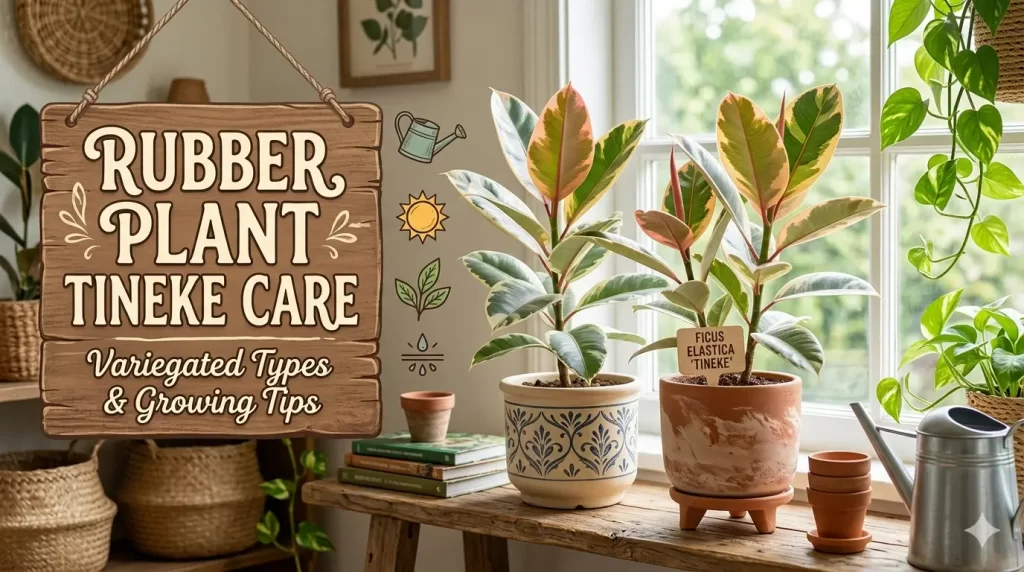

Rubber Plant Tineke Care and Variegated Types: A Practical Guide That Actually Helps
Rubber Plant Tineke is one of the most attractive variegated houseplants, but it also confuses many plant owners. People often buy it for its cream, green, and soft pink foliage, then panic when the color changes, leaves drop, or growth slows down. This guide is written for real plant owners who want clear, useful, and beginner-friendly advice they can actually apply.
By the end of this article, you will know what a Tineke rubber plant is, how to care for it properly, how it compares with other variegated rubber plant types, and what common problems usually mean.
Quick Summary
- Tineke is a variegated form of the rubber plant known for cream, green, and sometimes blush-pink leaves.
- It grows best in bright indirect light.
- Overwatering is the most common reason it struggles indoors.
- Loss of variegation usually means the plant needs more light.
- Tineke, Ruby, and Belize are popular variegated rubber plant types, each with different color intensity.
- Tineke is usually the best choice for beginners who want a balance of beauty and easier care.
Why This Guide Matters
If you searched for Rubber Plant Tineke care, you are probably in one of these situations. You may have just bought one and want to keep it healthy. You may already own one and are trying to figure out why the leaves are turning brown, losing color, or dropping. Or you may be comparing Tineke with Ruby or Belize before buying.
This article is designed to answer those real questions in a way that feels useful, clear, and practical. It is not written to impress search engines. It is written to help readers feel more confident with their plant.
What Is a Rubber Plant Tineke?
Tineke is a variegated cultivar of Ficus elastica, commonly known as the rubber plant. Unlike the standard green rubber plant, Tineke has multicolored foliage that typically includes shades of green, creamy white, pale yellow, and sometimes a soft pink blush on new growth.
Its appeal comes from the fact that no two leaves look exactly the same. Some are heavily variegated, while others are more green. That natural variation is part of what makes the plant so attractive indoors.
In simple terms, Tineke is a decorative version of the classic rubber plant. It is still fairly beginner-friendly, but because it is variegated, it is a little less forgiving than the all-green version.
How to Identify a Real Tineke
A true Tineke usually has the following traits:
- Cream or pale yellow margins on the leaves
- Green centers with irregular marbling
- Occasional light pink tones, especially on newer leaves
- A more subtle and balanced look than brighter pink varieties
If the plant looks much pinker overall, it may be a Ruby. If it has deeper red and green contrast, it may be Belize. Tineke usually sits in the middle with a softer, cleaner variegated pattern.
Tineke Rubber Plant Care
Light Requirements
Light is the most important part of caring for a Tineke rubber plant. It needs bright indirect light to stay healthy and keep its variegation. A position near a bright window usually works well, especially if the light is filtered.
It can tolerate gentle morning sun, but strong afternoon sun may scorch the leaves. If the plant is kept too far from natural light, the cream and pink tones may gradually fade and the leaves can become more green.
This is one of the most common reasons people feel disappointed with their Tineke. The plant may still survive in lower light, but it will not look its best.
Watering
The best rule is simple: water when the top 1 to 2 inches of soil feel dry. Do not water on a rigid calendar without checking the soil first.
In warmer months, this may mean watering every 7 to 10 days. In cooler months, watering may drop to every 2 to 3 weeks. The exact timing depends on your indoor conditions, pot size, and light level.
Overwatering is the biggest mistake with this plant. If the soil stays wet for too long, roots can begin to rot, and the leaves may turn yellow or drop.
Soil
Tineke needs a well-draining potting mix. A standard indoor plant mix works well if it does not stay compacted for too long. Many growers improve drainage by adding perlite or a coarse amendment.
The goal is to keep enough moisture for healthy roots while still allowing air to move through the soil. Heavy, soggy soil is one of the fastest ways to stress a variegated rubber plant.
Temperature and Humidity
Tineke grows well in normal indoor temperatures, ideally between 18 and 30 degrees Celsius. It does not like sudden cold drafts, strong air conditioning, or abrupt temperature shifts.
Average household humidity is usually enough. While it appreciates stable indoor conditions, it is not one of those houseplants that demands extreme humidity to survive.
Fertilizer
During the growing season, a balanced liquid fertilizer once a month is usually enough. There is no benefit in overfeeding it. Too much fertilizer can cause stress, leaf damage, or salt buildup in the soil.
Growth Rate
Tineke is a moderate grower, but it is usually slower than a non-variegated rubber plant. That is normal. Variegated plants often grow a bit more slowly because the lighter parts of the leaves contain less chlorophyll.
Common Problems and What They Usually Mean
| Problem | Most Likely Cause | What to Do |
|---|---|---|
| Leaves losing color | Not enough light | Move the plant closer to a bright window with indirect light. |
| Brown leaf edges | Irregular watering, dry air, or fertilizer buildup | Check watering consistency and flush the soil occasionally if fertilizer has been used heavily. |
| Yellow leaves | Overwatering | Let the soil dry more between waterings and check drainage. |
| Leaf drop | Stress from watering issues or environmental change | Keep conditions stable and avoid sudden shifts in placement. |
| Slow growth | Low light, cool temperatures, or normal seasonal slowdown | Increase light and review care conditions before assuming there is a major problem. |
The good news is that many Tineke issues are fixable once you identify the actual cause. Most problems come down to light, watering, or sudden environmental stress.
Variegated Rubber Plant Types Compared
If you are deciding between Tineke and other variegated rubber plant varieties, the comparison below makes things easier.
| Variety | Main Look | Care Difficulty | Best For |
|---|---|---|---|
| Tineke | Cream and green with soft pink hints | Easy to moderate | Beginners who want a balanced variegated look |
| Ruby | Stronger pink tones | Moderate | People who want brighter color and can provide more light |
| Belize | Deeper red, green, and cream contrast | Moderate | Plant owners who want a bolder appearance |
Tineke
Tineke is usually the safest choice for someone who wants a beautiful variegated rubber plant without chasing the brightest possible pink. It offers a refined look and tends to be more forgiving than Ruby.
Ruby
Ruby is often chosen for its stronger pink coloring. It can be stunning, but it usually needs better light to maintain that color. Without enough brightness, the pink may become less impressive over time.
Belize
Belize has a richer, more dramatic mix of red, green, and cream. It often feels bolder than Tineke and less pastel overall. It is a good option for people who want more contrast in their indoor plant display.
Which Variegated Rubber Plant Should You Choose?
- Choose Tineke if you want the easiest and most balanced option.
- Choose Ruby if you love pink foliage and have very bright indoor light.
- Choose Belize if you want stronger contrast and a more dramatic color palette.
For most beginners, Tineke is the smartest place to start. It gives you the beauty of variegation without being as demanding as the brighter pink types.
What Most Guides Do Not Tell You
Variegation Can Change Over Time
Even a healthy Tineke can produce greener leaves from time to time. That does not automatically mean something is wrong. Plants respond to their environment, especially light.
Bigger Leaves Usually Mean Better Conditions
If your newer leaves are larger, stronger, and more colorful, that is usually a sign that the plant is happy in its current location.
Rotation Helps It Grow Evenly
Turning the plant every week or two can help prevent leaning and encourage balanced growth.
Dusty Leaves Reduce Performance
Tineke leaves are broad and decorative, which also means they collect dust. Wiping them gently with a damp cloth every so often helps the plant absorb light better and keeps it looking cleaner indoors.
If You Are Writing About Tineke on Your Website
If your goal is to publish content that performs well for readers and search engines, this topic has real potential. Many articles only give basic care advice and stop there. That leaves a gap you can fill.
A better article should do more than repeat generic plant care tips. It should answer the questions readers actually ask, such as why their Tineke is losing color, how it compares with Ruby and Belize, and what common leaf changes really mean.
That is what makes content useful. Not more keywords. Not longer filler paragraphs. Just a better answer.
Final Thoughts
Tineke is one of the best variegated houseplants for people who want something decorative but still manageable. It is not difficult to grow once you understand its basic needs. Give it enough light, avoid overwatering, and do not panic over every small leaf change.
If you remember only a few things from this guide, remember these: bright indirect light matters, soil should dry slightly between waterings, and stable indoor conditions make a big difference. Do that well, and your Tineke has a strong chance of staying healthy and beautiful.
Quick Self-Check
- Is your plant getting bright indirect light?
- Are you checking the soil before watering?
- Are the leaves staying colorful and firm?
- Is the potting mix draining well?
- Have you kept the plant away from sudden temperature changes?
If most of your answers are yes, you are already doing better than many first-time Tineke owners.