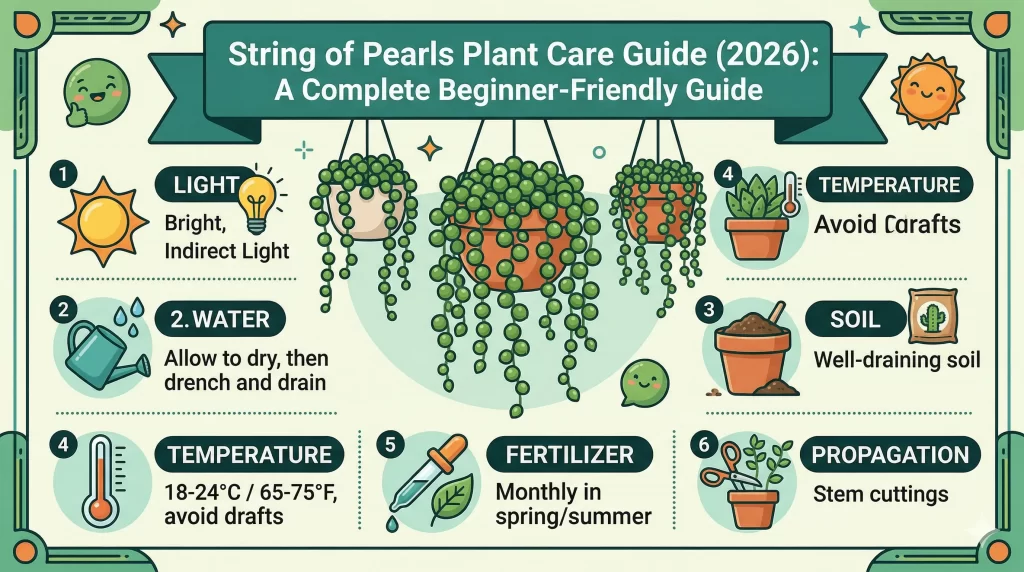

String of Pearls Plant Care Guide (2026): A Complete Beginner-Friendly Guide
The String of Pearls plant is one of the most beautiful trailing succulents you can grow indoors, but it often gets a reputation for being difficult. In reality, it is easy to maintain once you understand its basic needs. This guide is written for beginners and indoor plant lovers who want a practical, clear, and reliable care guide they can actually use.
Quick Summary
| Plant Name | String of Pearls |
|---|---|
| Botanical Name | Senecio rowleyanus |
| Best For | Beginners, indoor plant lovers, hanging planters |
| Light | Bright, indirect sunlight |
| Watering | Once every 10 to 14 days, depending on climate and soil dryness |
| Soil | Well-draining succulent or cactus mix |
| Common Problem | Overwatering and root rot |
| Propagation | Easy through stem cuttings |
| Toxicity | Mildly toxic to pets and humans if ingested |
Most important tip: Do not overwater it. That is the most common reason this plant dies.
What Is the String of Pearls Plant?
String of Pearls is a trailing succulent known for its small, round, bead-like leaves that hang elegantly over the sides of pots and baskets. It is especially popular as an indoor decorative plant because of its unique look and compact growing style.
This plant is native to dry regions of southwest Africa, which explains why it prefers bright light, dry soil, and less frequent watering. Many beginners make the mistake of treating it like a regular leafy houseplant, but it behaves much more like a drought-tolerant succulent.
If you understand that one point early, caring for it becomes much easier.
Who This Guide Is For
This article is designed for:
- Beginners who want to keep their first String of Pearls alive
- Indoor plant owners looking for a low-maintenance hanging succulent
- People whose plant is struggling and want to fix the problem quickly
- Anyone interested in propagation and long-term healthy growth
By the end of this guide, you should know how to care for the plant correctly, avoid the most common mistakes, and feel confident growing it indoors.
Why String of Pearls Is So Popular
There are many indoor plants that look beautiful in a home, but String of Pearls stands out because it offers something different. Instead of broad leaves or upright growth, it produces long, trailing stems lined with round green pearls. This makes it perfect for hanging baskets, shelves, windows, and elevated plant stands.
It also fits well into modern indoor decor because it looks elegant without demanding a lot of space. When cared for properly, it creates a soft, cascading effect that instantly adds character to a room.
However, the same qualities that make it attractive also make it delicate. The stems are thin, the roots are sensitive to excess moisture, and the plant can decline quickly if its environment is not right. That is why a human-first care guide matters more than generic plant advice.
Light Requirements
Light is one of the most important factors for healthy growth. String of Pearls prefers bright, indirect light. It can also handle some gentle direct sunlight, especially in the morning, but harsh afternoon sun can damage the leaves.
| Condition | What Happens |
|---|---|
| Too little light | The pearls become spaced out, the stems stretch, and the plant looks thin |
| Bright, indirect light | The plant stays compact, full, and healthy |
| Too much direct afternoon sun | The pearls can burn, shrivel, or become stressed |
A bright spot near an east-facing or south-facing window usually works well. If the plant looks pale, sparse, or stretched, it is probably asking for more light.
Watering Guide
If there is one thing every String of Pearls owner needs to understand, it is watering. This plant stores moisture in its bead-like leaves, so it does not need frequent watering. In fact, too much water is often fatal.
The best rule is simple: let the soil dry out completely before watering again.
| Season or Condition | Recommended Watering Pattern |
|---|---|
| Warm weather | About once every 10 to 14 days |
| Winter or low-growth period | About once every 2 to 3 weeks |
| Very humid indoor setting | Water less often and check soil first |
Before watering, insert your finger into the soil. If it still feels damp, wait a few more days. If it is dry, water thoroughly and allow excess water to drain out fully.
Signs of overwatering: mushy pearls, transparent-looking leaves, yellowing, stem collapse, or root rot.
Signs of underwatering: wrinkled pearls, dry stems, or a plant that looks visibly deflated.
Overwatering is much more dangerous than underwatering, so when in doubt, wait.
Best Soil and Pot Setup
String of Pearls needs fast-draining soil. Regular potting mix often holds too much moisture, which increases the risk of root rot. A succulent or cactus mix works much better.
For even better drainage, you can improve the mix by adding ingredients such as:
- Perlite
- Coarse sand
- Pumice
The pot is just as important as the soil. Always use a container with drainage holes. Decorative pots without drainage may look attractive, but they can quietly trap water around the roots and kill the plant.
Terracotta pots are often a great option because they allow moisture to evaporate faster than plastic pots.
Temperature and Humidity
This plant prefers mild to warm temperatures and dry air. In most indoor environments, it does very well without any special humidity adjustments.
| Ideal Temperature | 18°C to 28°C |
|---|---|
| Humidity Preference | Low to moderate humidity |
| Avoid | Frost, extreme heat, and overly damp environments |
It does not need misting. In fact, keeping the plant too moist can cause problems rather than help it.
How to Propagate String of Pearls
One of the most rewarding things about this plant is how easy it is to propagate. If your plant is healthy, you can grow new plants from stem cuttings with very little effort.
- Cut a healthy stem about 4 to 6 inches long.
- Remove a few pearls from the lower end of the stem.
- Place the stem gently on top of moist, well-draining soil.
- Lightly press the stem into the surface so it makes contact with the soil.
- Keep it in bright, indirect light.
- Water lightly only when needed while roots begin to form.
Roots often begin to develop within 1 to 2 weeks. Avoid burying the stem too deeply. A light surface placement is often enough for successful propagation.
Common Problems and How to Fix Them
| Problem | Likely Cause | How to Fix It |
|---|---|---|
| Mushy or soft pearls | Overwatering | Stop watering, inspect roots, and repot in dry well-draining soil if needed |
| Wrinkled or shriveled pearls | Underwatering or damaged roots | Check the soil and root health, then adjust watering carefully |
| Long, sparse stems | Insufficient light | Move the plant to a brighter location |
| Sudden overall decline | Root rot | Remove affected roots and propagate healthy stems if necessary |
| Pearls falling off easily | Stress, root issues, or inconsistent care | Stabilize watering, improve light, and avoid moving the plant too often |
Many plant owners assume the solution is more water, but that is often the opposite of what this plant needs. Always inspect the overall growing conditions before reacting too quickly.
Is String of Pearls Toxic?
Yes, String of Pearls is considered mildly toxic if ingested. It can cause irritation for both pets and humans. If you have cats, dogs, or small children, it is best to place the plant in a hanging basket or on a high shelf where it cannot be easily reached.
If safety is a major concern in your home, this is something worth considering before buying the plant.
Practical Care Tips That Help in Real Homes
Many care guides stay too general. In daily life, these practical habits often make the biggest difference:
- Do not water on a fixed schedule without checking the soil first.
- Do not keep the plant in a dark corner just because it looks decorative there.
- Use a pot with proper drainage from the beginning.
- Avoid frequent repositioning, especially once the plant is adjusting well.
- Do not mist the leaves.
- Watch the pearls closely because they reveal stress quickly.
These small decisions often separate a thriving plant from one that slowly declines.
Frequently Asked Questions
How fast does String of Pearls grow?
It grows at a moderate pace in the right conditions, especially during spring and summer when light and warmth are consistent.
Can String of Pearls grow indoors?
Yes. It can do very well indoors as long as it receives enough bright, indirect light and is not overwatered.
Why are my String of Pearls pearls falling off?
This usually points to stress, which may come from overwatering, root issues, sudden temperature shifts, or being moved too often.
Do I need to fertilize it?
Fertilizer is optional. A diluted succulent fertilizer once a month during the growing season is usually enough if you choose to feed it.
Can I grow it in a hanging basket?
Yes. In fact, that is one of the best ways to display it. Hanging baskets allow the stems to trail naturally and show off the plant’s unique appearance.
Final Thoughts
String of Pearls is not a difficult plant once you stop treating it like a regular tropical houseplant. It needs bright light, dry soil between waterings, and a fast-draining potting setup. Those three things matter most.
Most problems happen because the plant is overwatered, placed in poor light, or grown in soil that stays wet too long. If you avoid those mistakes, this plant can become one of the most rewarding and visually striking plants in your home.
For beginners, the goal should not be perfection. It should be understanding the plant’s natural behavior and adjusting your care accordingly. Once you do that, growing String of Pearls becomes far less intimidating and much more enjoyable.
Quick Self-Check Before You Go
- Is your plant getting enough bright light?
- Are you letting the soil dry fully before watering?
- Does your pot have drainage holes?
- Are you watching for mushy or wrinkled pearls?
- Have you avoided treating it like a regular leafy houseplant?
If your answer is yes to most of these, you are already doing better than many first-time growers.