
Quick Summary
| Plant name | Alocasia Polly |
| Best for | Beginners willing to learn and intermediate plant owners |
| Light | Bright indirect light |
| Watering | Water when the top 1 to 2 inches of soil feel dry |
| Humidity | Prefers humidity above 60 percent |
| Main issue | Overwatering, yellow leaves, and low humidity stress |
Alocasia Polly Care Guide: How to Grow a Healthy, Thriving Plant Indoors
If you have ever brought home an Alocasia Polly and watched it struggle within weeks, you are not alone. This plant looks stunning in stores but behaves very differently once it enters a typical indoor environment.
This guide is designed to solve that exact problem.
By the end, you will understand how to keep your plant alive, recognize early warning signs, and create the kind of environment where it actually thrives, not just survives.
What Is Alocasia Polly and Why Is It So Popular?
Alocasia Polly is a striking indoor plant loved for its bold, almost sculptural appearance. Its deep green leaves with bright white veins make it stand out instantly among other houseplants.
But here is the truth many plant owners learn too late.
It is not a beginner proof plant.
Alocasia Polly needs specific conditions, and if those are not met, it reacts quickly through yellowing leaves, drooping, brown edges, or complete leaf loss.
Understanding this early changes everything. Instead of guessing, you can care for the plant based on what it actually needs.
Who This Plant Is Best For
Before diving into care, it is important to be honest about whether this plant fits your lifestyle.
Alocasia Polly is best for:
- Beginners who are willing to observe their plant closely
- Intermediate plant owners
- People who can maintain indoor humidity
- Plant lovers who enjoy dramatic foliage
- Anyone who wants a statement plant for their home
It may not be ideal if:
- You travel often
- Your home is very dry
- You prefer very low maintenance plants
- You often forget to check soil moisture
Knowing this upfront helps you avoid frustration later. Alocasia Polly can be rewarding, but it does ask for attention.
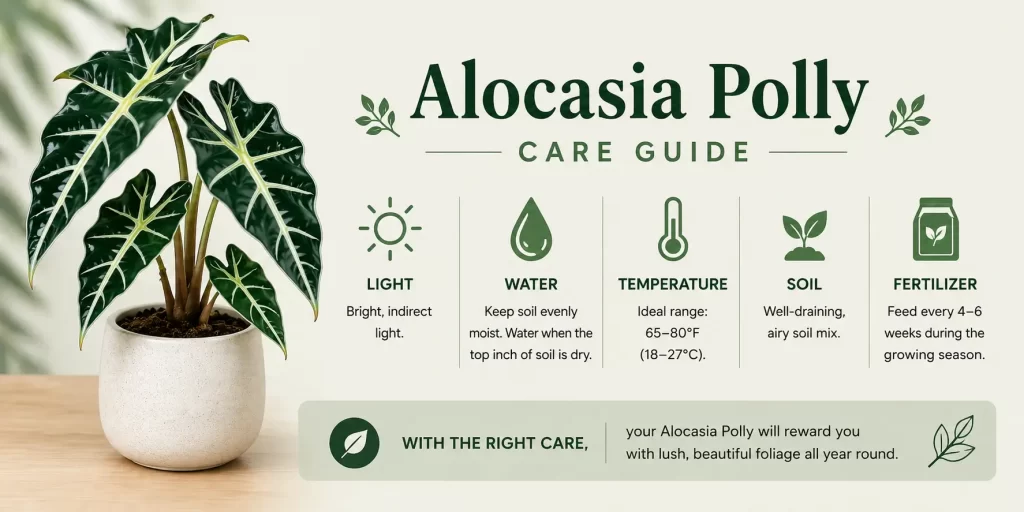
Alocasia Polly Care Requirements
| Care Area | Ideal Condition | What to Avoid |
|---|---|---|
| Light | Bright indirect light | Harsh direct afternoon sun |
| Water | Slightly moist soil | Soggy soil or standing water |
| Humidity | Above 60 percent | Very dry indoor air |
| Soil | Well draining, airy potting mix | Heavy garden soil |
| Temperature | 18 to 27 degrees Celsius | Cold drafts and sudden temperature changes |
Light Requirements: The Foundation of Healthy Growth
Alocasia Polly thrives in bright indirect light. This means the plant should receive plenty of brightness without being exposed to harsh direct sunlight for long periods.
Good light conditions include:
- A spot near an east facing window
- A few feet away from a bright south or west facing window
- A window filtered with a sheer curtain
- A bright room where natural light is strong but not harsh
Direct sunlight can scorch the leaves and leave brown patches that do not recover. On the other hand, too little light can cause weak stems, smaller leaves, slow growth, and increased risk of overwatering because the soil stays wet for longer.
A simple test is this: if you can comfortably read a book in that spot during the day without switching on a light, it is likely bright enough for your Alocasia Polly.
Watering: The Most Common Mistake
If there is one area where most people go wrong, it is watering.
Alocasia Polly likes soil that is lightly moist but never soggy. This balance is important because the roots need both moisture and oxygen. When the soil stays wet for too long, the roots can suffocate and begin to rot.
Follow this simple watering method:
- Check the top 1 to 2 inches of soil with your finger
- Water only when that top layer feels dry
- Water thoroughly until excess water drains out
- Empty the saucer after watering
- Never let the pot sit in standing water
Signs of overwatering include:
- Yellow leaves
- Mushy stems
- Wet soil that does not dry
- A sour or rotten smell from the pot
- Soft black or brown roots
Signs of underwatering include:
- Drooping leaves
- Dry soil pulling away from the pot
- Crispy brown edges
- Leaves curling inward
A useful rule from experience is this: it is usually safer to slightly underwater Alocasia Polly than to overwater it. The plant can recover from short dry periods more easily than from root rot.
Humidity and Temperature: The Game Changer
Humidity is one of the biggest reasons Alocasia Polly struggles indoors.
This plant prefers humidity levels above 60 percent. In many homes, especially air conditioned or heated rooms, humidity can be much lower. When the air is too dry, the plant may develop brown edges, curling leaves, and slow growth.
Ways to increase humidity include:
- Using a small humidifier near the plant
- Grouping plants together
- Placing the plant in a naturally humid room with good light
- Using a pebble tray with water below the pot
- Avoiding placement near heaters, vents, or air conditioners
The ideal temperature range is 18 to 27 degrees Celsius. Keep the plant away from cold drafts, open windows during cold weather, and sudden temperature changes.
Alocasia Polly likes consistency. Stable warmth and good humidity will do more for this plant than constant moving and experimenting.
Soil and Potting Mix: What Actually Works
Regular garden soil is not suitable for Alocasia Polly. It is usually too dense, holds too much water, and can suffocate the roots indoors.
You need a mix that drains well but still holds enough moisture for the plant to use.
A good Alocasia Polly soil mix can include:
- High quality indoor potting mix
- Perlite for drainage
- Orchid bark or coco chips for airflow
- A small amount of coco coir if your home is very dry
This type of mix allows water to move through the pot while keeping the roots lightly moist. It also helps prevent the compact, wet conditions that lead to root rot.
Always use a pot with drainage holes. A beautiful decorative pot is fine, but place the plant in a nursery pot inside it so excess water can drain properly.
Why Your Alocasia Polly Leaves Turn Yellow
Yellow leaves are one of the most common Alocasia Polly problems, and the cause is not always the same.
Possible reasons include:
- Overwatering
- Poor drainage
- Low light
- Sudden changes in temperature
- Natural aging of older leaves
- Stress after repotting or moving
Here is how to troubleshoot yellow leaves:
- Check the soil moisture first.
- If the soil is wet for many days, inspect the drainage.
- If the pot has no drainage holes, repot into a better container.
- If several leaves are yellowing at once, check the roots.
- If only one older leaf is yellow, it may be normal aging.
One yellow leaf is not always a problem. Multiple yellow leaves at the same time usually mean the plant is under stress.
Brown Edges and Crispy Leaves
Brown edges usually point to moisture stress. This can happen from dry air, underwatering, inconsistent watering, or mineral buildup from tap water.
To reduce brown edges:
- Increase humidity around the plant
- Water consistently when the top soil dries
- Avoid letting the soil fully dry for long periods
- Use filtered water if your tap water is hard
- Keep the plant away from hot or cold air vents
Damaged brown edges will not turn green again, but better care can help new leaves grow healthier.
Drooping Leaves: Should You Be Worried?
Drooping leaves can be alarming, but it does not always mean your plant is dying.
Common causes of drooping include:
- Underwatering
- Overwatering
- Low humidity
- Shock after repotting
- Sudden temperature changes
Do not water immediately just because the plant is drooping. First, check the soil. If the soil is dry, water it thoroughly. If the soil is wet, wait and check for root issues.
This one step can save your plant from being overwatered by mistake.
Dormancy: The Phase That Confuses Everyone
Alocasia Polly can go dormant, especially during cooler months or when indoor conditions are less favorable.
During dormancy, the plant may:
- Stop producing new leaves
- Lose one or more leaves
- Look less full than usual
- Need less water
This does not always mean the plant is dead. The underground structure may still be alive even if the leaves decline.
During dormancy:
- Reduce watering
- Do not fertilize heavily
- Keep the plant warm
- Maintain stable light and humidity
- Be patient with new growth
Once conditions improve, the plant may begin growing again.
Fertilizing Alocasia Polly
Alocasia Polly benefits from light feeding during the active growing season. This is usually spring and summer, when the plant is producing new leaves.
Use a balanced liquid houseplant fertilizer diluted to half strength. Feed once every 4 to 6 weeks during active growth.
Avoid fertilizing when:
- The plant is dormant
- The soil is very dry
- The plant is stressed or recently repotted
- The roots may be damaged
More fertilizer does not mean faster growth. Too much fertilizer can burn the roots and damage the plant.
Repotting Alocasia Polly
Alocasia Polly does not need frequent repotting. Repot only when necessary.
Signs it may need repotting include:
- Roots growing out of drainage holes
- Soil drying much faster than usual
- The plant becoming unstable in the pot
- Poor soil quality or compacted mix
When repotting, choose a pot only slightly larger than the current one. A pot that is too large can hold excess moisture and increase the risk of root rot.
After repotting, give the plant stable light, warmth, and humidity. Some temporary drooping is normal after repotting.
Is Alocasia Polly Toxic?
Yes, Alocasia Polly is considered toxic if ingested. It should be kept away from pets and small children.
The plant can cause irritation if chewed or eaten. Place it somewhere safe, especially if you have curious cats, dogs, or toddlers at home.
Common Mistakes to Avoid
| Mistake | Why It Hurts the Plant | Better Approach |
|---|---|---|
| Watering on a fixed schedule | Soil may still be wet | Check soil before watering |
| Using heavy soil | Roots can suffocate | Use an airy, well draining mix |
| Keeping it in low light | Growth becomes weak | Provide bright indirect light |
| Ignoring humidity | Leaves may turn crispy | Use a humidifier or group plants |
| Moving it too often | Plant may become stressed | Keep conditions stable |
A Simple Alocasia Polly Care Checklist
- Place it in bright indirect light
- Water when the top 1 to 2 inches of soil feel dry
- Use a pot with drainage holes
- Keep humidity above 60 percent when possible
- Use a loose, well draining soil mix
- Keep the temperature warm and stable
- Reduce watering during dormancy
- Watch for yellow leaves, brown edges, and drooping
Final Thoughts: What Most People Learn Too Late
Alocasia Polly is not difficult because it is fragile. It is difficult because it is specific.
Once you understand its needs and stop treating it like a generic houseplant, it becomes much easier to manage.
If you pay attention to light, watering, humidity, and soil quality, you will notice healthier leaves and steadier growth over time.
This plant rewards observation. The more you learn to read its signals, the better you will become at caring for it.
Quick Self Check Before You Leave
- Do I know when to water instead of guessing?
- Is my plant getting enough bright indirect light?
- Can I improve humidity in my space?
- Is my soil mix draining properly?
- Am I watching the plant instead of following a strict schedule?
If you can answer these confidently, you are already ahead of most plant owners.