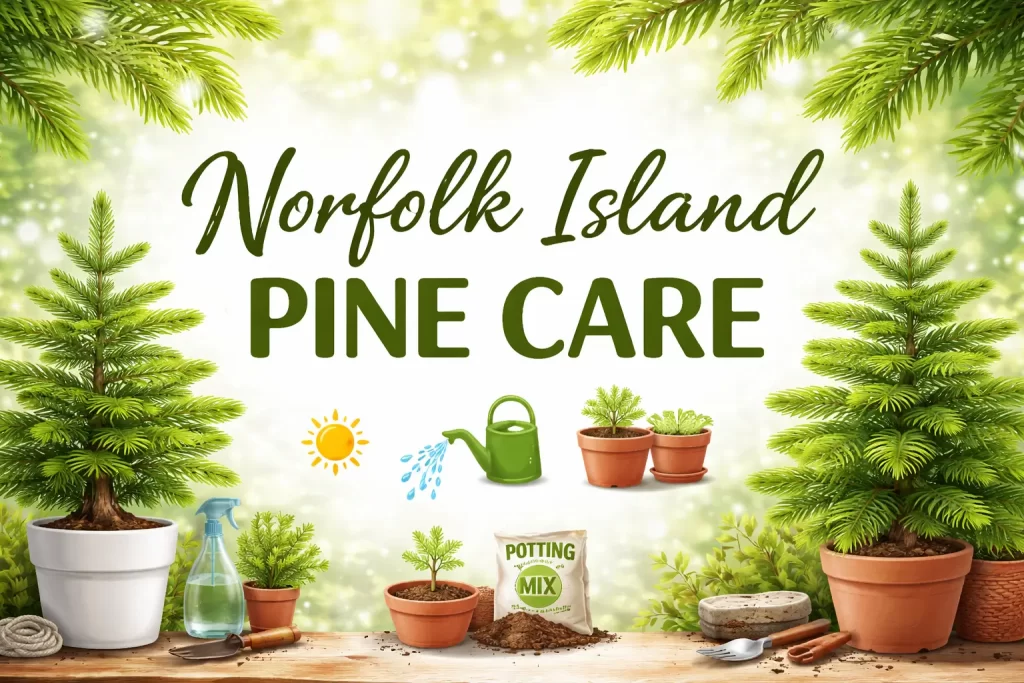

Norfolk Island Pine Care Guide (2026)
Complete Indoor Growing, Problems, and Expert Tips
Quick Summary
| Plant type | Not a true pine, but a tropical evergreen commonly grown indoors |
| Best light | Bright, indirect light |
| Main challenge | Dry indoor air and overwatering |
| Growth speed | Slow indoors |
| Best for | Plant owners who can provide stable care and good humidity |
What Is Norfolk Island Pine?
The Norfolk Island pine, scientifically known as Araucaria heterophylla, is a soft-needled evergreen that is often grown indoors as a decorative plant. Despite its name, it is not a true pine tree.
It is native to Norfolk Island, where it grows as a tall outdoor tree that can reach more than 60 meters. Indoors, it stays much smaller and is valued for its neat shape, layered branches, and calm, elegant look.
Why People Love It
- Symmetrical, tiered branches
- Soft needles that are pleasant to touch
- Popular as a living Christmas tree
- Works well in modern, minimal, and cozy interiors
Who This Guide Is For
This guide is written for beginners, indoor plant owners, and anyone who wants a clear and reliable care plan for Norfolk Island pine.
By the end of this article, you should know how to care for the plant, avoid common mistakes, and fix the issues that usually cause browning, drooping, or needle drop.
Light Requirements
Norfolk Island pine grows best in bright, indirect light. It likes a bright room but usually does not enjoy harsh afternoon sun.
| What Works Best | What to Avoid |
|---|---|
| East-facing window | Strong afternoon sun |
| North-facing bright room | Dark corners |
| Filtered sunlight | Long-term low light conditions |
If your plant starts leaning to one side, that usually means it is reaching for light. Rotate the pot every week or two to help it grow evenly.
Watering Guide
Watering is the area where most owners run into trouble. Norfolk Island pine likes lightly moist soil, but it does not want to sit in wet conditions for long periods.
How to Water Correctly
- Check the top inch of soil before watering
- Water when that top layer feels dry
- Let excess water drain fully
- Never leave the pot standing in water
Common Watering Signs
| Symptom | Likely Cause |
|---|---|
| Yellowing needles | Overwatering or poor drainage |
| Brown, crispy tips | Underwatering, dry air, or both |
| Drooping growth | Inconsistent watering or stress |
A simple habit works better than a fixed schedule: check the soil with your finger before every watering. That one step can prevent many common problems.
Humidity Needs
Norfolk Island pine comes from a humid island environment, so dry indoor air is often the biggest reason it starts to look unhealthy. This matters even more in winter when heaters dry out the room.
How to Improve Humidity
- Use a room humidifier
- Place the plant near other houseplants
- Keep it away from heaters and direct hot air
- Use a water tray nearby if needed
If your plant looks fine in one season and suddenly develops brown tips in winter, low humidity is often the reason.
Temperature Preferences
This plant prefers stable indoor temperatures and does not respond well to sudden changes.
| Ideal range | 16°C to 24°C |
| Avoid | Cold drafts, radiators, heating vents, and strong air conditioning |
| Important note | Even mild temperature stress can lead to needle drop |
Soil and Potting
Norfolk Island pine grows best in a well-draining potting mix. A slightly acidic mix is usually a good fit. Good drainage is more important than using a very specific soil blend.
Repotting Tips
- Repot only when the plant becomes root-bound
- Most indoor plants need repotting every 2 to 3 years
- Choose a pot with drainage holes
- Avoid oversized pots because they hold too much moisture
Growth and Size Expectations
Indoors, Norfolk Island pine usually grows slowly. Over time, it can still become an impressive indoor tree, often reaching 3 to 8 feet depending on the space and care it receives.
One important thing to remember is that this plant does not respond well to heavy pruning. Cutting the top can permanently affect its natural shape.
Common Problems and How to Fix Them
1. Browning Tips
Common causes: low humidity, underwatering, or salt buildup in the soil.
What to do: improve humidity, water more consistently, and occasionally flush the soil with clean water.
2. Yellowing Branches
Common causes: overwatering or poor drainage.
What to do: let the soil dry slightly before watering again and make sure excess water can escape easily.
3. Drooping Branches
Common causes: sudden temperature shifts, watering stress, or poor placement.
What to do: keep the plant in a stable location and avoid frequent changes in routine.
4. Needle Drop
Some needle drop is normal as the plant ages, but heavy shedding usually points to stress. In many homes, the main issue is dry indoor air.
Beginner Mistakes to Avoid
- Watering on a calendar instead of checking the soil
- Keeping it in a dim corner for too long
- Ignoring humidity needs
- Moving it often from one location to another
- Over-fertilizing in an attempt to speed up growth
The best care approach is consistency. This plant usually does better with steady, simple care than with frequent changes.
Seasonal Care Guide
| Season | What to Expect | What to Do |
|---|---|---|
| Winter | Slower growth, drier indoor air | Reduce watering slightly and increase humidity |
| Spring | Fresh growth may begin | Resume regular care and monitor light needs |
| Summer | Most active growing period | Water a bit more often if soil dries faster |
| Autumn | Growth starts slowing down | Prepare for lower humidity and less active watering |
Frequently Asked Questions
Is Norfolk Island pine toxic to pets?
It is generally considered mildly toxic, so it is best to keep it out of reach of cats and dogs.
Can it grow outdoors?
Yes, but only in warm climates that match its natural growing conditions. In cooler regions, it is usually kept indoors.
How fast does it grow?
It grows slowly indoors and much faster outdoors when planted in a suitable climate.
Can I use it as a Christmas tree?
Yes. Many people decorate Norfolk Island pine during the holiday season because of its symmetrical shape and soft foliage.
Final Thoughts
Norfolk Island pine is not the hardest houseplant to grow, but it is not a plant that thrives on neglect. Most problems happen when it is treated like an ordinary indoor plant instead of a tropical evergreen with specific needs.
If you focus on bright indirect light, careful watering, stable temperatures, and better humidity, your plant has a strong chance of staying healthy and attractive for years.
Final Self-Check Before Publishing
- Is the content useful for a beginner? Yes
- Does it solve real problems? Yes
- Is it clear and actionable? Yes
- Would a reader feel more confident after reading? Yes