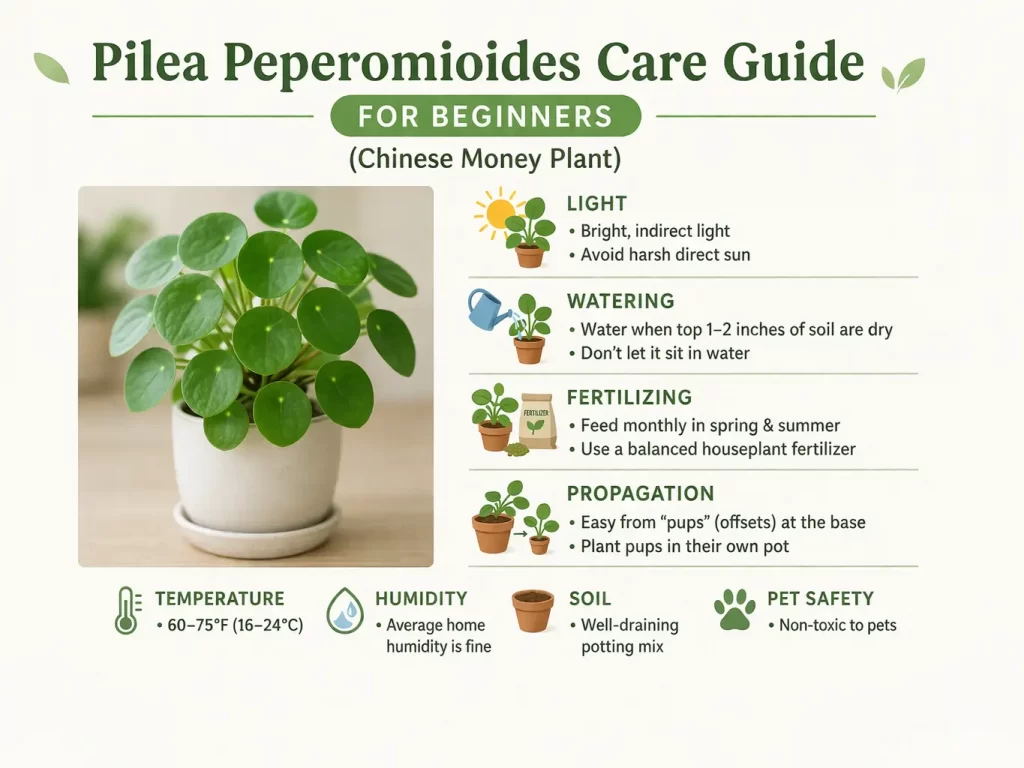

Pilea Peperomioides Care Guide for Beginners (Chinese Money Plant)
Quick Summary: Pilea peperomioides, also known as the Chinese money plant, is an easy to grow indoor plant that thrives in bright indirect light, needs watering only when the soil dries out, and prefers well draining soil. It is popular for its round coin shaped leaves and simple care routine. Most problems come from overwatering or poor lighting, both of which are easy to fix once you understand the basics.
Introduction: Why this plant deserves your attention
If you are looking for a plant that is low maintenance but still looks unique and stylish, Pilea peperomioides is one of the best choices.
It is perfect for beginners because:
- It does not need constant attention
- It grows quickly in the right conditions
- It is easy to propagate and share
I have personally found this plant very forgiving. Even after a few mistakes with watering, it bounced back once I corrected the routine. That is exactly why it is loved by both new and experienced plant owners.
By the end of this guide, you will know exactly how to care for it, fix common issues, and grow a healthy plant with confidence.
What is Pilea Peperomioides
Pilea peperomioides is a small indoor plant known for its flat, round leaves that look like coins. This is why it is often called the Chinese money plant.
Key characteristics:
- Bright green circular leaves
- Upright stem with evenly spaced foliage
- Compact size, perfect for desks and shelves
- Fast growing under the right conditions
It is also considered a lucky plant in many cultures, often associated with prosperity and positive energy.
Who this guide is for
This guide is written specifically for:
- Beginners who just bought their first plant
- People struggling with yellow leaves or slow growth
- Anyone who wants a simple and clear care routine
If you want practical advice instead of complicated plant science, you are in the right place.
Quick Care Table
| Care Factor | What to Do |
|---|---|
| Light | Place in bright indirect light near a window |
| Water | Water only when the top 1 to 2 inches of soil feels dry |
| Soil | Use well draining potting mix with perlite or sand |
| Pot | Choose a pot with drainage holes |
| Temperature | Keep in a normal indoor range of 18 to 24 degrees Celsius |
| Feeding | Use a balanced liquid fertilizer once a month in growing season |
Light Requirements: The most important factor
Light is the number one factor that affects your plant’s health.
Best conditions:
- Bright indirect sunlight
- Near a window with filtered light
- East or north facing windows work best
Avoid:
- Harsh direct sunlight for long hours
- Very dark corners
From experience, if your plant starts leaning in one direction, it is chasing light. Rotate the pot every week to keep it balanced and symmetrical.
Watering: Where most people go wrong
Overwatering is the most common reason Pilea plants struggle.
Simple rule: Water only when the top 1 to 2 inches of soil feels dry.
How to check:
- Insert your finger into the soil
- If it feels dry, water it
- If still moist, wait a few days
Signs of overwatering:
- Yellow leaves
- Mushy stems
- Drooping plant
Signs of underwatering:
- Leaves curling inward
- Dry soil pulling away from pot edges
A routine I follow is to water thoroughly, then let excess water drain out completely. Never let the plant sit in standing water.
Soil and Pot: The foundation of healthy growth
Your plant’s roots need air as much as they need water.
Best soil mix:
- Regular potting soil
- Mixed with perlite or sand for drainage
Pot requirements:
- Always use a pot with drainage holes
- Avoid decorative pots without drainage unless using an inner pot
If water cannot escape, roots can rot quickly. This is one mistake many beginners make.
Temperature and Humidity
Pilea peperomioides prefers a comfortable indoor environment.
Ideal conditions:
- Temperature between 18 to 24 degrees Celsius
- Normal indoor humidity is fine
Avoid:
- Cold drafts
- Sudden temperature changes
- Placing it near AC vents or heaters
It is not a high maintenance plant, which makes it perfect for most homes.
Fertilizer: Do you really need it
You do not need to overcomplicate feeding your plant.
Basic approach:
- Use a balanced liquid fertilizer
- Feed once a month during growing season
- Skip feeding in winter
From experience, too much fertilizer can do more harm than good. Keep it simple.
Common Problems and How to Fix Them
| Problem | Likely Cause | What to Do |
|---|---|---|
| Yellow leaves | Overwatering, poor drainage, low light | Reduce watering, improve drainage, move to a brighter spot |
| Drooping leaves | Too much water, too little water, sudden changes | Check soil moisture and keep care routine consistent |
| Leggy or sparse growth | Not enough light | Place closer to a bright window and rotate weekly |
| Curling leaves | Underwatering or too much direct sunlight | Check watering habits and reduce harsh sun exposure |
How to Propagate Pilea Peperomioides
One of the best things about this plant is how easy it is to propagate.
You will notice small baby plants growing around the base. These are called pups.
Follow these steps:
- Wait until the pup is a few inches tall
- Gently remove it with some roots attached
- Place it in water or soil
- Keep it in bright indirect light
Within a few weeks, it will grow into a new plant.
This is why many people call it a sharing plant.
Simple Care Routine You Can Follow
- Place near a bright window
- Water when soil is dry
- Use well draining soil
- Rotate weekly
- Feed monthly in growing season
That is enough to keep your plant healthy.
Frequently Asked Questions
Can Pilea grow in low light?
It can survive in low light but growth will slow down and leaves may become smaller.
How often should I water it?
Usually once a week, but always check the soil before watering.
Is it safe for pets?
Pilea peperomioides is generally considered non toxic, but it is still best to keep plants out of reach.
Why are my leaves curling?
This can happen due to underwatering or too much direct sunlight.
Final Thoughts: What really matters
Caring for Pilea peperomioides is not complicated once you understand the basics.
Focus on:
- Proper light
- Controlled watering
- Good drainage
Everything else is secondary.
If you follow these simple steps, your plant will not just survive, it will thrive.
Final Self Check
Before publishing, ask yourself:
- Does this guide actually help a beginner succeed?
- Is the advice clear and actionable?
- Would someone thank me after reading this?
If the answer is yes, you have created content that both people and Google will value.