
Echeveria Succulent Care Guide
A practical, beginner-friendly guide to help you grow healthy Echeveria succulents indoors or outdoors.
Quick Summary
- Echeveria is a beautiful rosette-shaped succulent that is easy to care for.
- It needs bright light, well-draining soil, and careful watering.
- Overwatering is the most common reason Echeveria plants die.
- Water only when the soil is completely dry.
- It is a great plant for beginners, balcony gardeners, and indoor plant lovers.
- Echeveria can be propagated through leaves or offsets.
- Most common problems are linked to watering, poor light, or bad soil drainage.
What This Guide Will Help You Do
If you have ever bought a beautiful Echeveria succulent and watched it slowly lose its shape, color, or leaves, this guide is for you.
By the end of this article, you will understand how to care for Echeveria without confusion. You will know how much light it needs, when to water it, what soil to use, how to fix common problems, and how to help it grow beautifully over time.
This guide is written for beginners, casual plant owners, indoor gardeners, and anyone who wants simple, practical Echeveria care advice that actually helps.
What is an Echeveria Succulent?
Echeveria is a popular group of succulent plants known for their attractive rose-like shape. These plants usually grow in compact rosettes and come in many beautiful colors, including green, blue, pink, purple, and grey.
Echeveria belongs to the Crassulaceae family and is native to Mexico and parts of Central America. Like many succulents, it stores water in its thick leaves. This is why it can survive dry conditions better than many regular houseplants.
Why People Love Echeveria
- It has a beautiful natural rosette shape.
- It looks great in small pots, bowls, and balcony planters.
- It needs less water than most houseplants.
- It is beginner-friendly when basic care rules are followed.
- It can be propagated easily from leaves or offsets.
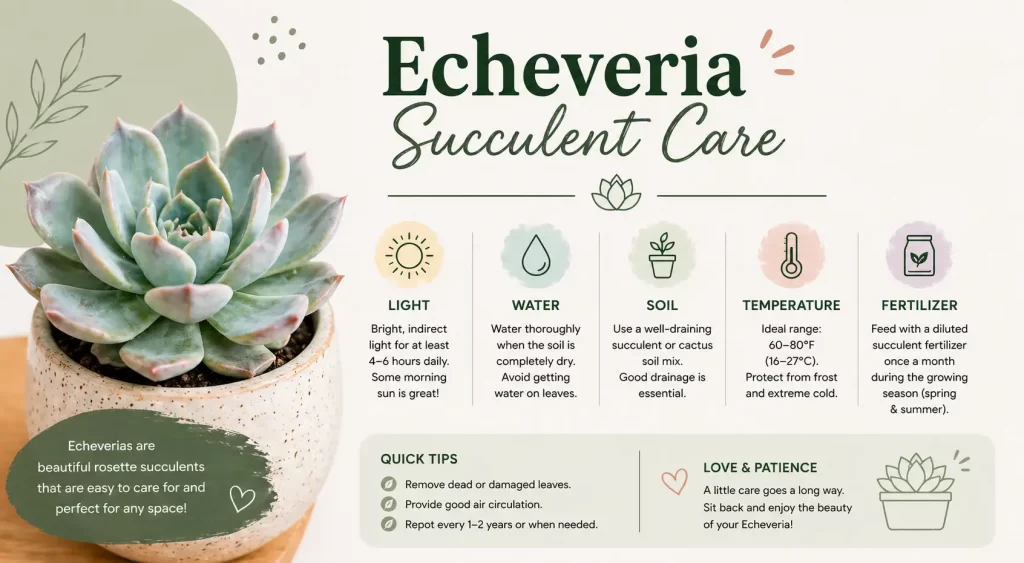
Echeveria Care Basics
If you are new to Echeveria care, start with the basics. Most care problems happen when people treat Echeveria like a normal leafy houseplant. It is not one. It prefers dry soil, strong light, and good airflow.
| Care Factor | Best Practice |
|---|---|
| Light | Bright indirect light or gentle morning sunlight |
| Watering | Water only when the soil is fully dry |
| Soil | Use cactus or succulent soil mix |
| Pot | Choose a pot with drainage holes |
| Temperature | Keep in mild to warm conditions |
| Main Risk | Overwatering and root rot |
How Much Light Does Echeveria Need?
Echeveria needs plenty of light to stay healthy, colorful, and compact. A healthy Echeveria usually has a tight rosette shape. If the plant starts stretching upward or the leaves become more spaced out, it usually means the plant is not getting enough light.
Place your Echeveria near a bright window, balcony, patio, or any spot where it receives strong but not harsh light. Morning sunlight is usually better than intense afternoon sunlight, especially in hot climates.
Signs Your Echeveria Needs More Light
- The plant becomes tall and stretched.
- The rosette loses its compact shape.
- The leaves become pale or dull.
- Growth becomes weak and uneven.
Signs Your Echeveria is Getting Too Much Harsh Sun
- Brown spots on leaves.
- Dry, crispy leaf edges.
- Faded or sunburned patches.
The best approach is balance. Give your Echeveria bright light, but protect it from extreme heat and harsh direct sun during the hottest part of the day.
How Often Should You Water Echeveria?
Watering is the most important part of Echeveria care. The biggest mistake beginners make is watering too often. Echeveria does not like constantly wet soil. Its roots need time to dry between watering sessions.
A good rule is simple: water only when the soil is completely dry. Depending on your climate, pot size, and season, this may be every 10 to 14 days. In winter, it may need even less water.
How to Water Correctly
- Check the soil before watering.
- Water deeply until excess water drains out.
- Do not let the pot sit in standing water.
- Avoid pouring water directly into the center of the rosette.
- Let the soil dry fully before watering again.
Signs of Overwatering
- Soft or mushy leaves.
- Yellow or translucent leaves.
- Leaves falling off easily.
- Black or rotten stem base.
- Bad smell from the soil.
Signs of Underwatering
- Wrinkled leaves.
- Dry and thin-looking leaves.
- Slow growth.
If you are unsure whether to water or wait, it is usually safer to wait. Echeveria can handle dryness better than soggy soil.
Best Soil for Echeveria Succulent
Echeveria needs soil that drains quickly. Regular garden soil or heavy potting soil can hold too much moisture, which increases the risk of root rot.
The best option is a cactus or succulent mix. These mixes are designed to drain faster than normal soil. You can also improve drainage by adding perlite, pumice, coarse sand, or small gravel.
Simple DIY Soil Mix
| Ingredient | Suggested Amount |
|---|---|
| Potting soil | 50% |
| Perlite or pumice | 25% |
| Coarse sand | 25% |
The goal is to create a mix that holds a little moisture but does not stay wet for too long.
Best Pot for Echeveria
The right pot can make a big difference. Always choose a pot with drainage holes. Without drainage, water collects at the bottom and can damage the roots.
Terracotta pots are a great choice because they allow moisture to evaporate faster. This helps reduce the risk of overwatering, especially for beginners.
Good Pot Choices
- Terracotta pots with drainage holes.
- Ceramic pots with proper drainage.
- Small containers that match the plant size.
Avoid These
- Pots without drainage holes.
- Oversized pots that hold too much soil moisture.
- Decorative containers where water gets trapped.
Temperature and Humidity Needs
Echeveria prefers mild to warm temperatures. It does not like frost, freezing conditions, or very high humidity. In most homes and balconies, it grows well if the soil stays dry and the plant gets enough light.
If you live in a hot climate, protect the plant from harsh afternoon sun. If you live in a cold climate, keep it away from frost and cold drafts.
How to Propagate Echeveria
One of the best things about Echeveria is that it can be propagated easily. You can grow new plants from healthy leaves or small baby plants called offsets.
Leaf Propagation Method
- Choose a healthy, mature leaf.
- Gently twist and remove the leaf from the stem.
- Let the leaf dry for 2 to 3 days so the end can callus.
- Place the leaf on top of dry succulent soil.
- Keep it in bright indirect light.
- Mist lightly only when needed.
- Wait for roots and a baby plant to appear.
Offset Propagation Method
Offsets are small baby plants that grow near the base of the mother plant. Once they are big enough, you can gently separate them and plant them in their own pot.
This method is usually faster and easier than leaf propagation.
Common Echeveria Problems and Solutions
Most Echeveria problems can be fixed if you catch them early. The key is to observe the leaves, soil, and shape of the plant.
| Problem | Likely Cause | Solution |
|---|---|---|
| Leaves falling off | Overwatering or sudden stress | Reduce watering and check soil drainage |
| Mushy leaves | Too much water | Stop watering and inspect roots |
| Plant stretching | Not enough light | Move to a brighter location |
| Brown patches | Sunburn or damage | Protect from harsh direct sun |
| Wrinkled leaves | Underwatering | Water deeply after soil dries |
| White cotton-like pests | Mealybugs | Clean with rubbing alcohol on cotton |
Why is My Echeveria Dying?
If your Echeveria is dying, the most likely causes are overwatering, poor drainage, or lack of light. These three issues cause most beginner problems.
First, check the soil. If it feels wet for many days, the soil is holding too much moisture. Next, check the leaves. Mushy leaves usually mean overwatering. Stretched growth usually means low light.
To save the plant, remove damaged leaves, stop watering for a while, move it to brighter light, and repot it in fresh dry succulent soil if needed.
Indoor vs Outdoor Echeveria Care
Growing Echeveria Indoors
Indoor Echeveria needs a bright window. A dark room is not suitable. If the plant does not receive enough light, it will stretch and lose its compact rosette shape.
- Place it near a bright window.
- Rotate the pot every few days for even growth.
- Do not overwater because indoor soil dries slower.
- Keep it away from bathrooms or very humid rooms.
Growing Echeveria Outdoors
Outdoor Echeveria can grow beautifully on balconies, patios, and garden shelves. Just protect it from heavy rain and harsh afternoon sun.
- Give it morning sunlight if possible.
- Protect it from long rainy periods.
- Use pots with drainage holes.
- Move it under shade during extreme heat.
Popular Echeveria Varieties
There are many types of Echeveria, and each has its own color, leaf shape, and growth pattern. However, most varieties need similar care.
| Variety | Notable Feature |
|---|---|
| Echeveria Elegans | Soft green-blue rosette, often called Mexican Snowball |
| Echeveria Agavoides | Pointed leaves with red edges |
| Echeveria Lola | Pastel rosette with elegant symmetry |
| Echeveria Black Prince | Dark purple to almost black leaves |
Fertilizing Echeveria
Echeveria does not need heavy feeding. Too much fertilizer can cause weak growth. If you want to fertilize, use a diluted succulent fertilizer during the active growing season.
Feed lightly once a month during spring or summer. Avoid fertilizing during winter when growth naturally slows down.
Seasonal Care Tips
Spring and Summer
- This is the active growing season.
- Water when soil dries completely.
- Provide bright light.
- Fertilize lightly if needed.
Autumn and Winter
- Growth slows down.
- Water less often.
- Protect from cold and frost.
- Avoid fertilizing during dormancy.
Beginner Care Checklist
- Keep your Echeveria in bright light.
- Water only when the soil is fully dry.
- Use fast-draining succulent soil.
- Choose a pot with drainage holes.
- Avoid letting water sit in the rosette.
- Protect from frost and heavy rain.
- Check regularly for pests.
- Do not over-fertilize.
FAQs About Echeveria Succulent
How often should I water Echeveria?
Water your Echeveria only when the soil is completely dry. For many homes, this means every 10 to 14 days, but it depends on climate, pot size, and season.
Can Echeveria grow indoors?
Yes, Echeveria can grow indoors if it receives enough bright light. A sunny window is usually the best indoor location.
Why are my Echeveria leaves falling off?
Leaves often fall because of overwatering, sudden temperature changes, or stress. Check the soil first. If it is wet and the leaves are soft, reduce watering immediately.
Does Echeveria need direct sunlight?
Echeveria enjoys bright light and gentle direct sun, especially morning sunlight. However, very harsh afternoon sun can burn the leaves.
Is Echeveria good for beginners?
Yes, Echeveria is good for beginners as long as you avoid overwatering and provide enough light.
Can I propagate Echeveria from a leaf?
Yes, Echeveria can be propagated from healthy leaves. Let the leaf callus before placing it on soil.
Final Thoughts
Echeveria is a beautiful and rewarding succulent, but it needs the right kind of care. The most important thing to remember is that it prefers dry soil, bright light, and good drainage.
If your plant is struggling, do not panic. Start by checking the basics: light, water, soil, and pot drainage. In many cases, fixing just one of these can help your Echeveria recover.
Once you understand its needs, Echeveria becomes one of the easiest and most satisfying succulents to grow.