
Monstera Adansonii Care Guide for Beginners (Swiss Cheese Vine)
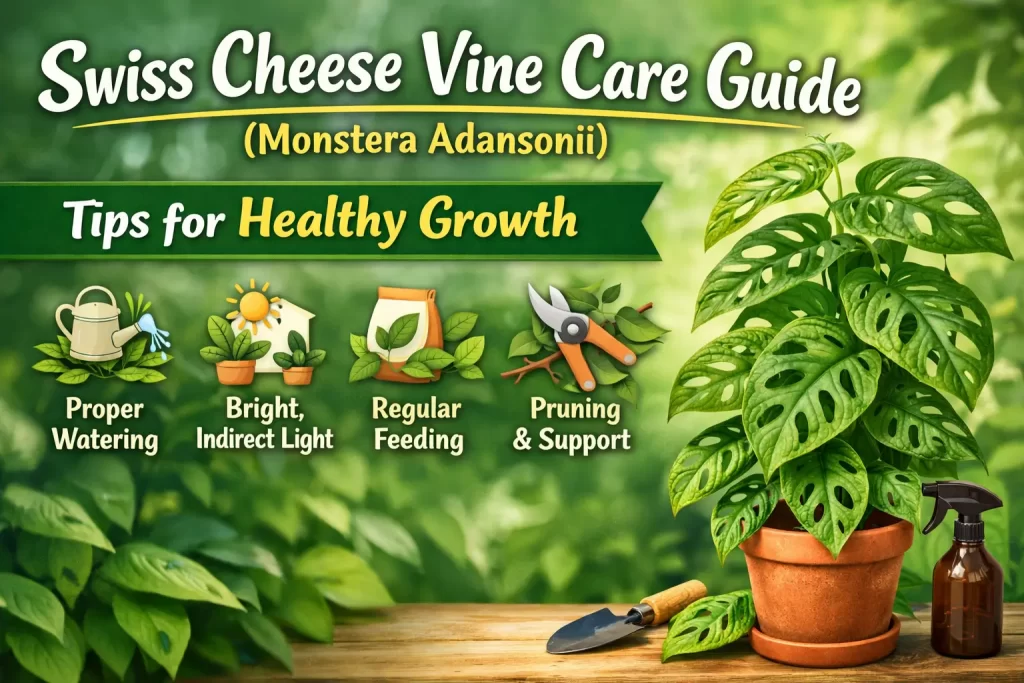
Monstera adansonii, also known as the Swiss cheese vine, is one of the most popular indoor plants for good reason. It has eye-catching leaves, grows quickly in the right conditions, and is beginner-friendly once you understand the basics. This guide will help you care for it properly, avoid common mistakes, and keep it healthy indoors.
Quick Summary
| Plant type | Tropical indoor vine |
|---|---|
| Light | Bright, indirect sunlight |
| Water | When the top 2 to 3 inches of soil are dry |
| Soil | Well-draining, airy mix |
| Growth | Fast-growing climber or trailing plant |
| Difficulty | Easy to moderate |
| Common issues | Yellow leaves, drooping, brown edges, leaves without holes |
What This Guide Will Help You Do
If you are searching for Monstera adansonii care, you are probably trying to do one of three things: keep your plant healthy, fix a problem, or help it grow faster. This guide is written for beginners and intermediate plant owners who want practical, clear advice without fluff.
By the end of this article, you will know how to water it, where to place it, what soil works best, how to solve common problems, and how to propagate it successfully.
What Is Monstera Adansonii?
Monstera adansonii is a tropical vining plant known for its distinctive leaves with natural holes. These holes are what give it the nickname Swiss cheese vine. Compared with Monstera deliciosa, this variety has smaller leaves and a more flexible, vining growth habit.
It can be grown in several ways indoors:
- Trailing from a hanging basket
- Climbing a moss pole or support
- Growing in a pot on a shelf or stand
Its unique appearance makes it popular, but its easy-going nature is what makes people keep it.
Why Monstera Adansonii Is Great for Beginners
This plant is a strong choice for beginners because it adapts well to indoor conditions and usually gives visible signs when something is wrong. It does not need constant attention, but it does reward consistent care.
- It grows relatively fast in good light
- It is easy to propagate
- It works as both a climbing and trailing plant
- It has a bold tropical look without being high-maintenance
The most common problems come from overwatering, poor drainage, or placing it in the wrong light.
Light Requirements
Light is one of the most important factors in keeping this plant healthy. Monstera adansonii does best in bright, indirect light. This means it should be near a window where it gets plenty of brightness without harsh direct sun hitting the leaves for long periods.
Best lighting conditions
- Bright room with filtered sunlight
- Near an east-facing window
- Near a south or west window with a sheer curtain
What to avoid
- Deep shade or very low light
- Strong afternoon sun directly on the leaves
If your plant is getting enough light, you are more likely to see healthy growth and more fenestrations, which are the holes in the leaves. If the plant becomes leggy or the leaves stay small and solid, low light is often the reason.
Watering Guide
Overwatering is the biggest reason Monstera adansonii struggles indoors. The safest approach is to water only when the top 2 to 3 inches of soil feel dry. Do not follow a strict calendar if your home conditions change with temperature, light, or season.
How to water correctly
- Check the soil with your finger before watering
- Water thoroughly until excess water drains out
- Do not let the pot sit in standing water
| Problem | Likely cause | What to do |
|---|---|---|
| Yellow leaves | Overwatering | Let the soil dry more between waterings and check drainage |
| Drooping leaves | Too much or too little water | Check soil moisture before deciding what to do next |
| Crispy edges | Underwatering or dry air | Water more consistently and improve humidity |
A simple moisture check is better than guessing. Once you learn how quickly your soil dries, watering becomes much easier.
Best Soil and Pot Setup
Monstera adansonii likes soil that drains well and allows air to reach the roots. Heavy soil that stays wet too long can lead to root rot. A loose, airy mix is a much better choice.
Good soil mix components
- Potting soil for base structure
- Perlite for drainage
- Orchid bark or similar chunky material for airflow
A pot with drainage holes is essential. Decorative pots without drainage often create problems because water collects at the bottom and keeps the roots too wet.
If the soil stays wet for many days after watering, it is likely too dense or the pot is too large for the plant.
Humidity and Temperature
Because it is a tropical plant, Monstera adansonii prefers warm temperatures and moderate to higher humidity. It can still grow in average indoor conditions, but dry air may slow growth and cause brown edges on leaves.
Ideal conditions
- Temperature between 18°C and 30°C
- Moderate to high humidity
- Protection from cold drafts and sudden temperature changes
Ways to improve humidity
- Group plants together
- Use a pebble tray
- Place it in naturally more humid rooms with good light
- Use a humidifier if needed
How to Make It Grow Faster and Fuller
If your Monstera adansonii looks sparse or slow, the solution is usually a mix of better light, proper feeding, and thoughtful pruning.
For faster growth
- Give it brighter indirect light
- Use a balanced fertilizer during the growing season
- Keep watering consistent
- Repot if it becomes root-bound
For a fuller look
- Trim leggy vines
- Propagate healthy cuttings
- Plant propagated cuttings back into the same pot
- Train the plant to climb for stronger upward growth
When this plant climbs, it often produces larger leaves and can look more mature over time.
Common Problems and How to Fix Them
1. Yellow Leaves
Yellow leaves usually point to overwatering. If the soil stays wet too long, roots cannot breathe properly.
Fix: Let the soil dry more between waterings, improve drainage, and check that the pot is not sitting in water.
2. Leaves Without Holes
If new leaves are small and lack fenestrations, the plant may not be getting enough light, or it may still be immature.
Fix: Move it to a brighter location with indirect light and give it time to mature.
3. Drooping Plant
Drooping can happen from both underwatering and overwatering, which is why checking soil moisture matters more than guessing.
Fix: Feel the soil first. If it is bone dry, water thoroughly. If it is wet, wait and improve airflow or drainage.
4. Brown Leaf Edges
Brown edges are often caused by dry air, inconsistent watering, or salt buildup from fertilizer.
Fix: Increase humidity, water more consistently, and occasionally flush the soil with plain water.
5. Slow Growth
Slow growth usually comes from low light, cool temperatures, or a lack of nutrients during the growing season.
Fix: Improve light, keep the plant warm, and feed lightly during active growth.
Propagation Guide
Propagating Monstera adansonii is one of the easiest ways to create new plants or make your current pot look fuller. The key is taking a cutting that includes at least one node, because roots grow from the node, not from the leaf alone.
How to propagate in water
- Find a healthy vine with a visible node
- Cut just below the node using clean scissors
- Place the node in water while keeping the leaf above water
- Change the water regularly
- Wait for roots to develop over the next few weeks
- Transfer the cutting to soil once roots are established
You can also propagate directly in moist soil, but water propagation makes it easier to see root development.
Is Monstera Adansonii Safe for Indoors?
Yes, it is an excellent indoor plant and is commonly grown inside homes and apartments. However, it is considered toxic if chewed or eaten, so it should be kept out of reach of pets and small children.
Frequently Asked Questions
How fast does Monstera adansonii grow?
It can grow quickly during spring and summer when it gets enough light, warmth, and water.
Can Monstera adansonii grow in low light?
It can survive in lower light, but it will not thrive. Growth slows down, and the leaves may stay smaller and less dramatic.
How often should I water Monstera adansonii?
There is no perfect schedule for every home. Water when the top 2 to 3 inches of soil are dry.
Should I let it hang or climb?
Both are fine. If you want larger leaves and a more mature look, climbing is often the better option.
When should I repot it?
Repot when roots start circling heavily inside the pot, growing out of drainage holes, or when the plant dries out unusually fast.
Final Thoughts
If you remember only a few things, remember these: do not overwater, give it bright indirect light, and use a potting mix that drains well. Those three steps solve most problems before they start.
Monstera adansonii is not difficult once you understand what it needs. With the right setup, it can become one of the most rewarding houseplants in your collection.
What to Do Next
- Check your plant’s current light conditions
- Test the soil before your next watering
- Inspect the pot for proper drainage
- Consider propagating one healthy vine
A little attention to the basics goes a long way with this plant.