
Calathea and Prayer Plants Care Guide for Real Homes and Real People
Quick Summary
Calathea, often called prayer plants, are beautiful but sensitive houseplants known for their patterned leaves and daily leaf movement.
This guide is written for beginners and frustrated plant owners who want honest, practical advice.
You will learn why Calathea struggle indoors, how to fix the most common problems, what most guides fail to explain, and whether this plant truly fits your lifestyle.
The goal is simple: help you keep your Calathea healthy without confusion, guilt, or plant parent burnout.
Purpose and Audience First
This article solves one core problem: why Calathea plants fail indoors and how to realistically care for them.
It is written for:
- Beginners who just bought a Calathea
- Indoor plant lovers whose Calathea keeps declining
- Readers searching for clear, honest care advice without fluff
After reading, you should:
- Understand Calathea behavior and needs
- Feel confident instead of intimidated
- Know exactly what to adjust in your home
- Decide whether Calathea is right for you
If you finish this article feeling calmer and more informed, it has done its job.
What Makes Calathea and Prayer Plants Different
Calathea belong to a group commonly called prayer plants because their leaves move throughout the day.
In the evening, the leaves fold upward. In the morning, they open again.
This movement is natural and healthy.
What makes Calathea different from many houseplants is their low tolerance for stress.
They react quickly to dry air, poor water quality, inconsistent watering, strong light, and temperature swings.
They are not forgiving plants. That does not mean they are impossible, but it does mean care needs to be intentional.
Is Calathea Hard to Care For? An Honest Answer
Yes, for most beginners, Calathea are challenging.
Not because they require constant attention, but because they demand consistency.
They respond poorly to neglect or overcorrection, and small mistakes show quickly on the leaves.
Many blogs claim Calathea are easy if you follow basic care. That is misleading.
Calathea thrive when their environment stays stable, and most homes change humidity, temperature, and light throughout the day.
If you like learning your plant’s signals and making small adjustments, Calathea can be rewarding.
If you prefer low effort plants, they may cause frustration.
Understanding Light Requirements Without Confusion
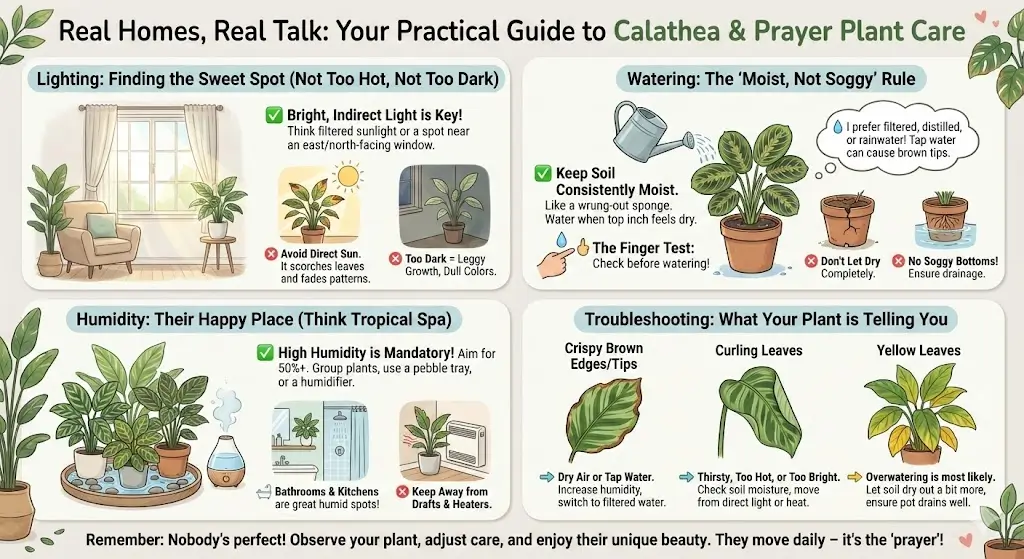
Calathea need bright, indirect light.
This does not mean direct sunlight, dark corners, or harsh afternoon sun.
| Placement | Why it works |
|---|---|
| Near an east facing window | Gentle morning light supports growth without scorching |
| A few feet away from a south window with sheer curtains | Bright light, filtered to prevent leaf burn |
| Bright rooms with no direct sun hitting leaves | Stable indirect light helps maintain color and movement |
Too much light can cause faded leaf patterns, crispy edges, and leaf curling.
Too little light can cause slow growth, smaller leaves, and less movement.
A simple test: if you can comfortably read a book during the day without turning on lights, that brightness usually works.
Watering Calathea the Right Way
Watering is where most Calathea problems begin.
| Common advice | What actually works in real homes |
|---|---|
| Water when the top inch of soil is dry | Keep soil lightly moist, never soggy and never bone dry |
Key watering rules:
- Use room temperature water
- Water thoroughly until excess drains out
- Empty the saucer after watering
- Never let the plant sit in water
The biggest mistake: tap water
Calathea are sensitive to minerals and chemicals.
Tap water often causes brown leaf edges, yellowing, and leaf tip burn.
Better options:
- Filtered water
- Distilled water
- Rainwater
If your Calathea has brown tips despite good care, water quality is often the cause.
Humidity Is Not Optional
Calathea are native to tropical environments. Indoor air is usually much drier.
An ideal humidity range is 60 percent or higher.
Signs humidity is too low:
- Curling leaves
- Crispy edges
- Slow unfurling of new leaves
Practical ways to increase humidity:
- Use a humidifier near the plant
- Group plants together
- Place the pot on a pebble tray with water
- Keep it in naturally humid rooms if light allows
Misting alone rarely helps. It raises humidity briefly and can cause leaf spotting if done excessively.
Temperature and Placement Mistakes
Calathea prefer stable temperatures.
Ideal range: 65 to 80 degrees Fahrenheit.
Avoid placing Calathea:
- Near air conditioners
- Near heaters
- By drafty windows
- Near exterior doors
Temperature stress often looks like drooping leaves, sudden curling, or leaf damage without visible pests.
Stability matters more than perfection.
Soil and Pot Choice That Actually Works
Calathea need soil that retains moisture but drains well.
A good soil mix includes:
- High quality indoor potting mix
- Perlite or pumice for drainage
- Coco coir or peat for moisture retention
Avoid heavy garden soil, sand based mixes, or soil that dries out too fast.
Pot tips:
- Always use a pot with drainage holes
- Do not oversize the pot
- Repot only when roots are crowded
Repotting too often can stress the plant.
Common Calathea Problems and Real Solutions
| Problem | Most likely cause | What to do |
|---|---|---|
| Leaves curling inward | Low humidity, underwatering, temperature stress | Increase humidity and check soil moisture |
| Brown edges or tips | Tap water minerals, low humidity, inconsistent watering | Switch to filtered water and stabilize care |
| Yellow leaves | Overwatering, poor drainage, root stress | Improve drainage and allow slight drying between waterings |
| Leaves not opening or moving | Low light, stress, poor overall health | Move to brighter indirect light and improve consistency |
Fertilizing Without Overdoing It
Calathea do not need heavy feeding.
Best approach:
- Use a balanced houseplant fertilizer
- Dilute to half strength
- Feed once a month during spring and summer
- Do not fertilize in winter
Overfertilizing can cause salt buildup, leaf burn, and root damage.
When in doubt, feed less.
Are Calathea Safe for Pets?
Yes. Calathea are considered non toxic to cats and dogs.
This makes them a popular choice for pet owners who still want decorative foliage.
What Most Articles Do Not Tell You
Calathea are dramatic in how they react.
They show stress quickly, take time to recover, and respond best to gentle changes.
Constantly moving the plant, changing routines, or trying every tip at once often makes things worse.
The best care strategy is patience and consistency.
Should You Buy a Calathea?
Calathea are right for you if:
- You enjoy learning plant behavior
- You can provide humidity
- You prefer foliage over flowers
- You like plants with personality
They may not be right for you if:
- You want low maintenance plants
- Your home has very dry air
- You forget to water regularly
There is no shame in choosing a plant that fits your lifestyle.
Final Thoughts and Encouragement
Struggling with a Calathea does not mean you are bad with plants.
It means you are caring for a species with specific needs.
Small adjustments make a big difference: better water, more humidity, stable placement, and patience.
Calathea reward consistency, not perfection.
If this article helped you feel more confident, calmer, or better prepared, then it has done what good content should do.
Create care routines, not stress. Your plant will notice.