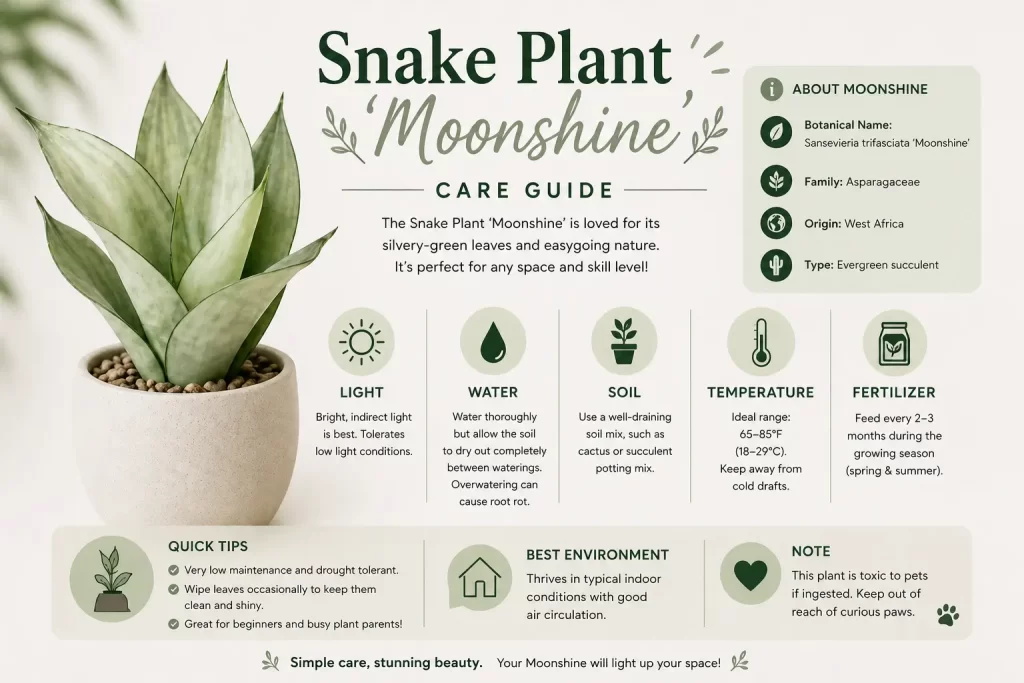

Snake Plant “Moonshine” Care Guide
A complete, beginner-friendly guide to growing a healthy, beautiful indoor plant.
Quick Summary
| Plant Name | Snake Plant “Moonshine” |
|---|---|
| Best For | Beginners, low-maintenance plant lovers, indoor decor |
| Light | Bright indirect light, but it can tolerate low light |
| Watering | Every 2 to 3 weeks, only when the soil is fully dry |
| Main Feature | Soft silvery-green upright leaves |
| Common Mistake | Overwatering |
| Pet Safety | Mildly toxic if eaten by cats or dogs |
If you want a houseplant that looks elegant but does not demand constant attention, the Snake Plant “Moonshine” is one of the best choices. Its pale silver-green leaves give it a clean, modern look, while its tough nature makes it beginner-friendly.
The most important thing to remember is simple: do not overwater it. Give it decent light, let the soil dry properly, and this plant can stay healthy with very little effort.
What Is Snake Plant “Moonshine”?
Snake Plant “Moonshine” is a beautiful variety of snake plant known for its smooth, upright, silvery-green leaves. It is often sold as Sansevieria “Moonshine,” although snake plants are now commonly classified under the Dracaena genus.
What makes this plant different from many other snake plants is its calm, pale color. While traditional snake plants usually have dark green leaves with yellow or patterned edges, Moonshine has a softer, more minimal appearance. This makes it especially popular for modern homes, offices, bedrooms, and small apartments.
Who This Guide Is For
This guide is written for beginners, busy plant owners, home decor lovers, and anyone who wants a simple, practical answer to how to care for a Moonshine snake plant.
After reading this guide, you should know where to place the plant, how often to water it, what soil to use, what problems to watch for, and how to keep it looking attractive indoors.
Why People Love the Moonshine Snake Plant
- It has a clean, modern look.
- It is easy to care for.
- It can tolerate low light better than many houseplants.
- It does not need frequent watering.
- It works well in bedrooms, living rooms, offices, and entryways.
- It is a great choice for beginners.
This plant is also forgiving. If you forget to water it for a while, it usually handles that better than being watered too often. That is one of the main reasons it is so popular with people who want greenery without a high-maintenance routine.
Light Requirements
Snake Plant “Moonshine” grows best in bright, indirect light. This means it should receive plenty of natural light, but not harsh direct sun for long periods.
A spot near a window with filtered light is ideal. East-facing windows, north-facing windows, or a few feet away from a bright south-facing window can work well.
Can It Survive in Low Light?
Yes, it can survive in low light, but survival is not the same as healthy growth. In lower light, the plant may grow more slowly and the leaves may become darker green over time.
If you bought this plant because you love its pale silver color, give it brighter indirect light. Better light helps the plant keep its signature Moonshine look.
Signs It Needs More Light
- The leaves are becoming darker green.
- The plant has stopped growing for a long time.
- New leaves look weak or narrow.
- The plant is leaning toward a light source.
Can Direct Sun Damage It?
Yes. Strong afternoon sun can burn or fade the leaves. A little gentle morning sun is usually fine, but harsh direct sunlight should be avoided.
Watering Guide
Watering is the most important part of Moonshine snake plant care. Most problems happen because the plant gets too much water, not too little.
The safest rule is this: water only when the soil is completely dry.
How Often Should You Water It?
In many homes, watering every 2 to 3 weeks is enough. During winter or cooler months, it may need even less water. During warmer months, it may dry out a little faster.
Do not water based only on a fixed calendar. Always check the soil first.
How to Check Before Watering
- Push your finger about 2 inches into the soil.
- If the soil feels dry, water the plant.
- If the soil feels damp, wait a few more days.
- Never let the plant sit in standing water.
Signs of Overwatering
- Yellow leaves
- Soft or mushy leaf bases
- Wet soil that stays damp for many days
- Bad smell from the pot
- Leaves collapsing from the base
Signs of Underwatering
- Wrinkled leaves
- Dry, curling edges
- Very dry soil pulling away from the pot
- Leaves looking thin or weak
If you are unsure, it is usually safer to wait. Snake plants handle dryness better than soggy soil.
Best Soil for Snake Plant “Moonshine”
This plant needs soil that drains quickly. Heavy soil that holds too much water can lead to root rot.
A cactus or succulent mix is a good choice. You can also improve regular potting soil by adding materials that increase drainage.
Good Soil Mix Options
- Cactus or succulent soil mix
- Potting soil mixed with perlite
- Potting soil mixed with coarse sand
- A light, airy indoor plant mix
The goal is simple: water should pass through the soil easily instead of sitting around the roots.
Best Pot for Moonshine Snake Plant
Always use a pot with drainage holes. This is more important than the material of the pot.
Terracotta pots are helpful because they allow moisture to dry out faster. Plastic or ceramic pots can also work, but you need to be more careful with watering.
Pot Size Tip
Do not place a small plant in a very large pot. Extra soil holds extra moisture, which can increase the risk of root rot. Choose a pot that is only slightly bigger than the root ball.
Temperature and Humidity
Snake Plant “Moonshine” does well in normal indoor conditions. It prefers warm rooms and does not need high humidity.
| Condition | Best Range |
|---|---|
| Temperature | 15°C to 30°C |
| Humidity | Normal indoor humidity |
| Cold Tolerance | Low |
Keep it away from cold drafts, air conditioner blasts, and freezing temperatures. If you are comfortable in the room, your plant is probably comfortable too.
Fertilizer Needs
This plant does not need heavy feeding. Too much fertilizer can do more harm than good.
Feed it once a month during spring and summer with a diluted balanced houseplant fertilizer. Avoid fertilizing during winter when growth naturally slows down.
Simple Fertilizer Rule
Less is better. A light feeding during the growing season is enough for most indoor Moonshine snake plants.
Growth and Maintenance
Moonshine snake plants grow slowly to moderately indoors. This is normal. Do not worry if you do not see new leaves every week.
To keep the plant looking good, wipe the leaves with a soft damp cloth when dust builds up. Dust can block light and make the plant look dull.
Easy Maintenance Tips
- Rotate the pot every few weeks for even growth.
- Remove damaged leaves at the base.
- Keep leaves clean and dust-free.
- Do not move the plant too often.
- Check soil moisture before watering.
Common Problems and How to Fix Them
| Problem | Likely Cause | Solution |
|---|---|---|
| Yellow leaves | Overwatering | Let soil dry fully and reduce watering |
| Leaves turning dark green | Low light | Move to brighter indirect light |
| Mushy base | Root rot | Remove damaged roots and repot in dry soil |
| No growth | Low light or winter dormancy | Improve light and be patient |
| Brown dry tips | Inconsistent watering or stress | Check watering routine and room conditions |
Moonshine Snake Plant vs Regular Snake Plant
Both plants are easy to care for, but they look different. Moonshine is usually chosen for its soft, pale color and modern style. Regular snake plants often have darker green leaves with stronger patterns.
| Feature | Moonshine Snake Plant | Regular Snake Plant |
|---|---|---|
| Leaf Color | Silvery-green | Dark green with patterns |
| Style | Modern and minimal | Classic and bold |
| Growth Speed | Slow to moderate | Moderate |
| Light Preference | Best in bright indirect light | More tolerant of lower light |
| Best For | Decor-focused indoor spaces | General indoor plant care |
Is Snake Plant “Moonshine” Good for Bedrooms?
Yes, it is a good bedroom plant. It is quiet, compact, attractive, and does not need frequent care. It can sit on the floor, a plant stand, or near a bright window.
Just make sure the bedroom has some natural light. A completely dark room is not ideal for long-term plant health.
Does It Purify the Air?
Snake plants are often promoted as air-purifying plants. While plants can help improve the feel of an indoor space, one plant will not dramatically clean the air in a normal room.
It is better to enjoy Moonshine snake plant for its beauty, low maintenance, and calming presence. Any air-related benefit should be seen as a bonus, not the main reason to buy it.
Is Snake Plant “Moonshine” Safe for Pets?
No, it is not considered pet-safe. Snake plants can be mildly toxic if eaten by cats or dogs.
If you have pets that chew plants, keep this plant out of reach. Possible symptoms after ingestion may include nausea, vomiting, or stomach discomfort.
How to Style It Indoors
The soft color of Moonshine makes it easy to style with many home designs. It looks especially good in simple pots, neutral rooms, office corners, and modern shelves.
Best Styling Ideas
- Place it in a white, beige, black, or terracotta pot.
- Use it as a clean accent plant in a living room.
- Place it near a bright bedroom window.
- Use a plant stand to lift it off the floor.
- Group it with darker green plants for contrast.
Pro Tips for Better Results
- Do not water just because the top of the soil looks dry. Check deeper.
- Bright indirect light keeps the leaves looking pale and attractive.
- A slightly root-bound plant is usually fine.
- Repot only when the plant is crowded or the soil has become poor.
- Do not mist this plant. It does not need extra humidity.
- When in doubt, water less often.
Frequently Asked Questions
How often should I water Snake Plant “Moonshine”?
Water every 2 to 3 weeks in most indoor conditions, but only after the soil has fully dried.
Can Moonshine snake plant grow in low light?
Yes, it can tolerate low light, but it grows better and keeps better color in bright indirect light.
Why is my Moonshine snake plant turning green?
This usually happens because the plant is not getting enough light. Move it to a brighter spot with indirect sunlight.
Why are the leaves turning yellow?
Yellow leaves are often a sign of overwatering. Check the soil, reduce watering, and make sure the pot drains well.
Is Snake Plant “Moonshine” rare?
It is more unique than the common snake plant, but it is not extremely rare. Availability depends on your local plant shops and online sellers.
Does it need direct sunlight?
No. Bright indirect light is best. Too much harsh direct sun can damage the leaves.
Is it beginner-friendly?
Yes. It is one of the best plants for beginners because it is tough, forgiving, and low maintenance.
Final Thoughts
Snake Plant “Moonshine” is a great choice if you want a plant that looks premium but is still easy to care for. Its silvery leaves make it stand out, while its simple care routine makes it suitable for beginners and busy plant owners.
Give it bright indirect light, use well-draining soil, avoid overwatering, and keep it away from cold drafts. If you follow those basics, your Moonshine snake plant can stay healthy and beautiful for years.
If you want a houseplant that adds calm, style, and greenery without constant maintenance, Snake Plant “Moonshine” is a smart pick.