
Philodendron Birkin Care Guide for Beginners
Complete, practical, and human friendly.
Quick Summary
| Topic | What to do |
|---|---|
| Light | Bright indirect light near a window with filtered sun. |
| Water | Water only when the top 1 to 2 inches of soil are dry. |
| Soil | Use an airy, well-draining mix to reduce root rot risk. |
| Humidity | Medium to high humidity is ideal, but it can adapt to typical homes. |
| Temperature | Keep it warm and away from cold drafts and AC vents. |
| Pets | Toxic if ingested. Keep out of reach of cats and dogs. |
| Growth | Slow to moderate growth, compact size, great for small spaces. |
Philodendron Birkin Care Guide
Everything you need to grow a healthy plant.
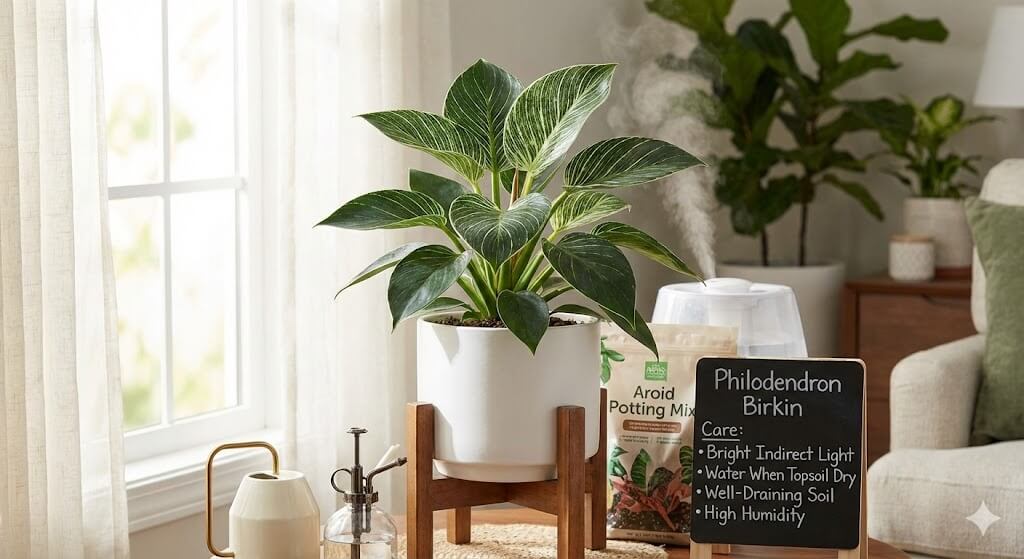
Philodendron Birkin has quickly become a favorite among indoor plant lovers. Its striking white pinstripe variegation looks almost painted on, which makes it stand out in any room.
But many owners struggle with issues like yellow leaves, fading stripes, or slow growth. This guide solves those problems in a clear and practical way.
If you are a beginner or someone who wants reliable care tips, this article will help you grow a Birkin with confidence.
Who This Guide Is For
This guide is for:
- Beginner plant parents
- Indoor gardeners
- People buying their first Birkin
- Anyone struggling to keep their Birkin healthy
After reading, you should know:
- Exactly where to place your plant
- How often to water
- What mistakes to avoid
- How to keep variegation strong
What Makes Philodendron Birkin Unique
Philodendron Birkin is believed to be a mutation related to the Rojo Congo philodendron. Unlike trailing philodendrons, Birkin is self heading, meaning it grows upright in a compact form.
Its main attraction is the variegation:
- Dark green leaves
- Thin white or cream pinstripes
- Each leaf looks slightly different
Interesting note: young leaves may start plain and develop stripes as they mature. This natural variation is normal and part of its charm.
What a Healthy Philodendron Birkin Looks Like
A healthy Birkin has:
- Crisp variegation
- Firm, glossy leaves
- Upright compact growth
- No mushy stems or brown patches
If your plant looks different, do not worry. Most issues are easy to fix once you know the cause.
Light Requirements
Light is the biggest factor for Birkin success.
Best light:
- Bright indirect light
- Near an east or north facing window
- Filtered light through curtains
Avoid:
- Harsh direct sun, which can scorch leaves
- Very low light, which reduces variegation and slows growth
Simple test: if you can comfortably read a book without turning on a light, the spot is bright enough.
Low light often leads to fewer stripes, leggy growth, and smaller leaves.
Watering Guide
Overwatering kills more Birkins than underwatering.
Best practice:
- Water when the top 1 to 2 inches of soil are dry
- Use pots with drainage holes
- Empty the saucer after watering
Typical schedule:
- Every 7 to 10 days in warm months
- Every 2 to 3 weeks in cooler months
| What you see | Likely cause | What to do |
|---|---|---|
| Yellow leaves, soggy soil, mushy stem | Overwatering or poor drainage | Let soil dry, improve drainage, reduce watering frequency. |
| Drooping leaves, very dry soil | Underwatering | Water thoroughly, then return to a consistent check-and-water routine. |
When in doubt, wait a day before watering.
Best Soil Mix
Birkin loves airy, well-draining soil.
Ideal mix:
- Regular potting soil
- Perlite or pumice
- Orchid bark or coco chips
This helps prevent root rot, improves airflow, and supports healthy roots. Dense soil that stays wet too long causes problems.
Humidity and Temperature
Philodendron Birkin prefers a tropical-like environment.
Ideal temperature:
- 65 to 85°F
- Keep away from cold drafts and AC vents
Humidity:
- Medium to high humidity is best
- 40 to 60 percent works well
If your home is dry:
- Use a humidifier
- Group plants together
- Place near a pebble tray
Low humidity may cause brown leaf edges.
Fertilizer Tips
Birkin is not a heavy feeder, but nutrients help growth.
Use:
- Balanced liquid houseplant fertilizer
- Once a month in spring and summer
Avoid fertilizing:
- In winter dormancy
- When soil is dry
Too much fertilizer can cause salt buildup and leaf burn.
Common Problems and Fixes
Yellow Leaves
Usually caused by:
- Overwatering
- Poor drainage
- Low light
Fix:
- Check soil moisture before watering
- Improve drainage with an airy soil mix and a pot with holes
- Move to brighter indirect light
Losing Variegation
If stripes fade:
- Move to brighter indirect light
- Avoid low light corners
Variegation depends heavily on light.
Brown Tips
Possible causes:
- Low humidity
- Inconsistent watering
- Excess fertilizer
Fix:
- Increase humidity if possible
- Maintain a steady watering routine
- Flush soil occasionally to reduce salt buildup
Is Philodendron Birkin Toxic to Pets
Yes. Like most philodendrons, it contains calcium oxalate crystals. If ingested by cats or dogs it can cause mouth irritation, drooling, and vomiting.
Keep it out of reach of pets and small children.
Growth Rate and Size
Birkin is a slow to moderate grower.
Typical indoor size:
- 1 to 3 feet tall
- Compact and bushy
It rarely becomes huge, which makes it perfect for apartments, desks, and shelves.
Propagation Basics
Birkin is harder to propagate than vining philodendrons.
Possible methods:
- Stem cuttings with nodes
- Tissue culture, used by growers
Home propagation can be tricky because of its compact growth. If you try, cut below a node, place in water or a moist medium, and keep it warm and humid.
Success rates vary.
Styling and Decor Ideas
Birkin fits many interior styles:
- Minimalist spaces
- Modern decor
- Scandinavian design
- Office desks
Great placement ideas:
- Side tables near windows
- Plant stands
- Bright bathrooms
Its bold foliage often acts as a statement piece.
Buying Tips
When buying, check for:
- Strong variegation
- No pests
- Firm stems
- Healthy roots
Avoid plants with:
- Mushy base
- Many yellow leaves
- Heavy pest damage
A healthy plant adapts faster to your home.
Beginner Friendly Care Routine
If you want a simple routine:
- Place in bright indirect light
- Water when the top soil dries
- Use airy soil
- Fertilize monthly in the growing season
That alone solves most issues.
Why People Love Philodendron Birkin
- Unique striped leaves
- Compact size
- Easy care
- Stylish look
- Beginner friendly
It gives a rare plant vibe without rare plant difficulty.
Final Thoughts
Philodendron Birkin is one of the best houseplants for beginners who want something visually special but manageable.
If you focus on good light, careful watering, and proper soil, your Birkin can stay healthy for years.
Before you leave, ask yourself:
- Do you have a bright indirect light spot ready?
- Are you comfortable checking soil before watering?
If yes, you are ready for a Birkin.