
Maidenhair Fern Care Guide: Light, Water, Soil, Propagation and Tips
TL;DR
Maidenhair Fern (Adiantum spp.) is a delicate indoor fern known for its soft, lace-like leaves and high humidity needs. It grows best in bright indirect light, consistently moist soil, and warm, humid environments. Avoid direct sun, dry air and underwatering. Keep the soil lightly moist, increase humidity, and repot every 1 to 2 years for best results.
Introduction
The Maidenhair Fern (Adiantum spp.) is an elegant houseplant loved for its airy, soft, fan shaped leaves. It is popular among indoor plant enthusiasts because of its graceful appearance and ability to bring a fresh botanical feel to any room. This plant is known for being a little sensitive, but with the right setup (indirect light, consistent moisture, high humidity), it can thrive indoors.
Plant Overview
| Botanical Name | Adiantum spp. |
| Common Names | Maidenhair Fern, Adiantum Fern, Venus Hair Fern |
| Plant Type | Tropical fern, indoor foliage plant |
| Difficulty Level | Moderate to high (humidity sensitive) |
| Growth Rate | Medium |
| Toxicity | Non toxic to cats, dogs and humans |
| Light | Bright, indirect light |
| Water | Keep soil lightly moist |
| Soil | Rich, well drained, high organic matter |
| Temperature | 18 to 24°C |
| Humidity | High humidity required (60 to 80 percent) |
What Maidenhair Fern Looks Like
Maidenhair Fern features thin, dark stems with delicate, fan shaped leaflets that move softly with air flow. The foliage is a light, fresh green and creates a soft, cloud like texture in containers or planters. In nature, it grows in moist, shaded forest floors, near waterfalls and along rocky crevices where humidity is naturally high. The contrast of its dark stems and bright leaves makes it a standout decorative plant indoors.
Complete Care Guide
1. Light Requirements
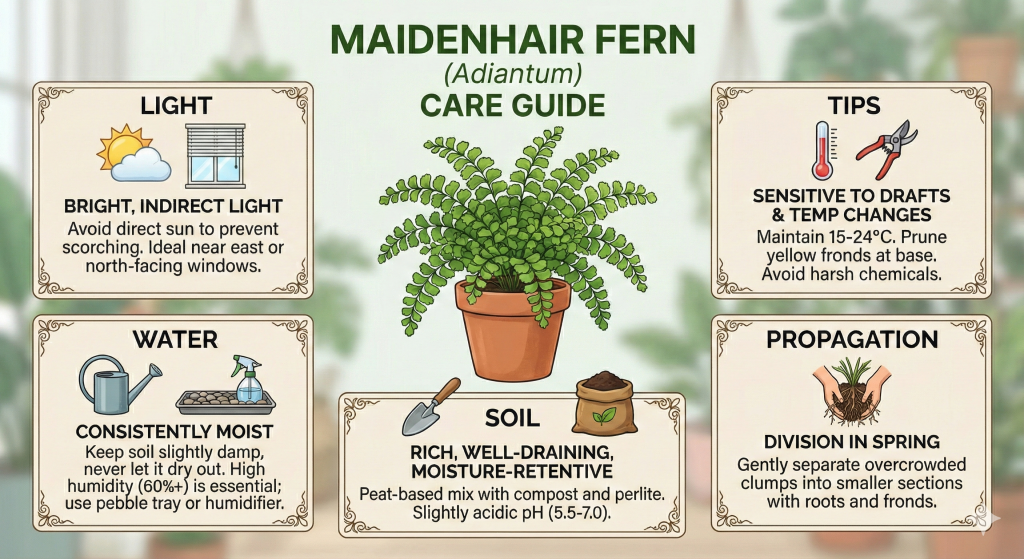
Maidenhair Fern prefers bright, indirect light. Direct sun can scorch the delicate fronds, so it should never be placed in harsh, direct rays. Low light conditions can lead to slow growth and yellowing foliage.
Best indoor placement ideas:
- Near a north or east facing window
- A few feet away from a bright window with sheer curtains
- On a shelf where it receives filtered or reflected light
Signs of too much light: crispy edges, faded or bleached foliage.
Signs of too little light: pale, weak fronds and slow or stretched growth.
2. Watering Instructions
Maidenhair Fern likes the soil to be consistently moist but never waterlogged. It does not tolerate dry soil and can decline quickly if it dries out completely.
- Water when the top 1 to 2 cm of soil feels slightly damp, not dry.
- Use room temperature water.
- Avoid letting excess water sit in the saucer for long periods.
Seasonal watering tips:
- Spring and summer: increase watering frequency as the plant grows actively.
- Autumn and winter: reduce slightly, but never allow the soil to dry out completely.
Signs of underwatering: dry, crispy fronds and rapid leaf drop.
Signs of overwatering: yellowing leaves, mushy stems and possible root rot.
3. Soil Requirements
Use a rich, well draining potting mix that can hold moisture without becoming compacted. A good mix often includes:
- Peat or coco coir for moisture retention
- Perlite for drainage and aeration
- Compost or leaf mold for organic matter
A slightly acidic to neutral pH is ideal. The soil should feel light and springy rather than heavy or dense.
4. Temperature and Humidity
Temperature
- Ideal range: 18 to 24°C.
- Avoid cold drafts and sudden temperature changes.
- Keep away from direct heat sources such as radiators or heaters.
Humidity
Maidenhair Fern has a strong preference for high humidity, ideally around 60 to 80 percent. Dry indoor air is one of the most common reasons these ferns struggle indoors.
Ways to increase humidity:
- Use a room humidifier near the plant.
- Place the pot on a pebble tray filled with water (without submerging the base).
- Group it with other plants to create a more humid microclimate.
- Keep it in naturally humid rooms such as bathrooms with good light.
5. Fertilizer Guidance
Feed your Maidenhair Fern lightly during the growing season. The roots are sensitive, so it is better to underfeed than overfeed.
- Use a diluted liquid houseplant fertilizer every 4 to 6 weeks in spring and summer.
- Reduce or stop fertilizing in autumn and winter when growth slows.
- Avoid strong, undiluted fertilizers that can burn the roots.
6. Pruning and General Maintenance
Regular pruning keeps the plant tidy and encourages fresh growth.
- Remove old, yellow or brown fronds at the soil level with clean scissors.
- Gently brush off dust with a soft brush instead of wiping the fragile leaves.
- Clear away dead foliage from the soil surface to prevent mold and pests.
7. Repotting Instructions
Repot every 1 to 2 years or when the plant becomes root bound and the soil breaks down.
Signs it needs a larger pot:
- Roots visible at the drainage holes
- Water runs through very quickly
- Growth becomes slow despite proper care
Step by step repotting process:
- Water the plant lightly 24 hours before repotting to reduce stress.
- Gently remove the plant from its pot, supporting the root ball.
- Loosen the roots slightly without breaking the delicate stems.
- Place it into a pot one size larger with fresh, rich potting mix.
- Fill around the roots, firm gently and water thoroughly.
- Keep the plant in bright, indirect light and maintain humidity while it settles.
8. Propagation Methods
Best method: division
Division is the most reliable way to propagate Maidenhair Fern and is usually done in spring.
- Remove the plant from its pot carefully.
- Locate natural clumps in the root ball with their own fronds and roots.
- Gently separate these clumps by hand or with a clean knife.
- Plant each division into its own small pot with fresh potting mix.
- Water well and keep in high humidity and indirect light until new growth appears.
Propagation from spores is possible but is more advanced and requires controlled conditions, so division is recommended for most home growers.
9. Common Problems and Solutions
Yellowing Leaves
Likely causes: overwatering, poor drainage, or low light.
Solutions: improve drainage, allow the top of the soil to dry slightly between waterings, and move the plant to brighter indirect light.
Crispy Brown Edges
Likely causes: low humidity or underwatering.
Solutions: increase humidity, water more consistently, and avoid placing the plant near vents or fans that dry the air.
Leaf Drop
Likely causes: sudden temperature changes, drafts or very dry soil.
Solutions: stabilize the environment, check for drafts, and adjust the watering schedule so the soil stays evenly moist.
Pests
Maidenhair Fern is not a common pest magnet, but it can occasionally attract aphids, scale or mealybugs.
Solutions:
- Inspect the plant regularly, especially under the fronds.
- Rinse gently with lukewarm water to remove light infestations.
- Use a diluted neem oil spray or insecticidal soap if needed.
10. Toxicity Information
Maidenhair Fern is considered non toxic to cats, dogs and humans. If ingested in larger quantities, it may cause mild stomach discomfort, but it is generally regarded as a safe choice for homes with pets and children.
Do’s and Don’ts
Do
- Maintain high humidity around the plant.
- Provide bright, indirect light.
- Use a rich, well draining potting mix.
- Keep the soil evenly moist.
Do Not
- Expose the plant to direct, harsh sunlight.
- Allow the soil to dry out completely.
- Place it near heaters, air conditioners or cold drafts.
- Over fertilize with strong, undiluted products.
Seasonal Care Tips
- Spring: new growth begins; increase watering slightly and resume light feeding.
- Summer: protect from excessive heat, watch humidity levels closely.
- Autumn: gradually reduce feeding as growth slows.
- Winter: keep away from heating vents, maintain moisture and humidity, and avoid cold windowsills.
Styling and Placement Suggestions
Maidenhair Fern works well in bathrooms with good natural light, on bright shelves away from direct sun, or as a soft accent on side tables and plant stands. It looks attractive in ceramic pots, simple white planters or decorative containers that highlight its fine texture. It can also be used in high humidity terrariums if enough space and light are provided.
Growth Expectations
- Typical height: 30 to 60 cm
- Typical spread: 30 to 45 cm
- Produces fresh fronds throughout the growing season with proper care
Frequently Asked Questions
Why is my Maidenhair Fern turning brown?
Brown, crispy fronds usually indicate low humidity or underwatering. Check how often you water and increase humidity around the plant with a humidifier or pebble tray.
How often should I water Maidenhair Fern?
Water often enough to keep the soil lightly and consistently moist. The top layer should never become completely dry. Frequency will depend on your home environment, pot size and season.
Can Maidenhair Fern grow in low light?
It can survive in low to medium light, but it will grow best in bright, indirect light. In very low light, growth may become slow and fronds may weaken.
Is Maidenhair Fern safe for pets?
Yes, Maidenhair Fern is considered non toxic to cats and dogs, making it a pet friendly indoor plant choice.
Can Maidenhair Fern grow outdoors?
In mild, frost free climates it can grow outdoors in shaded, moist, humid locations. In cooler regions it is usually grown indoors or in protected, sheltered spaces.