
English Ivy Complete Guide for Homeowners and Gardeners
Quick Summary
English ivy is a popular evergreen plant known for its lush green leaves, fast growth, and ability to cover walls, fences, and indoor spaces.
This guide explains what English ivy is, its real benefits, its serious downsides, how to grow and care for it responsibly, and whether it is right
for your home, garden, pets, and local environment. By the end, you will clearly know if English ivy is a smart choice for you and how to manage it
safely if you decide to grow it.
What Is English Ivy and Why People Search for It
English ivy, also known by its botanical name Hedera helix, is an evergreen climbing or trailing plant native to Europe and Western Asia.
It has become widely popular across the world for both indoor and outdoor use.
People search for English ivy because they want answers to practical questions, such as:
- Is English ivy good or bad for homes and gardens
- Is it safe for pets and children
- How hard it is to maintain
- Whether it damages walls or trees
- If it is invasive in their region
This article is written primarily for homeowners, renters, beginner gardeners, and indoor plant lovers who want clear, honest guidance before planting
or buying English ivy.
Why English Ivy Is So Popular
English ivy did not become common by accident. It has several real advantages that make it attractive to homeowners and designers.
Visual Appeal
English ivy creates a classic look. It is often associated with older buildings covered in greenery. Indoors, it adds softness and movement to shelves
and hanging baskets.
Year Round Greenery
Because it is evergreen, English ivy stays green throughout the year in many climates. This helps maintain consistent visual coverage.
Fast Growth
English ivy grows quickly once established. If you want rapid coverage for privacy, ground cover, or decoration, this is a major benefit.
Adaptability
It can grow in a wide range of conditions, including:
- Full shade
- Partial sun
- Indoors with indirect light
- Poor soil conditions
Real Benefits of English Ivy
Let us look at the benefits honestly, without exaggeration.
Useful as Ground Cover
English ivy can reduce soil erosion on slopes and shaded areas where grass struggles. It creates a dense mat that suppresses weeds once established.
Decorative Indoor Plant
Indoors, English ivy works well in hanging pots, shelves, and trailing displays. It is relatively forgiving if watering is occasionally missed.
Low Daily Maintenance
Once mature, outdoor English ivy does not require frequent watering or fertilizing. Indoors, it needs moderate care but not constant attention.
Some Air Quality Support Indoors
While often overstated online, English ivy can contribute slightly to indoor air quality by absorbing small amounts of pollutants.
It should never replace proper ventilation, but it can be a supportive element in a healthy home.
The Serious Downsides You Must Know
Many articles skip this part. English ivy has important drawbacks you should consider before planting.
English Ivy Is Invasive in Many Regions
In many parts of North America and other regions, English ivy is classified as invasive. This means it can spread aggressively, outcompete native plants,
and damage local ecosystems. Once established outdoors, it can be very difficult to remove.
Damage to Walls and Structures
English ivy does not usually damage solid brick or stone walls on its own. However, it can worsen existing cracks, trap moisture against surfaces,
and damage painted or wooden structures. Homes with older walls or poor maintenance are especially at risk.
Harm to Trees
When allowed to climb trees, English ivy can block sunlight from tree leaves, add weight that stresses branches, and increase risk of wind damage.
Over time, this can weaken or even kill trees.
Toxicity to Pets and Humans
English ivy is toxic if ingested. It can cause vomiting, diarrhea, and skin irritation. Pets such as dogs and cats are especially vulnerable.
Children should also be kept away from chewing or handling the leaves.
Indoor vs Outdoor English Ivy
Understanding the difference between indoor and outdoor use is critical. The table below summarizes the practical differences.
| Topic | Indoors | Outdoors |
|---|---|---|
| Control | Easier to control with pots and pruning | Can spread aggressively if not contained |
| Risk to environment | Low | Can be invasive in many regions |
| Maintenance | Moderate watering and occasional trimming | Regular pruning is essential, removal can be hard |
| Risk to structures | Minimal | Can trap moisture and worsen cracks on some surfaces |
| Best use | Hanging baskets, shelves, indoor decor | Ground cover, fences, walls, only with strict management |
Growing English Ivy Indoors
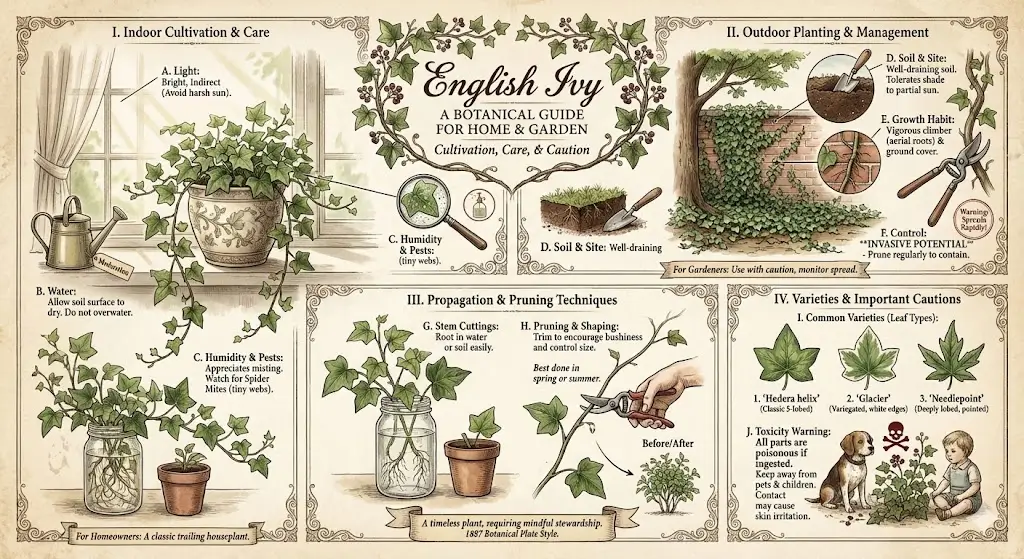
Indoors, English ivy is easier to manage and far less risky. Best conditions include:
- Bright, indirect light
- Well draining soil
- Moderate watering
- Occasional pruning
Indoor ivy grows slower and is less aggressive, making it a safer option for most people.
Growing English Ivy Outdoors
Outdoor planting requires serious thought. You should avoid planting English ivy outdoors if:
- You live in an area where it is invasive
- You cannot commit to regular pruning
- You have nearby trees or natural habitats
If planted outdoors, strict containment and maintenance are essential.
How to Care for English Ivy Properly
Whether indoors or outdoors, good care reduces problems.
Light Requirements
English ivy prefers bright, indirect light. It tolerates shade but grows slower. Direct harsh sunlight can scorch the leaves.
Watering
- Water when the top inch of soil feels dry
- Avoid soggy soil
- Reduce watering in winter
Overwatering is one of the most common mistakes.
Soil
Use well draining soil. Poor drainage increases the risk of root rot.
Pruning
Pruning is not optional, especially outdoors. Regular trimming controls growth, encourages fuller foliage, and helps prevent damage to structures.
Dispose of cuttings responsibly. Never dump them in natural areas.
Common Myths About English Ivy
Many blogs repeat myths that confuse readers.
Myth: English Ivy Is Maintenance Free
Reality: It requires less daily care, but more long term management.
Myth: It Improves Air Quality Significantly
Reality: The effect is usually minor and should not be overstated.
Myth: It Cannot Damage Buildings
Reality: It can worsen existing structural issues if ignored.
Is English Ivy Right for You
English ivy can be a good choice if:
- You want an indoor trailing plant
- You are committed to pruning and control
- You understand the risks
It is not a good choice if:
- You want a low effort outdoor plant
- You live near natural forests
- You have curious pets without supervision
Honest evaluation matters more than aesthetics.
Environmental Responsibility and Ethical Gardening
Modern gardening is not just about looks. It is about responsibility. If English ivy is invasive in your region, consider native alternatives that provide
similar coverage without environmental harm. Responsible choices protect ecosystems and reduce future problems.
Frequently Asked Questions
Is English ivy poisonous to dogs and cats
Yes. English ivy is toxic to pets if ingested and can cause digestive issues and discomfort.
Can English ivy damage my house
It can worsen existing cracks, trap moisture, and damage paint or wood if not controlled.
Is English ivy hard to remove
Yes. Once established outdoors, it can be difficult and labor intensive to remove completely.
Is English ivy good for indoor spaces
Yes. When kept indoors with proper care, it is manageable and visually appealing.
Final Thoughts and Next Steps
English ivy is neither a miracle plant nor a villain by default. It is a powerful, fast growing plant that rewards careful owners and punishes neglect.
If you want beauty with minimal responsibility, indoor English ivy is usually the safer choice. If you are considering outdoor planting, research your
local guidelines carefully and commit to long term management.
A good rule to follow: Choose plants you can control, not plants that control you.