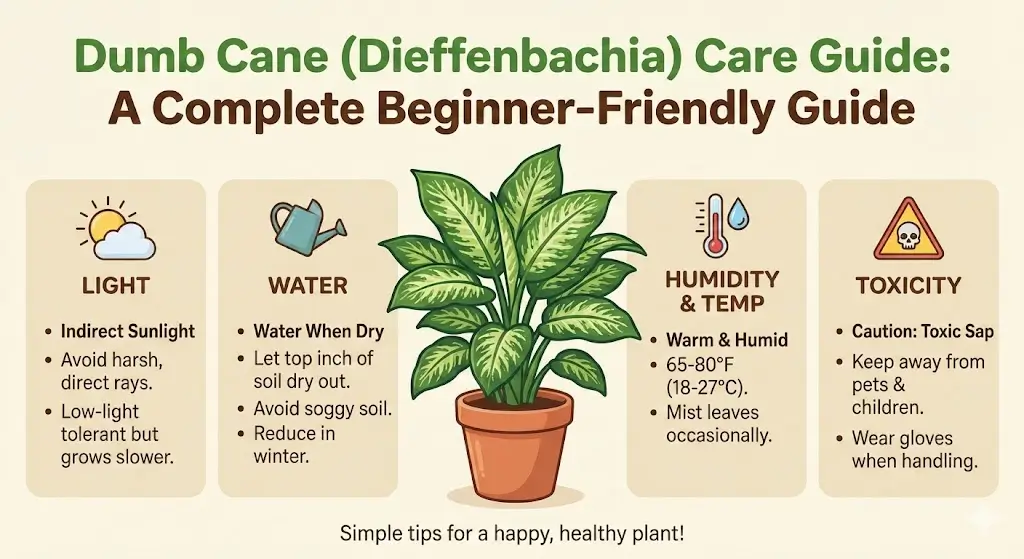

Dumb Cane (Dieffenbachia) is an easy-care indoor plant that grows best in bright, indirect light.
Water it when the top soil feels dry, keep it warm, and provide moderate humidity.
Use well-draining soil, fertilize during spring and summer, and avoid overwatering.
The plant is toxic to pets and children, so handle with care.
Dumb Cane (Dieffenbachia) Care Guide: A Complete Beginner-Friendly Guide
Dumb Cane, scientifically known as Dieffenbachia, is one of the most popular houseplants in the world.
Its large, patterned leaves make any indoor space look fresh and lively.
The best part is that it is easy to care for, which makes it perfect for beginners.
This guide explains everything you need to know about caring for a Dumb Cane plant.
The information is simple, clear, and easy to understand, even for a 12-year-old.
What Is Dumb Cane (Dieffenbachia)?
Dieffenbachia is a tropical plant that comes from Central and South America.
In nature, it grows under the shade of larger trees in warm and humid environments.
Because of this, it adapts very well to indoor conditions.
The name “Dumb Cane” comes from the plant’s toxic sap, which can cause temporary speech problems if eaten.
While this sounds serious, the plant is safe to grow indoors as long as basic safety steps are followed.
Why Choose Dieffenbachia as a Houseplant?
- Easy to grow and maintain
- Beautiful decorative leaves
- Grows well indoors
- Improves indoor air quality
- Great for beginners
Light Requirements for Dumb Cane
Light plays an important role in keeping your Dieffenbachia healthy and colorful.
Best Light Conditions
- Bright, indirect light is ideal
- Place near a window with filtered sunlight
- Medium light is acceptable but slows growth
What to Avoid
- Direct sunlight, which can burn the leaves
- Very low light, which causes faded leaf patterns
If the leaf patterns start fading, your plant likely needs more light.
How Often Should You Water Dieffenbachia?
Proper watering is one of the most important parts of Dumb Cane care.
Proper Watering Method
- Water when the top 1–2 inches of soil feel dry
- Water thoroughly until excess drains from the bottom
- Always empty the drainage tray
Seasonal Watering
- Water more often during spring and summer
- Reduce watering in fall and winter
Temperature and Humidity Needs
As a tropical plant, Dieffenbachia prefers warm temperatures and moderate humidity.
| Factor | Ideal Condition |
|---|---|
| Temperature | 65–80°F (18–27°C) |
| Minimum Temperature | Above 60°F (15°C) |
| Humidity | Moderate to high |
To increase humidity, you can mist the leaves, use a humidifier, or place the pot on a pebble tray.
Best Soil and Pot for Dieffenbachia
The right soil and pot help prevent root rot and keep the plant healthy.
- Use well-draining potting soil
- Mix houseplant soil with perlite for better drainage
- Choose a pot with drainage holes
Repot your Dumb Cane every 1–2 years or when roots become crowded.
Fertilizing Dumb Cane
Feeding your plant helps it grow strong leaves during the growing season.
- Fertilize every 4–6 weeks in spring and summer
- Use a balanced liquid houseplant fertilizer
- Do not fertilize during fall and winter
Pruning and General Maintenance
Dieffenbachia does not require much pruning, but light maintenance keeps it looking neat.
- Remove yellow or damaged leaves
- Cut leggy stems to encourage bushier growth
- Wipe leaves with a damp cloth to remove dust
Is Dumb Cane Toxic? (Important Safety Information)
Dieffenbachia is toxic if eaten by humans or pets.
The sap can cause irritation and swelling.
- Keep the plant away from children and pets
- Wear gloves when pruning
- Wash hands after handling the plant
Common Dumb Cane Problems and Solutions
| Problem | Cause | Solution |
|---|---|---|
| Yellow leaves | Overwatering | Allow soil to dry slightly before watering |
| Brown leaf edges | Low humidity or underwatering | Increase humidity and check watering routine |
| Drooping leaves | Cold temperature or dry soil | Move to a warmer area and water if needed |
| Pale leaves | Low light | Move to brighter indirect light |
How Fast Does Dieffenbachia Grow?
Dumb Cane grows at a moderate speed.
Under good conditions, it can reach 3–6 feet tall indoors and produce new leaves every few weeks during spring and summer.
Can Dumb Cane Be Propagated?
Yes, Dieffenbachia is easy to propagate using stem cuttings.
Place a healthy cutting in water or moist soil and keep it warm until roots form.
Best Places to Keep Dumb Cane in Your Home
- Living rooms with bright, indirect light
- Bedrooms away from direct sunlight
- Offices with good indoor lighting
Final Thoughts
Dumb Cane is a beautiful, low-maintenance houseplant that rewards simple care with lush, colorful leaves.
With proper light, watering, and warmth, it can thrive for many years and enhance any indoor space.