
Cast Iron Plant Care Guide for Beginners and Busy Plant Owners
Quick Summary
The cast iron plant is one of the toughest and most forgiving houseplants you can grow. It thrives in low light,
tolerates missed waterings, and survives conditions that would kill most indoor plants. This guide explains what a
cast iron plant is, why it is so resilient, how to care for it step by step, common mistakes to avoid, and how to
keep it healthy long term. By the end, you will know exactly how to grow a cast iron plant with confidence, even
if you think you have a black thumb.
Who This Guide Is For and Why It Exists
This article is written for real people, not plant textbooks.
It is for:
- Beginners who want a nearly unkillable houseplant
- Busy people who forget to water sometimes
- Apartment dwellers with low light rooms
- Homeowners who want greenery without constant maintenance
The goal is simple. After reading this, you should feel confident choosing, placing, and caring for a cast iron
plant without stress or confusion.
What Is a Cast Iron Plant
The cast iron plant, scientifically known as Aspidistra elatior, is a slow growing evergreen plant
originally from East Asia. It earned its nickname because it can tolerate neglect, poor lighting, temperature
changes, and inconsistent watering far better than most houseplants.
This plant became popular during the Victorian era when homes had low light, coal smoke, and poor air quality.
While many plants failed, the cast iron plant survived.
That reputation still holds true today.
Why the Cast Iron Plant Is So Popular
People love the cast iron plant for practical reasons, not trends.
Here is why it stands out:
- Thrives in low light environments
- Does not require frequent watering
- Rarely suffers from pests
- Long lifespan with minimal care
- Elegant dark green leaves that suit modern interiors
If you want a plant that quietly does its job without drama, this is it.
Understanding the Natural Growth Habit
One reason people struggle with houseplants is unrealistic expectations.
The cast iron plant grows slowly. Very slowly.
This is normal and healthy.
You should not expect rapid growth, weekly new leaves, or dramatic changes. Instead, think of it as a stable, long
term companion plant that improves your space gradually over years.
Slow growth also means lower maintenance and fewer problems.
Light Requirements Explained Simply
Light is where many people overthink things.
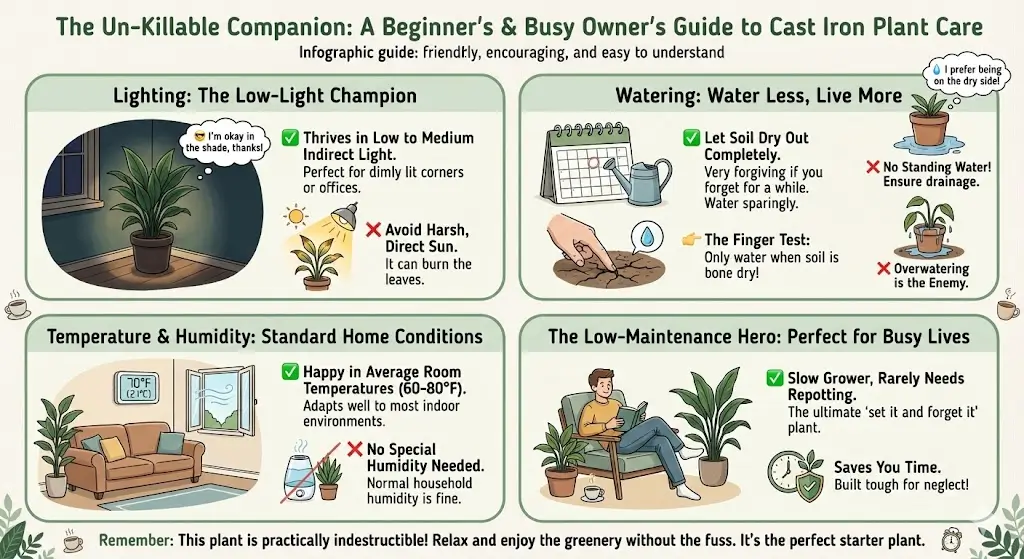
The cast iron plant prefers low to moderate indirect light.
It can survive in very low light, but survival and thriving are not the same thing.
Best placement ideas
- North facing rooms
- Hallways with ambient light
- Bedrooms away from direct sun
- Offices with fluorescent lighting
Avoid
- Direct sunlight
- South facing windows without curtains
Direct sun can scorch the leaves, causing brown patches that do not heal. If your plant has dark green leaves and
looks steady, the light is good enough.
How Often to Water a Cast Iron Plant
Overwatering is the most common mistake.
The cast iron plant prefers its soil to dry slightly between waterings.
A simple rule: Water when the top 2 inches of soil feel dry.
| Season | Typical frequency |
|---|---|
| Warmer months | Every 10 to 14 days |
| Cooler months | Every 2 to 3 weeks |
Always adjust based on your environment.
Signs of overwatering
- Yellowing leaves
- Soft or mushy stems
- Sour smelling soil
Signs of underwatering
- Leaf tips turning brown
- Leaves looking dull or limp
When in doubt, wait one more day.
Best Soil and Potting Setup
Good drainage matters more than fancy soil.
Use:
- Well draining indoor potting mix
- Pots with drainage holes
You can improve drainage by mixing in:
- Perlite
- Coarse sand
- Orchid bark
Avoid heavy garden soil or compacted mixes that hold water too long.
Repot only when necessary, usually every 3 to 5 years. The cast iron plant does not mind being slightly root bound.
Temperature and Humidity Needs
| Ideal temperature | 60 to 80 degrees Fahrenheit |
|---|---|
| Cold tolerance | Tolerates cool indoor temps but does not like frost |
| Humidity | Average household humidity is fine |
You do not need humidifiers or misting. Excess moisture on leaves can encourage fungal issues.
Fertilizing Without Overdoing It
The cast iron plant does not need frequent feeding.
Fertilize:
- Once every 6 to 8 weeks during spring and summer
- Skip fertilizing in fall and winter
Use a balanced liquid houseplant fertilizer diluted to half strength.
Too much fertilizer causes more harm than good, including leaf burn and salt buildup.
Common Problems and How to Fix Them
Yellow Leaves
Possible causes:
- Overwatering
- Poor drainage
- Cold drafts
Solution:
- Reduce watering
- Check pot drainage
- Move plant away from cold air
Brown Leaf Tips
Possible causes:
- Underwatering
- Salt buildup from fertilizer
- Very dry air
Solution:
- Water more consistently
- Flush soil occasionally
- Avoid overfertilizing
Dusty or Dull Leaves
This is normal indoors. Wipe leaves gently with a damp cloth every few weeks. Clean leaves photosynthesize better
and look healthier.
Is the Cast Iron Plant Pet Safe
The cast iron plant is generally considered non toxic to cats and dogs.
That said, any plant material can cause mild stomach upset if chewed in large amounts. If your pet is a known plant
chewer, place the plant out of reach.
Indoor vs Outdoor Growing
| Location | Why it works | Watch out for |
|---|---|---|
| Indoors | Great for low light rooms, apartments, offices | Overwatering, direct window sun |
| Outdoors | Best in shade or partial shade, useful as ground cover in warm climates | Frost, strong direct sun |
Avoid direct sun outdoors just as you would indoors.
How Long Does a Cast Iron Plant Live
With proper care, a cast iron plant can live for decades.
This is not a disposable houseplant. Many are passed down or kept in the same family for years. Its longevity is
one of its most underrated qualities.
Mistakes Most People Make
Learning from others saves frustration.
Common mistakes include:
- Watering on a fixed schedule instead of checking soil
- Placing it in direct sunlight
- Expecting fast growth
- Overfertilizing
Avoiding these alone puts you ahead of most plant owners.
Styling and Placement Tips
The cast iron plant has a clean, architectural look.
It works well:
- In minimalist interiors
- As a floor plant in corners
- In ceramic or matte pots
- In offices and entryways
Because it grows slowly, it holds its shape well and does not require constant rearranging.
Is This Plant Right for You
Ask yourself:
- Do I want a low effort plant
- Do I have limited natural light
- Do I prefer steady, slow growth
- Do I want something reliable
If yes, the cast iron plant is an excellent choice.