
Boston Fern Care Guide: Light, Water, Soil, Propagation and Tips
Boston Fern (Nephrolepis exaltata) is a popular indoor plant known for its elegant, lush green fronds. It’s a favorite for home and office décor due to its air-purifying qualities and its ability to thrive in various indoor conditions. Boston Ferns are fairly easy to care for once you understand their moisture and light needs.
At a glance, Boston Fern care looks like this:
- Light: Bright, indirect light is best; it tolerates low light but grows more slowly.
- Water: Keep soil moist but not waterlogged; don’t let it dry out completely.
- Soil: Rich, well-draining potting mix that holds moisture but drains excess water.
With consistent care, the Boston Fern will reward you with lush, arching fronds and a healthy, thriving plant.
Boston Fern Overview
- Botanical name: Chamaedorea exaltata
- Common names: Boston Fern, Sword Fern, Nephrolepis Fern
- Plant type: Tropical, evergreen fern, often grown indoors as a houseplant.
- Difficulty level: Moderate; requires attention to water and humidity levels.
- Growth rate: Moderate growth; can reach up to 3 feet tall and wide indoors under ideal conditions.
- Mature size indoors: Typically 2–3 feet tall and 2–3 feet wide, though it can spread more with time.
- Safety and toxicity: Non-toxic to pets and humans, making it a safe plant for homes with animals or children.
Quick Boston Fern Care Summary
| Care Aspect | Requirement |
|---|---|
| Light | Bright, indirect light, tolerates low light |
| Water | Keep soil evenly moist, not soggy |
| Soil | Well-draining, rich potting mix |
| Temperature | Ideal 18–24°C (65–75°F), protect from temperatures below 10°C (50°F) |
| Humidity | Prefers moderate to high humidity, mist regularly if indoor air is dry |
| Fertilizer | Feed every 4-6 weeks during the growing season |
| Growth habit | Arching, bushy fronds with a spreading, clumping growth pattern |
| Toxicity | Non-toxic to pets and humans |
What Boston Fern Looks Like
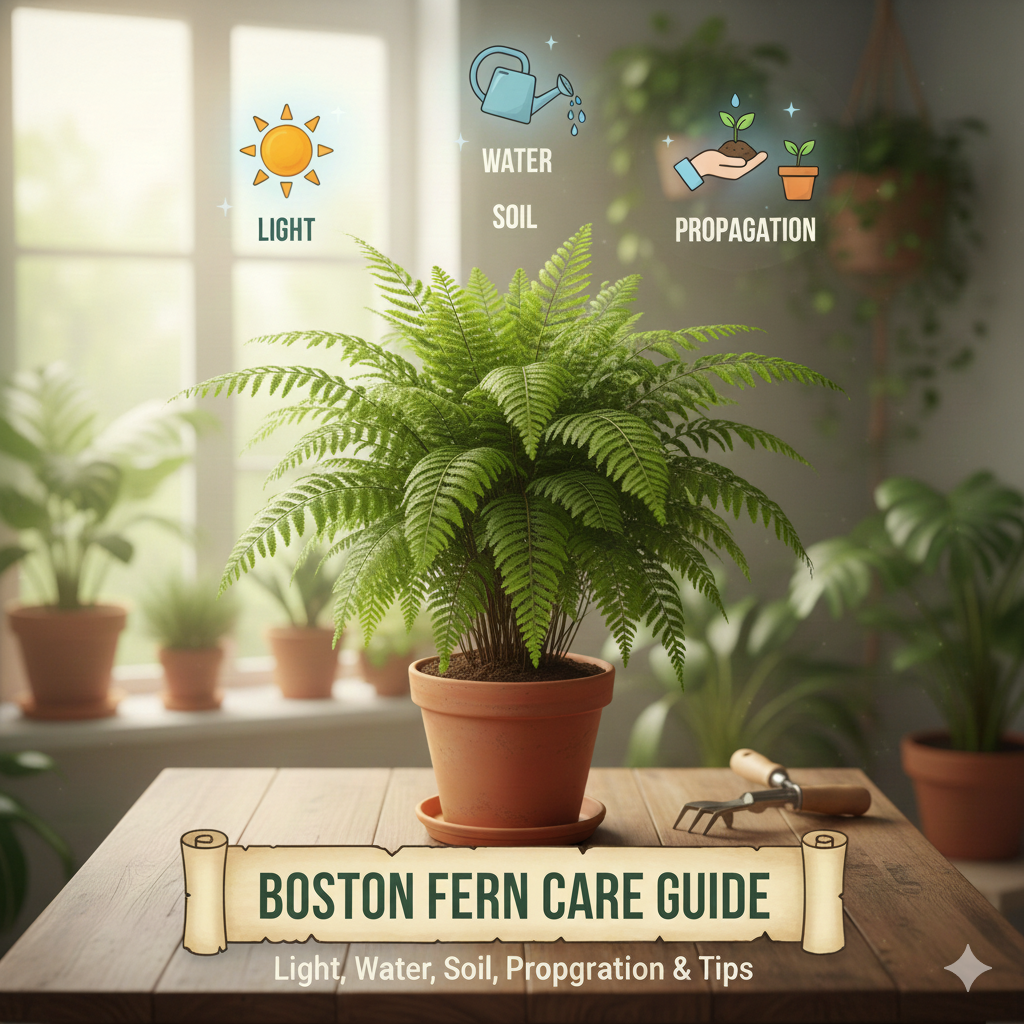
The Boston Fern is recognized for its feathery, lush foliage and graceful fronds that give it an elegant look.
- Leaves:
- Feathery, bright green fronds grow from the crown of the plant.
- Fronds are lance-shaped, arching, and have a soft, airy appearance.
- The leaves are usually a rich, deep green, though they may lighten slightly in lower light conditions.
- Growth habit:
- Boston Ferns form dense clumps of fronds and can spread wide as they mature.
- It grows quickly under the right conditions and can fill out large containers or hanging baskets.
- Flowers and spores:
- Boston Ferns don’t flower, but they produce brown, spore-covered structures on the undersides of mature fronds.
- Size:
- Grows to about 2–3 feet tall and 2–3 feet wide, though it can get larger with optimal care.
Natural Habitat
Boston Ferns are native to tropical and subtropical regions of the Americas, Asia, and Africa. They typically grow in moist, shady environments like forest floors or in the shade of larger plants.
Unique Characteristics
- Known for their ability to tolerate low light and their graceful fronds.
- Has a slow to moderate growth rate but can live for many years with proper care.
- Non-toxic, making it a safe plant for households with pets or small children.
Complete Boston Fern Care Guide
A. Light Requirements for Boston Fern
Ideal Light
- Boston Ferns prefer bright, indirect light but will tolerate low light.
- Keep them away from direct sunlight, as it can scorch the fronds.
Low Light Tolerance
- While it tolerates low light, the plant grows much slower and may not produce new fronds as quickly.
- You may notice yellowing leaves if the light is too dim.
Signs of Too Little Light
- Slow growth or no new growth.
- Yellowing of the older fronds.
- Leggy, sparse growth.
Signs of Too Much Light
- Brown, scorched leaf tips or edges on fronds.
- Faded or bleached leaves, indicating sunburn.
Best Indoor Placement Tips
- Place near a bright window with sheer curtains for light diffusion.
- If the room is low light, consider moving the plant closer to a window or adding a grow light.
B. Watering Instructions
Watering is crucial for keeping your Boston Fern healthy, as it loves consistently moist soil.
How Often to Water
- Keep the soil evenly moist but not soggy.
- Water when the top 1–2 inches of soil feel dry to the touch.
- In warmer months, this may be once a week. In cooler months, watering intervals may need to be longer.
How to Avoid Overwatering
- Ensure the pot has good drainage and never let the plant sit in standing water.
- Don’t let the soil stay waterlogged, as this can lead to root rot.
Signs of Underwatering
- Dry, crispy, or browning leaf tips.
- Soil is extremely dry and pulling away from the pot edges.
- Drooping fronds.
Signs of Overwatering
- Yellowing leaves, especially older fronds.
- Soggy soil with a musty odor.
C. Soil Requirements
Boston Ferns need a well-draining, rich potting mix that retains moisture.
Best Potting Mix
- Use a high-quality, well-draining indoor potting mix with added perlite or sand for better aeration.
- A mix designed for ferns or tropical plants works well.
pH Level
- Prefers a slightly acidic to neutral pH, ideally between 5.5 and 7.0.
Drainage Needs
- Ensure the pot has good drainage holes to avoid waterlogging.
D. Temperature and Humidity
Ideal Temperature Range
- Boston Ferns thrive in temperatures between 18°C and 24°C (65°F–75°F).
- Avoid exposing it to temperatures below 10°C (50°F).
Humidity Level
- Prefers moderate to high humidity.
- Regular misting can help provide the right moisture levels.
Ways to Increase Humidity
- Lightly mist the fern’s fronds regularly, especially during dry winter months.
- Use a humidity tray or place the pot on pebbles filled with water.
- Group your plants together to create a more humid microclimate.
E. Fertilizer Guidance
Fertilizing helps boost growth, especially during the growing season.
Type of Fertilizer
- Use a balanced liquid fertilizer (20-20-20) or a slow-release fertilizer.
- Feed with half-strength fertilizer to avoid overfeeding.
How Often to Feed
- Fertilize once a month during the growing season (spring and summer).
- Avoid fertilizing in the fall and winter when the plant is dormant.
F. Pruning and General Maintenance
How and When to Prune
- Remove dead or yellow fronds from the base to maintain a healthy look.
- Use clean, sharp scissors to avoid injuring the plant.
- Prune in the growing season (spring and summer).
Cleaning and Grooming Tips
- Dust the fronds regularly with a damp cloth to help the plant breathe better and look lush.
- Regularly check the undersides of leaves for pests like spider mites or mealybugs.
G. Repotting Instructions
How Often to Repot
- Repot every 2–3 years or when the plant becomes root-bound.
- If the plant’s growth slows or the roots are visible through drainage holes, it’s time to repot.
Signs It Needs a New Pot
- Roots growing out of drainage holes.
- Soil drying out quickly after watering.
- Pot cracking from root pressure.
Step by Step Repotting Process
- Choose a new pot: Select a pot 2–3 inches larger than the current one, with drainage holes.
- Prepare fresh soil: Use a well-draining potting mix.
- Remove the plant: Gently take the fern out of its current pot.
- Check the roots: Trim any dead roots before placing in the new pot.
- Repot the fern: Add fresh mix, firm it down lightly, and water thoroughly.
H. Propagation Methods
Propagate Boston Fern by division during repotting.
Best Propagation Technique
- Division of the root ball is the most effective way to propagate.
Step by Step: Propagating by Division
- Remove the plant from its pot.
- Gently separate the root ball into smaller sections, ensuring each division has roots and fronds.
- Repot each division into a new container with fresh potting mix.
- Water lightly and place in a bright, indirect light location.
Best Season to Propagate
- Spring is the best time for propagation.
I. Common Boston Fern Problems and Solutions
1. Yellowing Leaves
Likely causes: Overwatering, poor drainage.
Solutions:
- Allow the top of the soil to dry between waterings.
- Ensure your pot has drainage holes to prevent waterlogging.
2. Brown Tips on Leaves
Likely causes: Low humidity, over-fertilization, or low water quality.
Solutions:
- Increase humidity around the plant by misting or placing it on a humidity tray.
- Reduce fertilization and flush the soil to remove excess salts.
3. Drooping Leaves
Possible causes: Underwatering, root rot, or cold drafts.
Solutions:
- Check soil moisture and water thoroughly when dry.
- Inspect the roots for rot and replace any that are rotting.
4. Pests
Common pests include spider mites, mealybugs, and scale.
Solutions:
- Wipe leaves with soapy water or use insecticidal soap for infestations.
- Isolate the infested plant until the problem is resolved.
J. Toxicity Information
Boston Ferns are non-toxic to pets and humans, making them a great choice for families with animals or children.
Do’s and Don’ts for Boston Fern Care
Do
- Keep the plant in bright, indirect light.
- Water when the top 1–2 inches of soil are dry.
- Keep the humidity high around the plant.
- Prune dead or yellow fronds regularly.
- Fertilize once a month during the growing season.
Do Not
- Let the plant sit in standing water.
- Expose it to direct, hot sunlight.
- Over-fertilize the plant.
- Place the plant in a drafty spot.
Seasonal Care Tips
- Spring: Resume feeding, repot if needed, and increase watering as days warm up.
- Summer: Maintain regular watering and humidity levels.
- Autumn: Reduce watering as growth slows.
- Winter: Water less frequently and avoid fertilizing.
Growth Expectations
- With proper care, Boston Ferns grow quickly and can reach 3 feet tall.
- They will continue to fill out and thrive in their indoor environment.
FAQs About Boston Fern Care
1. Is Boston Fern easy to care for?
Yes, once you understand its light, water, and humidity needs, the Boston Fern is easy to care for.
2. How do I get my Boston Fern to grow faster?
Provide it with bright, indirect light, high humidity, and regular watering to promote healthy growth.
3. How often should I water my Boston Fern?
Water when the top 1–2 inches of soil feel dry. In warmer months, this may be once a week, but adjust based on your home’s light and temperature.
4. Why are the tips of my Boston Fern turning brown?
Brown tips are usually a sign of low humidity or over-fertilization. Increase humidity and reduce fertilizer.
5. How do I propagate Boston Fern?
Propagate by dividing the root ball during repotting. Each division should have its own roots and fronds.
6. Is Boston Fern toxic to pets?
No, Boston Fern is non-toxic to both pets and humans, making it a safe plant for homes with animals or children.