
Bird’s Nest Fern Care Guide: Light, Water, Soil, Propagation & Tips
Bird’s nest fern (Asplenium nidus) stands out as a striking houseplant with its nest-shaped rosette of ruffled, apple-green fronds that bring tropical flair to any indoor space. Popular for easy upkeep and air-purifying qualities, it mimics rainforest epiphytes perfectly in homes. Key needs include bright indirect light, consistently moist but well-drained soil, and high humidity to prevent crisp edges.
Plant Overview
| Aspect | Details |
|---|---|
| Botanical Name | Asplenium nidus |
| Common Names | Bird’s nest fern, nest fern |
| Plant Type | Tropical epiphytic fern, primarily indoor |
| Difficulty | Beginner-friendly with humidity attention |
| Growth Rate | Moderate; reaches 2-4 feet tall indoors over years |
| Safety/Toxicity | Non-toxic to pets, humans, and children |
Plant Description
This fern forms a compact crown of undivided, strap-like fronds up to 3-5 feet long with wavy edges and glossy texture in vibrant green shades. Native to humid Southeast Asian rainforests, Australia, and Pacific Islands, it clings to tree trunks in shaded, misty understories. Standout features include a central “nest” cup that collects water naturally and older fronds that yellow from the tip inward before shedding.
Care Guide
Light Requirements
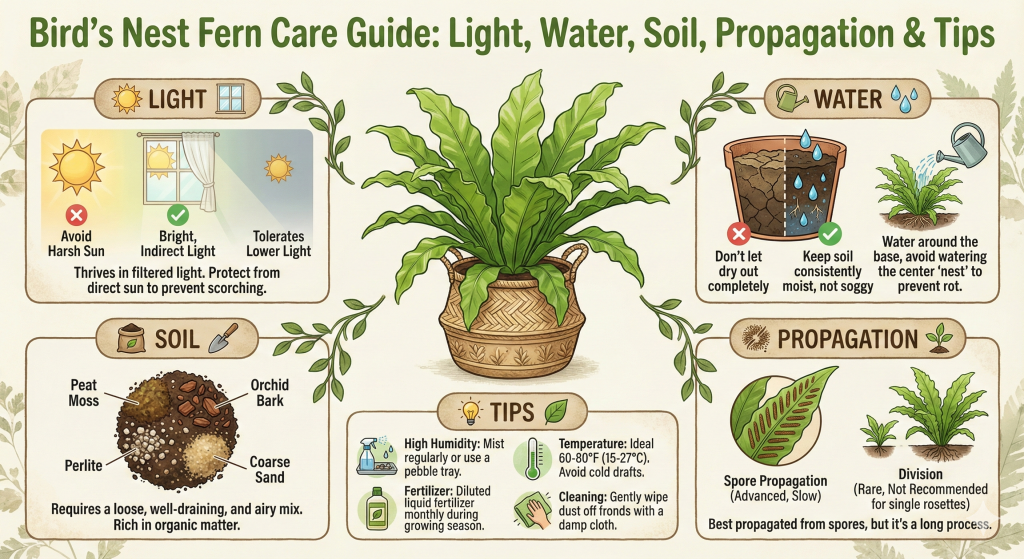
Bird’s nest fern excels in medium to bright indirect light, such as east-facing windows or filtered north light; direct sun causes brown scorch marks on fronds. Insufficient light leads to stretched, pale growth or etiolation—rotate weekly for even exposure. Place 2-4 feet from south/west windows or under grow lights for 12-14 hours daily in low-light homes.
Watering Instructions
Allow the top 1-2 inches of soil to dry before watering thoroughly, typically every 7-10 days; keep soil evenly moist like a wrung-out sponge. Always water around the pot edges, avoiding the central crown to dodge rot—empty saucers promptly. In winter, stretch to biweekly as growth slows; drooping fronds signal underwatering, while mushy bases indicate overwatering.
Soil Requirements
Opt for loose, airy mixes like peat moss, coco coir, or orchid bark blended with perlite (50/50) to retain moisture yet drain fast. Aim for slightly acidic to neutral pH (5.5-7.0); heavy soils compact and suffocate roots. Pots must have drainage holes—terracotta excels for wicking excess moisture.
Temperature & Humidity
Maintain 65-80°F daytime with nights no cooler than 60°F; shield from drafts, AC vents, or heaters. High humidity (60-80%) is non-negotiable—daily misting, pebble trays, or grouping with other plants boosts levels. In dry homes, a humidifier nearby prevents tip burn mimicking underwatering.
Fertilizer Guidance
Feed diluted balanced liquid fertilizer (e.g., 10-10-10 at half strength) every 4-6 weeks during spring through fall. Skip winter entirely to avoid salt buildup; flush soil monthly with plain water. Overfeeding yellows tips—less is more for this light feeder.
Pruning & General Maintenance
Snip dead or yellowing fronds at the base with sterilized shears any time, promoting fresh growth from the crown. Gently wipe fronds monthly with damp microfiber to clear dust, enhancing photosynthesis—avoid leaf shine products. Rotate quarterly for balanced shape.
Repotting Instructions
Repot every 18-24 months in spring when roots fill the pot or water rushes through quickly.
- Hydrate well the day prior for easy removal.
- Tip out gently, shake off old soil, trim mushy roots.
- Use 1-2 inch larger pot with fresh mix; position crown at soil level.
- Water sparingly first week, keep humid.
Propagation Methods
Division of offsets works best in spring; spores suit experts only.
- Division: Unpot mature plant, separate pups with roots using clean knife.
- Pot individually in small humid pots; cover with plastic for 4-6 weeks.
- Spring timing yields 70% success in warm (75°F+), misty setups.
Common Problems & Solutions
- Pests (scale, mealybugs, spider mites): Wipe with neem oil or insecticidal soap weekly; isolate plant.
- Yellowing leaves: Excess water/low light—dry soil slightly, boost indirect rays.
- Brown tips/crisp edges: Low humidity—mist daily, add humidifier.
- Root rot: Soggy soil—repot in sterile mix, cut affected roots.
- Leaf drop: Cold shocks/drafts—move to stable warmth.
- Diseases (leaf spot): Improve airflow, avoid wet foliage.
Toxicity Information
Fully non-toxic; safe around cats, dogs, kids—mild stomach upset rare if fronds munched.
Do’s and Don’ts
| Do’s | Don’ts |
|---|---|
| Mist fronds 2-3 times weekly | Water crown center |
| Check soil moisture with finger | Expose to direct sun |
| Provide pebble tray humidity | Over-fertilize |
Seasonal Care Tips
Spring/summer: Ramp up watering/feeding as new fronds unfurl rapidly. Fall/winter: Halve inputs, combat indoor dry air with humidifier—watch for legginess from short days.
Styling & Placement Suggestions
Elevate in hanging baskets for cascading drama or nest on shelves in steamy bathrooms/kitchens. Pair with calatheas for lush understory look; thrives in offices with fluorescents. Expect 4-6 new fronds yearly, maturing to statement size in 3-5 years indoors.
Frequently Asked Questions (FAQs)
Q: How to care for Bird’s nest fern?
A: Bright indirect light, moist soil, 60%+ humidity, monthly spring-summer feeds.
Q: Bird’s nest fern watering?
A: Top inch dry, edges only, every 1-2 weeks.
Q: Bird’s nest fern light requirements?
A: Medium indirect; no direct sun.
Q: Bird’s nest fern problems?
A: Brown tips from dry air; yellow from wet feet.
Q: Bird’s nest fern propagation?
A: Spring divisions best for home growers.