
Aloe Vera Care Guide: Light, Water, Soil, Propagation and Tips
TL;DR
Aloe vera grows best in bright sunlight, well drained sandy soil and infrequent watering. Allow the soil to dry completely before each watering and keep it in warm, low humidity conditions. It is easy to maintain, drought tolerant and ideal for beginners. Overwatering is the main cause of problems.
Introduction
Aloe vera (Aloe barbadensis miller) is a popular indoor succulent known for its medicinal gel, architectural shape and low maintenance nature. The plant is widely used in skincare and wellness, and its ability to thrive with minimal care makes it a favorite among beginners. With the right light, soil and watering routine, Aloe vera grows vigorously and produces healthy offsets.
Plant Overview
| Botanical Name | Aloe barbadensis miller |
| Common Names | Aloe vera, First Aid Plant, Burn Plant |
| Plant Type | Succulent, evergreen perennial |
| Difficulty Level | Easy |
| Growth Rate | Moderate |
| Toxicity | Mildly toxic to pets |
| Light | Bright direct light to full sun |
| Water | Infrequent, allow soil to fully dry |
| Soil | Sandy, gritty, well draining |
| Temperature | 18 to 32°C |
| Humidity | Low |
What Aloe Vera Looks Like
Aloe vera forms a dense rosette of thick, fleshy, spear shaped leaves filled with clear gel. The leaves are typically blue-green and may develop slight pigmentation in strong sunlight. Mature plants can reach 60 to 90 cm in height and occasionally produce tall flower spikes with tubular yellow or orange blooms. The plant is native to hot, arid climates, which explains its tolerance for heat, sun and minimal water.
Complete Care Guide
1. Light Requirements
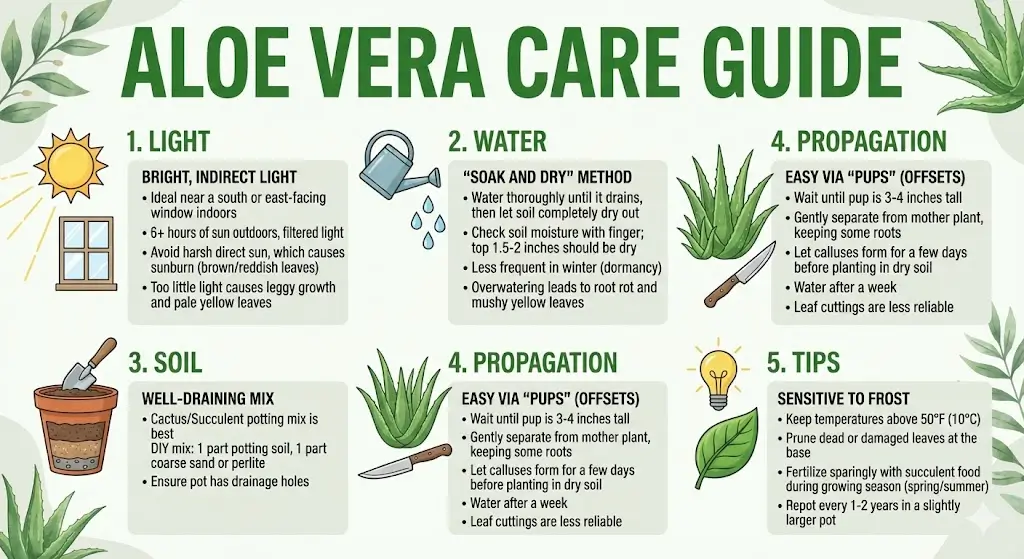
Aloe vera requires abundant bright light and performs best in full sun. Indoors, it should be placed near a south or west facing window. Without enough light, it becomes leggy, pale and structurally weak.
- Best light: direct sunlight for several hours
- Too little light: stretched, weak growth
- Too much sudden sun: reddish or brown leaf tips (sun stress)
2. Watering Instructions
Aloe vera prefers infrequent watering and is naturally drought tolerant. It stores water in its leaves and roots, making it sensitive to excess moisture.
- Allow soil to dry out completely before watering
- Water deeply and let excess drain
- Do not mist the plant
Seasonal watering:
- Summer: every 2 to 3 weeks
- Winter: every 4 to 6 weeks
Overwatering signs: mushy leaves, root rot, brown drooping foliage.
Underwatering signs: thin or curling leaves.
3. Soil Requirements
Aloe vera must be planted in sandy, gritty, well draining soil. Heavy or compact soil will cause root rot.
- Cactus or succulent mix
- Garden soil + sand + perlite blend
- Any loose mix with fast drainage
4. Temperature and Humidity
Temperature
- Ideal range: 18 to 32°C
- Protect from cold drafts
- Never expose to frost
Humidity
- Prefers low humidity
- High humidity may slow growth
5. Fertilizer Guidance
- Use diluted succulent fertilizer every 2 to 3 months in spring and summer
- Avoid high nitrogen formulas
- No fertilizer in winter
6. Pruning and Maintenance
- Remove dead or dried leaves at the base
- Wipe leaves periodically to remove dust
- Cut back flower stalks after blooming
7. Repotting Instructions
Repot every 1 to 2 years or when roots fill the container.
- Remove the plant carefully
- Brush off old soil and inspect roots
- Separate pups if propagating
- Plant in fresh succulent soil
- Do not water for 3 to 5 days after repotting
8. Propagation Methods
Offsets (pups)
- Detach pup with roots
- Let the cut area callous for 24 hours
- Plant in dry succulent soil
- Water after 5 to 7 days
Seeds: possible but slow.
9. Common Problems and Solutions
Soft Leaves
Cause: overwatering or poor drainage
Fix: dry soil, improve airflow, use gritty mix.
Brown Leaves
Cause: sun scorch or dehydration
Fix: adjust light or water frequency.
Pale Leaves
Cause: insufficient light
Fix: move to a brighter area.
Pests
- Scale
- Mealybugs
- Aphids
Treatment: cotton swab with rubbing alcohol or neem oil.
Toxicity Information
Aloe vera is mildly toxic to pets due to the latex layer in the leaves. The inner gel is generally safe for humans when properly processed, but raw latex can cause digestive discomfort if ingested.
Do’s and Don’ts
| Do | Do Not |
|---|---|
| Provide strong sunlight | Overwater the plant |
| Use gritty, fast draining soil | Use compact or heavy soil |
| Allow soil to dry completely | Let water sit in the pot |
| Place in warm, dry conditions | Expose to frost or cold drafts |
| Repot when root bound | Keep in low light areas |
Seasonal Care Tips
- Spring: best time to repot or propagate
- Summer: water slightly more often
- Autumn: reduce feeding gradually
- Winter: minimal watering, protect from cold
Styling and Placement Suggestions
Aloe vera fits well in modern, minimal and natural decor settings. It thrives on sunny windowsills, plant shelves, office desks and patios where it receives strong light. Terracotta pots help prevent overwatering and complement the plant aesthetically.
Growth Expectations
- Height: 30 to 60 cm
- Spread: approximately 30 cm
- Produces offsets when mature
Frequently Asked Questions
Why is my Aloe vera getting soft?
Most likely due to overwatering. Let the soil dry fully.
Can Aloe vera grow outdoors?
Yes, in hot, dry climates. Protect from frost.
How often should I water it?
Only when the soil is completely dry.
Why is my Aloe turning pale?
It needs more sunlight.
Can the gel be used on skin?
Yes, only the clear inner gel. Avoid the yellow latex layer.