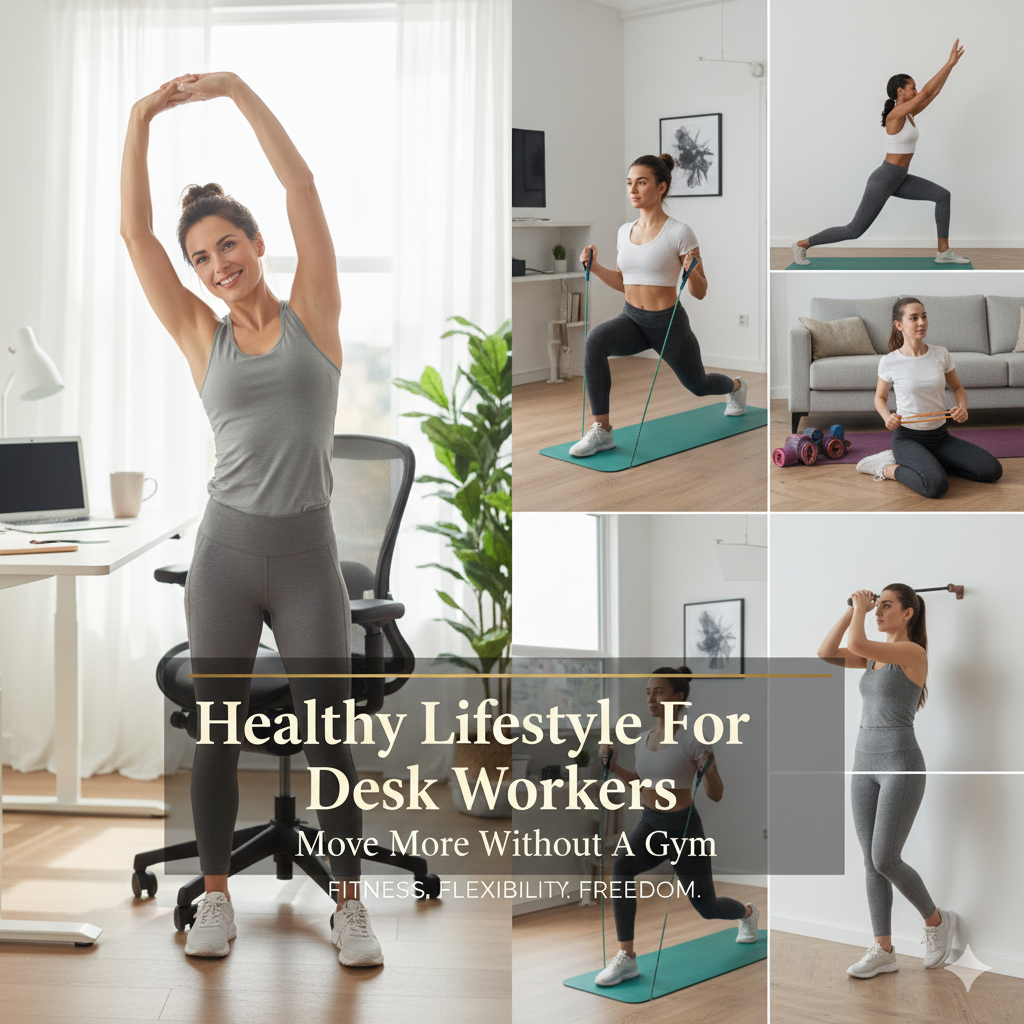

Healthy Lifestyle For Desk Workers: Move More Without A Gym
A practical guide for office workers and remote professionals who sit for long hours and want to stay active, flexible, and energized without needing a gym routine.
Why Desk Workers Need A Different Approach To Health
Desk work often requires long hours of sitting, which can affect posture, energy, metabolism, and long term health. Many people feel stiff, tired, and mentally drained by the end of the day, even though they have not engaged in physical labor. This happens because sitting for extended periods reduces circulation, tightens muscles, and slows the natural movement your body depends on.
The good news is that you do not need a gym membership or long workouts to stay healthy. With a few simple adjustments to your daily routine, you can improve your posture, mobility, energy, and long term wellness directly from your desk.
How Sitting Affects Your Body
Research from ergonomics experts, ACSM, and workplace health studies shows that prolonged sitting influences several systems in the body. Understanding these effects helps you take meaningful action.
- Reduced circulation: blood flow slows, leading to stiffness and fatigue.
- Tight hips and lower back: sitting shortens hip flexors and strains the lumbar area.
- Weak upper back and neck strain: screens positioned too low cause forward head posture.
- Reduced metabolism: long sitting decreases calorie burn and glucose uptake in muscles.
- Lower energy and focus: inactivity lowers alertness and increases mental tiredness.
The solution is not to eliminate sitting completely. Instead, aim to break up long sitting periods with strategic movement, mobility, and better posture habits throughout the day.
Movement Guidelines For Desk Workers
Desk workers benefit from more frequent, shorter movement sessions rather than long workouts once a day.
Science based recommendations include:
- Stand or move every 30 to 45 minutes.
- Include 1 to 3 minute movement snacks during the workday.
- Aim for 7,000 to 10,000 total steps per day.
- Add short stretches for the chest, hips, neck, and upper back.
- Use a few light strength or mobility sessions each week.
Even small bursts of activity help reduce stiffness, support posture, and improve focus.
Quick Movement Snacks You Can Do At Work
These short, practical exercises can be done at home or in the office without equipment. Each snack takes less than one minute and helps counteract the effects of sitting.
1. Neck Mobility Circles
Time: 20 to 30 seconds
- Make gentle circles with your neck.
- Reverse the direction halfway.
- Helps reduce tension from screens.
2. Shoulder Rolls
Time: 20 seconds
- Roll shoulders up, back, and down in smooth movements.
- Repeat in both directions.
3. Chest Opener Stretch
Time: 20 to 30 seconds
- Interlace fingers behind your back and gently lift your chest.
- Opens chest muscles tightened by typing and sitting.
4. Hip Flexor Stretch (Standing)
Time: 30 seconds each side
- Take a short step back and gently lean forward.
- Feel a stretch in the front of the hip.
5. Seated Spinal Twist
Time: 20 seconds each side
- Sit tall and rotate your torso to one side.
- Repeat on the other side.
6. Mini Squats Or Chair Sits
Time: 20 to 30 seconds
- Stand up and sit down repeatedly with control.
- Activates leg muscles and increases circulation.
7. Calf Raises
Time: 20 seconds
- Rise onto your toes and slowly lower.
- Improves blood flow and reduces swelling.
Build A Desk Friendly Daily Movement Routine
A simple movement plan helps you stay active without feeling overwhelmed. Below is a beginner routine designed for desk workers.
Morning Routine (5 minutes)
- 1 minute of light stretching
- 1 minute of shoulder and neck mobility
- 1 minute of hip mobility
- 2 minutes of walking or marching in place
Workday Routine
- Stand or walk for 1 to 2 minutes every 45 minutes.
- Do 1 quick movement snack each hour.
- Use your lunch break for a 10 to 15 minute walk.
Evening Routine (5 minutes)
- Gentle stretches for the chest and back
- Hip flexor stretch
- Torso rotation to release the spine
Posture Tips For Desk Workers
Good posture reduces neck strain, shoulder stiffness, and lower back discomfort. Small adjustments create big improvements.
Screen Position
- Top of screen at eye level
- Screen at arm’s length distance
- Avoid leaning forward or slouching
Chair Setup
- Sit with hips fully supported
- Feet flat on the floor
- Knees at 90 degrees if possible
- Use a cushion for lumbar support if needed
Keyboard And Mouse Position
- Keep elbows close to your body
- Wrists neutral, not bent upward
- Avoid gripping the mouse too tightly
Healthy Eating Tips For Desk Workers
Desk work often leads to irregular eating, snacking out of stress, and relying on quick processed foods. A few simple nutrition habits can stabilize energy and improve wellness.
- Have a protein rich breakfast to avoid mid morning crashes.
- Prepare balanced lunches with protein, vegetables, and whole grains.
- Keep healthy snacks such as nuts, fruit, or yogurt nearby.
- Stay hydrated with water throughout the day.
- Avoid excessive caffeine or energy drinks.
Stress Care For Desk Workers
Mental fatigue is common for desk workers due to screen time and constant cognitive load. Daily stress care helps you stay focused and calm.
- Take short breathing breaks (30 to 60 seconds).
- Look away from your screen every 20 minutes for eye relaxation.
- Do a short walk when stress rises.
- Use simple mindfulness practices such as focusing on your breath.
- Organize your workspace for clarity.
Example Full Day Movement Schedule For Desk Workers
Use this schedule as a sample template for your workday. You can adjust the timings based on your job and routine.
Example Workday
- 9:00 AM: Begin work with good posture
- 9:45 AM: 1 minute walk or stretch
- 10:30 AM: Movement snack such as neck rotations
- 11:15 AM: Stand and stretch hips or back
- 12:30 PM: 10 to 15 minute walk after lunch
- 2:00 PM: Shoulder rolls and chest opener
- 3:00 PM: 1 minute standing break
- 4:00 PM: Mini squats or calf raises
- 5:30 PM: Light stretching before ending your day
Common Mistakes Desk Workers Should Avoid
- Sitting for long hours without breaks.
- Working from soft couches or beds.
- Keeping the screen too low or too far away.
- Not drinking enough water during the day.
- Eating lunch at the desk daily.
- Ignoring early signs of stiffness or stress.
Frequently Asked Questions
How often should I get up if I sit all day
Aim to stand or move every 30 to 45 minutes. Even one minute of movement helps reduce stiffness and increase alertness.
Can small movement snacks replace gym workouts
They improve circulation and posture but do not replace full strength or cardio workouts. However, for beginners or very busy professionals, they are an excellent foundation.
What if I cannot leave my desk during meetings
Use seated stretches, posture resets, and leg movements to stay active. Stand between calls whenever possible.
Do I need a standing desk
A standing desk can help, but it is not required. Sitting with good posture and adding frequent movement is enough for most people.
Will walking alone improve my health
Walking is excellent for circulation, stress relief, and metabolism. Combined with stretching and short strength sessions, it forms a strong routine for desk workers.
Build Your Healthy Desk Lifestyle
Small, strategic changes create big results for desk workers. Start by adding movement snacks, adjusting your posture, staying hydrated, and taking short breaks. Over time, these habits increase energy, reduce discomfort, and support long term wellbeing, even with a busy schedule and long hours at a desk.
You do not need perfection. You only need consistency and awareness. Healthy living is possible for every desk worker with the right daily approach.