
How Long Does It Really Take To See Health And Fitness Results?
Understanding the realistic timeline for fitness and health changes based on science and individual consistency.
Understanding the Fitness Timeline
One of the most common questions for anyone starting a fitness or health journey is, “How long will it take to see results?” The answer depends on several factors, including your goals, consistency, workout intensity, nutrition, and sleep quality.
Whether your aim is to lose weight, build muscle, increase endurance, or simply feel better, understanding the science behind fitness progress will help you manage expectations and stay motivated.
In this article, we’ll break down the typical timelines for different types of fitness and health goals and show how you can maximize your results through consistency and patience.
What Affects How Quickly You See Results?
While everyone’s body is different, several factors influence the rate at which you see fitness progress:
- Consistency: Regular exercise and healthy eating will yield better results than sporadic efforts.
- Intensity of Workouts: Higher intensity workouts, especially strength training, stimulate faster muscle growth.
- Nutrition: A balanced diet, adequate protein intake, and proper hydration are crucial for recovery and muscle repair.
- Sleep: Rest and recovery are just as important as workouts. Sleep supports muscle growth, energy, and mood balance.
- Age and Gender: Age affects recovery and muscle growth, while gender can influence muscle-building potential.
- Previous Fitness Level: Beginners typically see faster initial changes compared to experienced athletes.
By understanding these factors, you can better align your efforts to achieve your desired results at a steady and sustainable pace.
Fitness Timeline for Different Goals
Results vary depending on whether you want to lose weight, build muscle, improve endurance, or boost energy. Below are some common fitness goals, along with a typical timeline for results. Keep in mind that everyone’s body responds differently.
1. Weight Loss (Fat Loss)
Timeframe: 2 to 4 weeks for initial changes; 3 to 6 months for noticeable transformation.
Weight loss typically happens in the first few weeks of a new exercise and diet routine. However, fat loss can be slow, as it depends on creating a sustainable calorie deficit, regular exercise, and proper nutrition.
What happens in the first 2–4 weeks:
- Water weight loss may occur quickly in the first week.
- Initial fat loss is often small but noticeable in how clothes fit.
- You may experience an increase in energy levels and improved mood.
What happens in 3–6 months:
- Visible fat loss will become more noticeable, especially in the midsection, thighs, and face.
- Increased muscle definition and decreased body fat percentage.
- Improved cardiovascular fitness and stamina.
Remember, slow and steady wins the race. Aim for 1–2 pounds of weight loss per week for sustainable progress.
2. Building Muscle (Hypertrophy)
Timeframe: 4–6 weeks for initial strength improvements; 3–6 months for visible muscle growth.
Muscle building requires consistent strength training and adequate nutrition, especially protein. In the first few weeks, you’ll notice an increase in strength and muscle endurance before visible changes occur.
What happens in the first 4–6 weeks:
- Strength improves as neuromuscular adaptations occur.
- Increased ability to lift heavier weights or perform more reps.
- No significant visible muscle growth yet, but you may feel tighter and more toned.
What happens in 3–6 months:
- Visible muscle hypertrophy (growth) begins in major muscle groups like the chest, back, and legs.
- Improved posture and joint stability due to stronger muscles.
- Improved metabolism and overall strength, enhancing your ability to perform daily tasks.
Building muscle is a long term commitment. For best results, ensure you are getting enough protein (at least 1.6g per kg of body weight), focusing on progressive overload, and allowing for proper recovery.
3. Endurance and Cardiovascular Health
Timeframe: 2–4 weeks for improved stamina; 3–6 months for significant performance improvements.
Cardiovascular fitness and endurance can improve quickly if you are consistent with aerobic exercise like running, swimming, or cycling. You’ll notice increased stamina early on, with more significant results appearing after several months.
What happens in the first 2–4 weeks:
- Increased ability to sustain moderate exercise for longer periods.
- Improved recovery time between workouts.
- Higher energy levels and better circulation.
What happens in 3–6 months:
- Significant improvements in aerobic capacity, meaning you can work out harder and for longer.
- Improved heart health, reduced blood pressure, and better cholesterol levels.
- Faster recovery after intense exercise.
To increase endurance, aim for at least 150 minutes of moderate-intensity exercise (or 75 minutes of vigorous exercise) per week, as recommended by the CDC.
4. Improved Energy and Mood
Timeframe: 1–2 weeks for noticeable changes in energy; 1 month for improvements in mood.
Regular physical activity is known to boost energy levels and improve mood. Exercise increases blood flow, helps release endorphins, and stabilizes hormones, all of which contribute to better overall energy and happiness.
What happens in the first 1–2 weeks:
- Increased energy levels throughout the day.
- Improved focus, concentration, and mental clarity.
- Better quality of sleep at night, leading to more restorative rest.
What happens in 1 month:
- Improved mood regulation and reduced anxiety or stress.
- Higher levels of motivation and decreased fatigue.
Consistent physical activity helps balance cortisol levels and supports a positive mood by increasing serotonin and endorphin levels.
How to Track Progress Without Obsessing Over Numbers
Progress in fitness can be measured in many ways. It is important to track results in a balanced way that doesn’t lead to unnecessary stress or obsession with numbers. Here are ways to monitor your progress:
- Energy levels: Track how your energy shifts throughout the day.
- Performance improvements: Track the weights you lift or the duration of your runs.
- Body composition: Instead of focusing solely on weight, track muscle gain and fat loss through measurements.
- Self-assessment: Note how you feel physically and emotionally after workouts, meals, or sleep.
- Non-scale victories: Pay attention to improved flexibility, stamina, or strength.
Consistency, not perfection, is the key to long-term results.
Setting Realistic Fitness Expectations
Everyone’s fitness journey is unique. It is important to set goals that are realistic and achievable. The key is consistency and patience. If you have realistic expectations, you’ll stay motivated and see lasting results.
Example of a healthy progression:
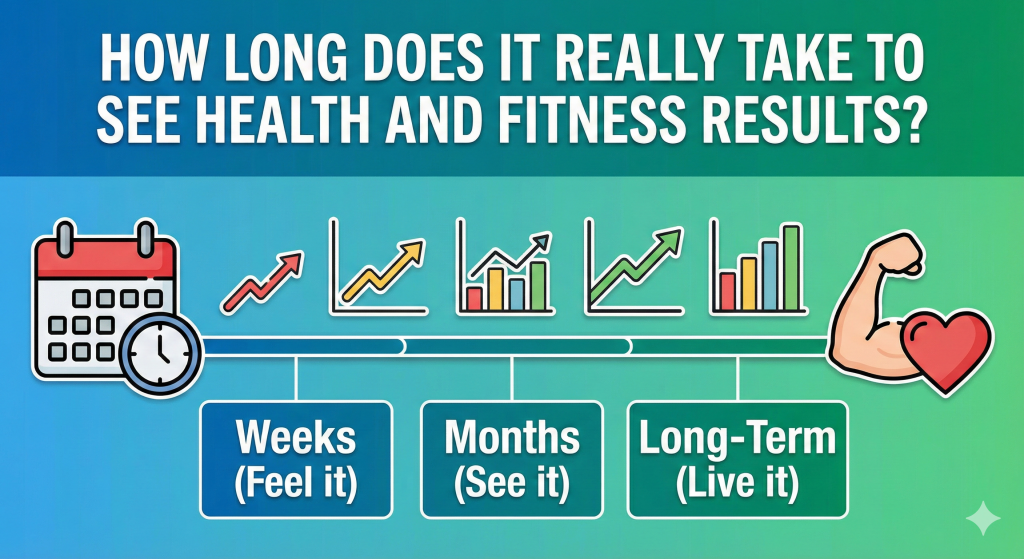
- Week 1–4: Focus on establishing healthy habits, such as daily walks, hydration, and balanced meals.
- Week 5–8: Add more structured workouts such as strength training, increase intensity, and track progress.
- Week 9+: Focus on personal milestones, like increasing your running distance or adding more weight to lifts.
Frequently Asked Questions
How long will it take to lose weight?
Typically, healthy and sustainable weight loss is about 1–2 pounds per week. This means that noticeable fat loss could take several weeks, with visible changes occurring after 2–4 weeks of consistent effort.
How long before I see muscle growth?
Initial strength gains appear in the first 4–6 weeks, but visible muscle growth usually takes 3–6 months of consistent strength training and nutrition.
Why do I feel stronger but not see results yet?
Strength gains often come before visible muscle growth because of neural adaptations. Keep going, and muscle size will follow.
How do I stay motivated if I don’t see fast results?
Focus on non-scale victories, such as improved energy, strength, endurance, or better sleep. Celebrate small wins and focus on long term progress.
Conclusion: Patience + Consistency Equals Results
Fitness progress takes time. The best approach is to be patient and focus on the process rather than the immediate outcome. With consistency, realistic expectations, and a balanced approach to movement, nutrition, and recovery, you will see results over time.
Whether you’re working on fat loss, muscle gain, or simply improving your energy, the most important thing is to keep moving forward at your own pace and stay consistent.