
Chinese Evergreen Care Guide (Aglaonema): Light, Water, Soil, Humidity and Growth Tips
TL;DR
Chinese Evergreen (Aglaonema) is a low maintenance foliage plant that tolerates low to medium light, prefers evenly moist but not soggy soil and enjoys warm, slightly humid conditions. Keep it away from cold drafts, allow the top layer of soil to dry slightly between waterings and use a loose, well draining potting mix. It is ideal for beginners and offices but is toxic if ingested by pets or children.
Introduction
Chinese Evergreen (Aglaonema spp.) is a popular indoor plant valued for its attractive patterned leaves and ability to tolerate low light and inconsistent care better than many other houseplants. Native to the tropical forests of Southeast Asia, Aglaonema grows on the forest floor in warm, shaded, humid environments. This natural habitat explains why it thrives in homes and offices with filtered light and stable indoor temperatures.
With its broad range of leaf colors and patterns, long lifespan and forgiving nature, Chinese Evergreen is often recommended as a starter plant for new indoor gardeners who want reliable greenery with minimal effort.
Plant Overview
| Botanical Name | Aglaonema spp. |
| Common Names | Chinese Evergreen, Aglaonema |
| Plant Type | Tropical evergreen foliage plant |
| Difficulty Level | Easy |
| Growth Rate | Slow to moderate |
| Toxicity | Toxic to pets and humans if ingested |
| Light | Low to medium indirect light (variegated types prefer brighter light) |
| Water | Evenly moist, allow top soil to dry slightly |
| Soil | Well draining, peat or coco based potting mix |
| Temperature | 18 to 27°C, avoid below 15°C |
| Humidity | Moderate, appreciates higher humidity |
| Lifespan | Many years with proper care |
What Chinese Evergreen Looks Like
Chinese Evergreen features broad, lance shaped leaves that may be solid green or patterned with silver, cream, pink or red depending on the variety. Leaves emerge from short stems, creating a compact, bushy shape. Mature plants generally reach 30 to 60 cm in height indoors. Small, pale spathe and spadix type flowers may appear, but the main ornamental value lies in the foliage.
In its natural forest habitat, Aglaonema grows in dappled shade with consistently warm temperatures and moist soil, which makes it well suited to indoor environments with indirect light and stable conditions.
Complete Care Guide
1. Light Requirements
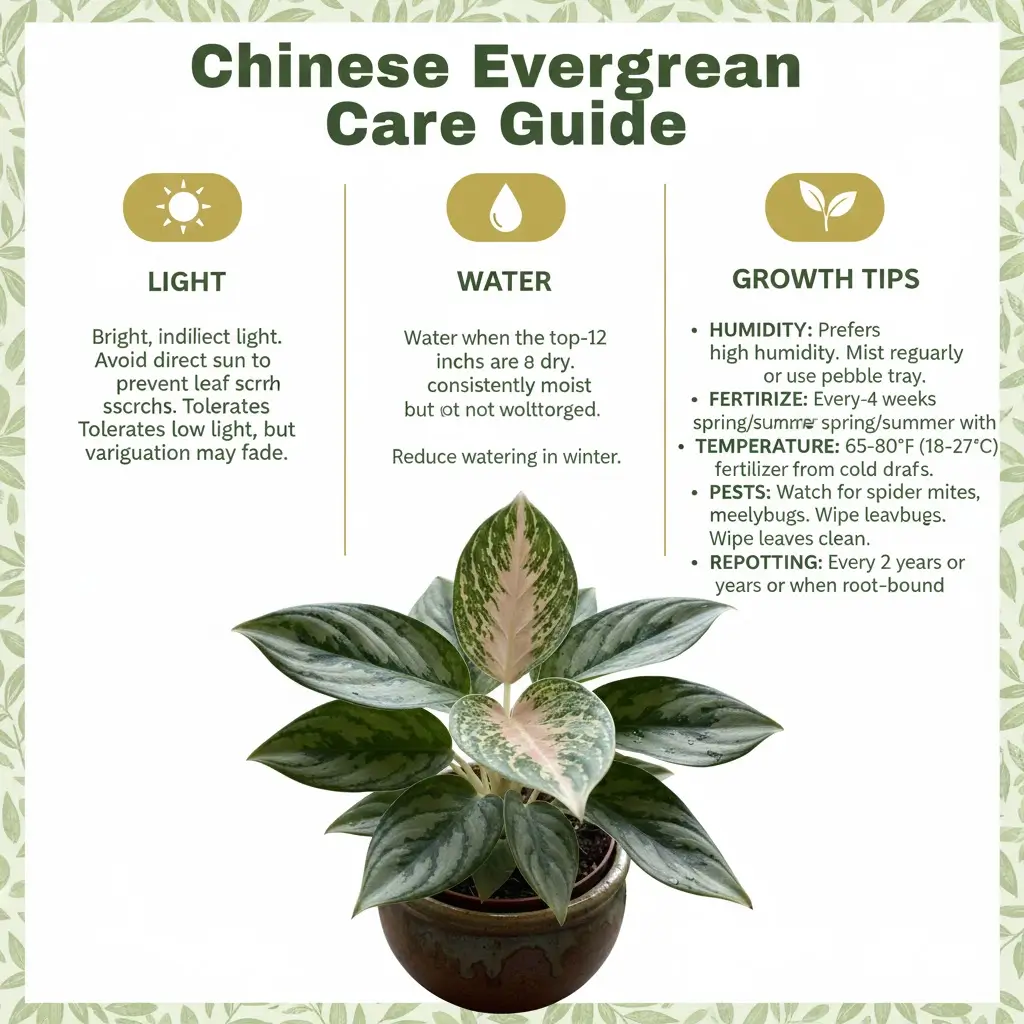
Chinese Evergreen is known for its ability to tolerate low light, though its exact light needs depend on the variety.
- Solid green varieties: tolerate lower light and are suitable for shaded rooms.
- Variegated varieties: prefer medium, bright indirect light to maintain leaf color.
- Avoid direct, strong sun which can scorch leaves.
Low light signs: leggy growth, smaller new leaves, slower growth.
Excessive light signs: yellow patches, pale or bleached leaves, dry edges.
2. Watering Instructions
Aglaonema prefers slightly moist soil but does not like to sit in water. Overwatering is more harmful than slightly underwatering.
- Water when the top 2 to 3 cm of soil feel dry to the touch.
- Water thoroughly until excess water drains from the bottom.
- Discard any water that collects in the saucer.
- Use room temperature water.
Seasonal watering guidelines:
- Spring and summer: more frequent watering during active growth.
- Autumn and winter: reduce watering, allowing the soil to dry a bit more between waterings.
Overwatering signs: yellowing leaves, soft stems, root rot, soil with stagnant smell.
Underwatering signs: drooping leaves, dry edges and slow recovery after watering.
3. Soil Requirements
Chinese Evergreen grows best in a well draining potting mix that retains some moisture but does not stay soggy.
- Standard houseplant mix with added perlite for drainage.
- Peat or coco coir based mix with perlite or pumice.
- A small amount of orchid bark can be added to increase air spaces.
Avoid heavy garden soil or mixes that compact easily, as these can suffocate roots and promote rot.
4. Temperature and Humidity
Temperature
- Ideal range: 18 to 27°C.
- Minimum: avoid temperatures below 15°C.
- Do not place near cold drafts, air conditioning vents or heaters.
Humidity
- Performs well in average household humidity.
- Prefers slightly higher humidity, especially in heated or air conditioned rooms.
- Increase humidity using a pebble tray or room humidifier if leaf tips brown.
5. Fertilizer Guidance
Chinese Evergreen has modest nutrient needs and responds well to light feeding during the growing season.
- Use a balanced liquid houseplant fertilizer diluted to half strength.
- Apply every 4 to 6 weeks in spring and summer.
- Reduce or stop fertilizing in autumn and winter.
6. Pruning and General Maintenance
Routine maintenance keeps the plant compact and removes tired foliage.
- Trim yellow, brown or damaged leaves at the base with clean scissors.
- Wipe leaves occasionally with a damp cloth to remove dust.
- Remove flower spikes if you prefer the plant to focus energy on foliage.
- Rotate the pot occasionally for even, upright growth.
7. Repotting Instructions
Chinese Evergreen does not require frequent repotting and often grows well slightly root bound. Repot every 2 to 3 years or when roots fill the pot.
Repotting steps:
- Water the plant lightly a day before repotting.
- Gently remove the root ball from the pot and loosen roots.
- Trim any rotted or dead roots.
- Place into a pot one size larger with fresh potting mix.
- Backfill with soil, firm gently and water to settle the mix.
8. Propagation Methods
Division (most common and reliable):
- Remove the plant from its pot.
- Gently separate clumps, ensuring each division has roots and leaves.
- Pot each division into fresh soil and water lightly.
Stem Cuttings:
- Cut a healthy stem section with several leaves and at least one node.
- Root in water or directly in moist soil.
- Once roots are established, transfer to a pot with well draining mix (if started in water).
9. Common Problems and Solutions
Yellow Leaves
Likely causes: overwatering, poor drainage or natural aging of lower leaves.
Solution: check root health, improve drainage and adjust watering frequency.
Brown Leaf Tips
Likely causes: low humidity, underwatering or excess fertilizer salts.
Solution: increase humidity, water more consistently and flush the soil occasionally with plain water.
Drooping Leaves
Likely causes: underwatering, cold drafts or root issues.
Solution: adjust watering, move away from cold sources and inspect roots if the problem persists.
Slow or No Growth
Likely causes: very low light, compacted soil or lack of nutrients.
Solution: increase indirect light, repot into fresh mix and provide light feeding during growing season.
Pests
Chinese Evergreens can occasionally attract spider mites, mealybugs or scale.
- Inspect leaf undersides and stems regularly.
- Remove pests manually with a soft cloth or cotton swab dipped in rubbing alcohol.
- Use insecticidal soap or neem oil for persistent infestations.
Toxicity Information
Chinese Evergreen contains calcium oxalate crystals and is toxic if ingested by pets or humans. Ingestion may cause mouth irritation, drooling or stomach upset. Keep out of reach of children and pets that chew on plants.
Do’s and Don’ts
| Do | Do Not |
|---|---|
| Provide low to medium indirect light | Expose to harsh direct sunlight for extended periods |
| Water when the top soil feels slightly dry | Water so frequently that the soil stays constantly soggy |
| Use a light, well draining potting mix | Use dense, compact soil that holds water excessively |
| Keep temperatures above 18°C and away from drafts | Place near cold windows, doors or air conditioning vents |
| Feed lightly during spring and summer | Overfertilize or apply full strength fertilizer often |
| Keep out of reach of pets and children | Allow pets to chew leaves or stems |
Seasonal Care Tips
Spring
- Increase watering as growth resumes.
- Start light fertilizing every 4 to 6 weeks.
- Repot or divide if roots are crowded.
Summer
- Maintain consistent moisture and moderate humidity.
- Protect from direct midday sun.
- Monitor for pests in warm, dry conditions.
Autumn
- Gradually reduce feeding.
- Keep watering steady but less frequent than in summer.
- Ensure plant is not exposed to dropping nighttime temperatures.
Winter
- Reduce watering and allow soil to dry more between waterings.
- Keep away from cold drafts and heaters.
- Consider using a humidifier if indoor air is very dry.
Styling and Placement Suggestions
Chinese Evergreen suits offices, living rooms, hallways and bedrooms where consistent but indirect light is available. Its patterned leaves add interest to corners, shelving units and plant clusters. Neutral or dark colored pots highlight the foliage patterns and work well with most interior styles.
Growth Expectations
- Height: typically 30 to 60 cm indoors, depending on variety.
- Spread: 30 to 50 cm.
- Growth rate: slow to moderate, faster in warm, bright conditions.
- Lifespan: many years if kept warm, watered correctly and repotted occasionally.
Frequently Asked Questions
Can Chinese Evergreen grow in low light?
Yes. It is one of the better plants for low light spaces, especially the darker green varieties. However, growth will be slower and variegation may be less pronounced.
How often should I water Chinese Evergreen?
Water when the top 2 to 3 cm of soil feels dry. This usually means every 1 to 2 weeks depending on light, pot size and room temperature.
Why are the leaves turning yellow?
Yellow leaves often result from overwatering or poor drainage. Check moisture levels and ensure your pot and soil drain well.
Is Chinese Evergreen safe for pets?
No. It is considered toxic if ingested and can cause irritation, so keep it away from cats, dogs and children that might chew on leaves.
Do I need to mist Chinese Evergreen?
Misting is optional. It tolerates average household humidity, but in very dry air, a humidifier or pebble tray is more effective than misting alone.