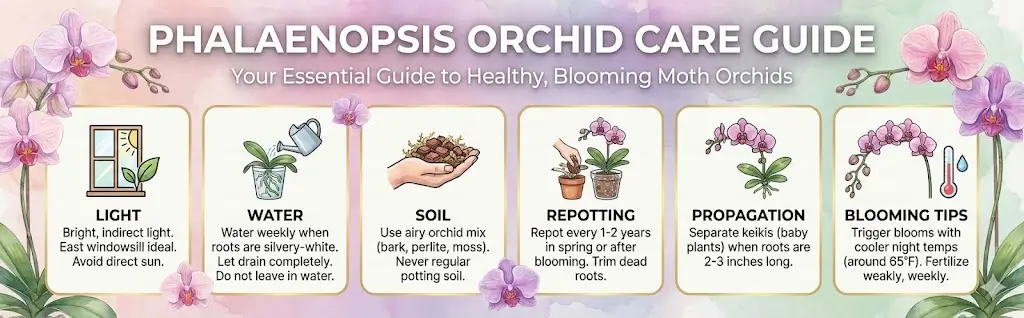

Phalaenopsis Orchid Care Guide: Light, Water, Soil, Repotting, Propagation and Blooming Tips
TL;DR
Phalaenopsis orchids (Moth Orchids) thrive in bright indirect light, moderate humidity and a free draining orchid bark mix. Water them when the bark is nearly dry, avoid letting water sit in the crown and maintain temperatures between 18 and 27°C. They bloom reliably about once a year and can rebloom from old flower spikes under proper care.
Introduction
The Phalaenopsis orchid, commonly known as the Moth Orchid, is one of the most popular and beginner friendly orchids grown indoors. It is known for long lasting blooms, graceful flower spikes and elegant foliage that works well in homes and offices. Native to tropical regions of Southeast Asia, Phalaenopsis orchids grow as epiphytes on tree trunks, which means they prefer loose, airy media and plenty of airflow around their roots rather than compact soil.
With the correct balance of light, moisture, temperature and airflow, Phalaenopsis orchids rebloom year after year and can live for many seasons.
Plant Overview
| Botanical Name | Phalaenopsis spp. |
| Common Name | Moth Orchid |
| Plant Type | Epiphytic tropical orchid |
| Difficulty Level | Easy to moderate |
| Growth Rate | Moderate |
| Toxicity | Non toxic to pets |
| Light | Bright indirect light |
| Water | Water when bark is nearly dry |
| Soil | Orchid bark mix |
| Temperature | 18 to 27°C |
| Humidity | 40 to 70 percent |
| Bloom Time | Once a year, blooms last 2 to 3 months |
What Phalaenopsis Orchids Look Like
Phalaenopsis orchids have thick, fleshy, arching leaves that grow in a rosette at the base of the plant. Long, elegant flower spikes emerge from between the leaves and carry multiple blooms in a range of colors such as white, pink, purple, yellow and patterned combinations. The thick aerial roots are silver green and covered in velamen, a spongy layer that absorbs moisture and nutrients from the air and from the growing media.
In their natural habitat, these orchids cling to tree bark in warm forests and receive filtered light from the canopy above, which is why they prefer bright, indirect light when grown indoors.
Complete Care Guide
1. Light Requirements
Phalaenopsis orchids thrive in bright, indirect light. Direct midday sun can damage the leaves, so they are best placed where light is filtered or softened.
- Best placement: near an east or north facing window
- For south or west windows, use sheer curtains to diffuse light
- Avoid strong midday sun on leaves
Signs of too little light: dark green leaves, lack of blooms and slow growth.
Signs of too much light: yellowish leaves, dry sunburn patches or scorched areas.
The ideal leaf color is a medium green. Very dark leaves usually indicate light levels are too low for reliable blooming.
2. Watering Instructions
Phalaenopsis orchids need a careful watering routine that keeps the bark moist but not constantly wet. Their roots require moisture and oxygen at the same time.
- Water when the orchid bark is almost dry to the touch
- Water thoroughly until water drains from the bottom of the pot
- Never allow water to sit in the crown (the center where the leaves meet)
- Empty any saucers after watering
General watering frequency (adjust for your environment):
- Spring and summer: about once per week
- Autumn and winter: every 10 to 14 days
Overwatering signs: yellow leaves from the bottom up, mushy or brown roots, leaf drop.
Underwatering signs: wrinkled or limp leaves, shriveled roots that appear dry and brittle.
3. Soil Requirements
Phalaenopsis orchids do not grow in regular potting soil. They need a very open and well aerated medium that allows rapid drainage and airflow around the roots.
- Medium grade orchid bark
- Orchid bark mixed with perlite
- Orchid bark combined with a small amount of sphagnum moss for drier homes
- Coconut husk chips designed for orchids
Avoid standard houseplant soil, which is too dense and can suffocate the roots and cause rot.
4. Temperature and Humidity
Temperature
- Ideal daytime range: 21 to 27°C
- Ideal nighttime range: 18 to 21°C
- A small drop in night temperature can help stimulate flower spike formation
- Avoid cold drafts, sudden temperature swings and very hot dry air
Humidity
- Preferred humidity: 40 to 70 percent
- Increase humidity with a pebble tray, room humidifier or by grouping plants
- Ensure good air circulation to prevent fungal diseases
5. Fertilizer Guidance
Phalaenopsis orchids respond well to light but consistent feeding during active growth.
- Use a balanced orchid fertilizer (for example 20-20-20) diluted to half strength
- Feed every two weeks in spring and summer
- Reduce feeding to once a month or pause it in winter when growth slows
- Flush the pot with plain water once a month to remove fertilizer salt buildup
6. Pruning and General Maintenance
Regular maintenance helps keep the plant healthy and encourages repeat flowering.
- Remove individual spent flowers as they fade to keep spikes tidy
- After blooming, if the spike remains green, you can leave it to encourage side branching and potential rebloom
- If the flower spike turns brown and dry, cut it back to the base
- Wipe leaves with a soft damp cloth to remove dust and improve photosynthesis
- Trim dead or rotted roots only when repotting
7. Repotting Instructions
Repot Phalaenopsis orchids every 1 to 2 years or when the bark breaks down, compacts or retains water for too long.
Signs that repotting is needed:
- Decomposed or compacted bark
- Roots circling the pot tightly
- Musty or sour odor from the potting mix
- Water taking a long time to drain
How to repot a Phalaenopsis orchid:
- Gently remove the plant from its pot and shake or rinse off old bark.
- Inspect the roots and trim away any soft, brown or hollow roots with sterilized scissors.
- Position the orchid in a new pot with fresh orchid bark, arranging roots evenly.
- Fill around the roots with bark, tapping the pot lightly so the media settles.
- Wait about one week before watering to allow any cuts on the roots to dry and heal.
8. Propagation Methods
Phalaenopsis orchids are monopodial, so they do not divide like some other orchids. They are mainly propagated by keikis, which are small plantlets that form on flower spikes.
Keiki propagation:
- Allow the keiki to grow until it has at least two to three leaves and several roots about 3 cm long.
- Use a sterilized blade to carefully cut the keiki from the flower spike.
- Pot the keiki in a small container with fine to medium orchid bark.
- Maintain slightly higher humidity and gentle air movement.
- Water lightly until roots are well established.
9. Blooming Cycle and Reblooms
Phalaenopsis orchids typically bloom once per year, with flowers lasting 2 to 3 months. Under ideal care, mature plants can bloom more than once.
To encourage reblooming:
- Provide bright, indirect light throughout the year
- Allow a small nighttime temperature drop to around 16 to 18°C for a few weeks
- Maintain a consistent but light fertilizer routine during growth
- Keep the plant slightly root snug rather than overpotting
New flower spikes usually emerge from between the leaves. Occasionally, side branches may form on an existing green spike and produce additional blooms.
10. Common Problems and Solutions
Yellow Leaves
Likely causes: excess light, natural aging of lower leaves or overwatering.
Solution: adjust light levels, check root health and ensure correct watering frequency.
Wrinkled or Limp Leaves
Likely causes: underwatering or root damage caused by rot.
Solution: inspect roots, remove rotted parts and adjust watering so bark dries slightly between waterings.
Root Rot
Cause: waterlogged media or compacted, old bark.
Solution: repot into fresh, free draining orchid bark and reduce watering.
Bud Blast (Buds Falling Off)
Likely causes: sudden temperature changes, drafts, low humidity or change of location.
Solution: keep the environment stable and avoid moving the plant when buds are forming.
Pests
Common pests include scale, mealybugs and spider mites.
- Inspect leaves, spikes and undersides regularly.
- Use a cotton swab with rubbing alcohol to remove visible pests.
- Apply neem oil or insecticidal soap for larger infestations.
Toxicity Information
Phalaenopsis orchids are considered non toxic to cats, dogs and humans. This makes them a safe choice for homes with pets and children. Ingestion of plant material can still cause mild digestive upset, so it is best not to encourage chewing.
Do’s and Don’ts
| Do | Do Not |
|---|---|
| Provide bright, indirect light near a suitable window | Expose the plant to harsh, direct midday sun |
| Grow in airy orchid bark or other orchid specific media | Plant in regular dense potting soil |
| Water when the bark is nearly dry and let excess drain | Allow water to sit in the crown or let the pot stand in water |
| Maintain moderate humidity with good air circulation | Keep in stagnant, overly damp conditions |
| Repot every 1 to 2 years with fresh bark | Overfertilize or use full strength fertilizer frequently |
Seasonal Care Tips
Spring
- Increase watering frequency as light and temperatures rise
- Resume regular feeding with diluted orchid fertilizer
- Watch for new roots and leaves
Summer
- Maintain humidity with trays or a humidifier
- Protect from excessive heat and direct sun
- Ensure good airflow to prevent fungal issues
Autumn
- Provide slightly cooler nights to encourage flower spike formation
- Continue consistent watering and light feeding
Winter
- Enjoy the blooming period if spikes are present
- Protect from cold drafts and sudden temperature drops
- Support flower spikes with stakes if needed
Styling and Placement Suggestions
Phalaenopsis orchids add a refined look to living rooms, bedrooms, kitchens and offices. They look particularly elegant on coffee tables, shelves, countertops and bathroom windowsills with bright, indirect light. Simple ceramic or glass cachepots complement their modern lines and allow the flowers to be the main focus.
Growth Expectations
- Height: approximately 30 to 70 cm, including flower spikes
- Spread: 25 to 45 cm
- Bloom duration: typically 2 to 3 months per spike
- Lifespan: many years with consistent, correct care
Frequently Asked Questions
How often should I water my Phalaenopsis orchid?
Water when the bark feels nearly dry rather than on a strict schedule. In many indoor environments this is about once per week in warmer months and every 10 to 14 days in cooler months.
Why will my orchid not rebloom?
Common reasons are insufficient light, lack of a small nighttime temperature drop or irregular care. Improve light levels, ensure cooler nights for a few weeks and maintain a steady watering and feeding routine.
Should I cut the flower spike after the blooms fade?
If the spike is still green, you can keep it and sometimes it may produce side branches with new buds. If the spike turns brown and dry, cut it back to the base.
Is a clear pot necessary for orchids?
Clear pots are helpful because they allow you to monitor root health and moisture levels, and some light can reach the roots. However, they are not strictly required if you manage watering carefully.
Do orchids need misting?
Light misting is optional and not a replacement for proper humidity. Humidity trays and a room humidifier are more reliable ways to maintain ideal humidity levels.