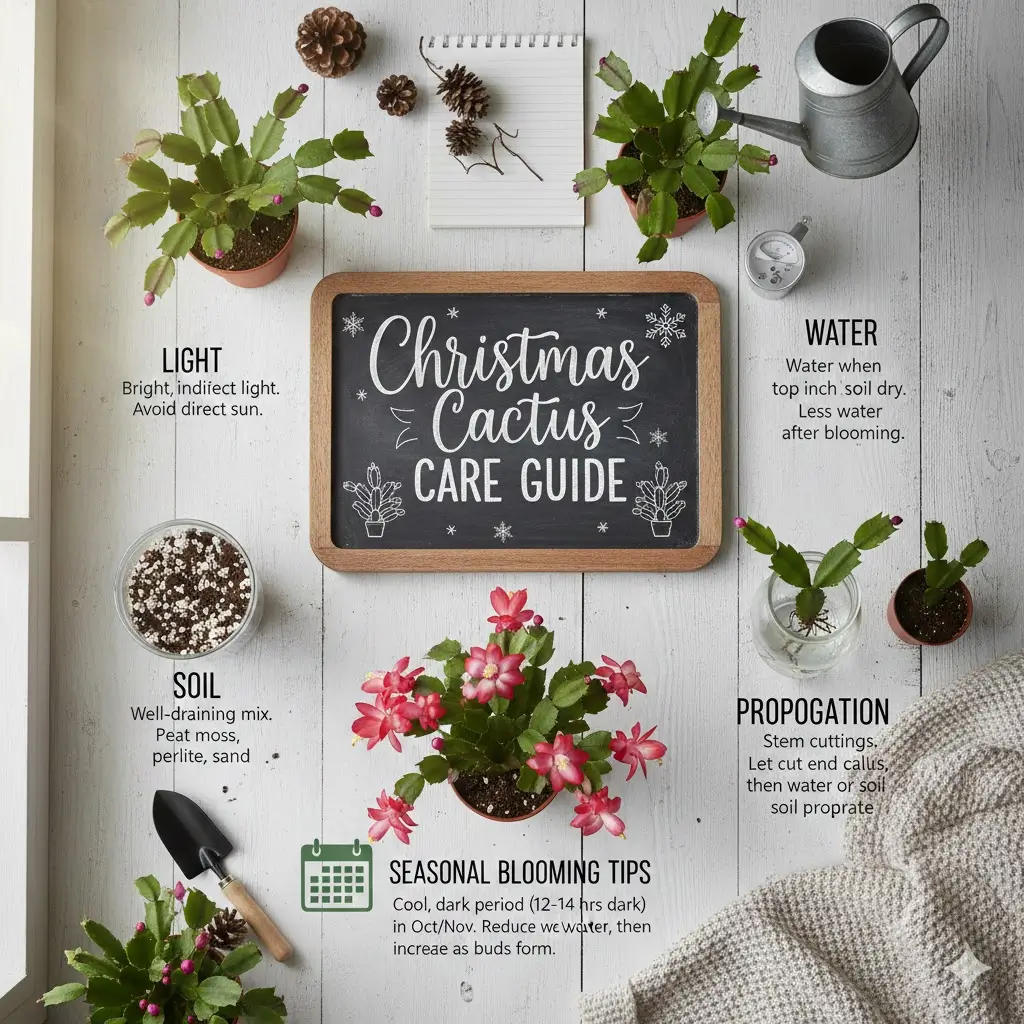

Christmas Cactus Care Guide: Light, Water, Soil, Propagation and Seasonal Blooming Tips
TL;DR
The Christmas Cactus (Schlumbergera) thrives in bright indirect light, evenly moist soil and moderate humidity. It prefers cooler temperatures to trigger blooming and should not be treated like a desert cactus. Allow the top layer of soil to dry slightly between waterings, keep it away from harsh direct sun and provide a short period of cooler nights in autumn to encourage bud formation.
Introduction
The Christmas Cactus (Schlumbergera spp.) is a popular holiday flowering plant known for its vibrant blooms, segmented stems and long lifespan. Unlike desert cacti, this plant originates from tropical forests where it grows on trees and rocks in shaded, humid environments. Christmas Cactus is valued for its extended winter flowering period and relatively low maintenance needs, as long as its preference for moisture and cooler temperatures is respected.
Plant Overview
| Botanical Name | Schlumbergera spp. |
| Common Names | Christmas Cactus, Thanksgiving Cactus, Holiday Cactus |
| Plant Type | Epiphytic tropical cactus |
| Difficulty Level | Easy to moderate |
| Growth Rate | Moderate |
| Toxicity | Non toxic to pets |
| Light | Bright indirect light |
| Water | Evenly moist, not soggy |
| Soil | Well draining, lightly moisture retentive mix |
| Temperature | 15 to 23°C |
| Humidity | Moderate |
| Bloom Time | Late autumn to winter |
What the Christmas Cactus Looks Like
Christmas Cactus has flat, jointed segments instead of spines. These segments form arching, cascading branches that produce tubular, multi petaled flowers in shades of pink, red, white, salmon or purple. In its natural habitat, the plant grows in the canopies of tropical forests, where it receives dappled light, steady moisture and good airflow. Mature plants may reach 30 to 60 cm in width and can live for several decades when properly maintained.
Complete Care Guide
1. Light Requirements
Christmas Cactus prefers bright, indirect light rather than full sun. It does well near an east or north facing window where it receives soft light without intense midday rays.
- Ideal light: bright, filtered light
- Avoid strong afternoon sun, especially in summer
- Too much shade can reduce the number of blooms
Low light symptoms: stretched, weak segments and limited flowering.
Too much sun symptoms: yellowing or reddish discoloration on the segments.
2. Watering Instructions
Christmas Cactus requires more consistent moisture than desert cacti but still does not tolerate waterlogged soil. Aim for evenly moist conditions during active growth and blooming.
- Allow the top 2 to 3 cm of soil to dry before watering again
- Water thoroughly, then allow excess water to drain
- Avoid leaving the pot standing in water
Seasonal watering guidelines:
- Spring and summer: water regularly as the plant grows, keeping soil lightly moist
- Autumn (bud formation): maintain slightly cooler conditions and consistent moisture
- Winter (flowering): keep moisture steady but not excessive
- After flowering: reduce watering for 4 to 6 weeks to allow a short rest period
Overwatering signs: limp, wilted stems, soft segments and possible root rot.
Underwatering signs: shriveled, flattened or wrinkled segments.
3. Soil Requirements
A well draining, slightly moisture retentive mixture is ideal. The goal is to retain some moisture without becoming compact or waterlogged.
- Succulent soil mixed with peat or coco coir
- Standard potting mix with added perlite and orchid bark
- A peat based African violet mix with extra perlite
4. Temperature and Humidity
Temperature
- Preferred range: 15 to 23°C
- Avoid hot, dry locations near heaters
- Bud formation is improved by cooler nights (around 10 to 15°C) for several weeks in autumn
Humidity
- Moderate humidity (around 40 to 60 percent) is ideal
- Use a pebble tray or group plants to increase local humidity
- Light misting is acceptable, but avoid soaking flowers and buds
5. Fertilizer Guidance
Regular but light feeding helps support healthy growth and abundant blooms.
- Use a balanced liquid houseplant fertilizer every 4 weeks in spring and summer
- Switch to a fertilizer slightly higher in phosphorus in late summer to support bud development
- Stop feeding once buds are well formed and during winter rest
6. Pruning and General Maintenance
Light pruning keeps the plant compact and encourages branching.
- Prune after flowering by gently twisting off one or two segments at the ends of stems
- Remove faded flowers to keep the plant tidy and prevent energy loss
- Wipe segments with a soft cloth to remove dust
7. Repotting Instructions
Repot every 2 to 3 years or when roots fill the pot. Christmas Cactus prefers a slightly snug container and does not like frequent repotting.
- Repot in late winter or early spring after the flowering period has ended.
- Carefully remove the plant from its pot and loosen the root ball.
- Place it into a pot one size larger with fresh, well draining mix.
- Water lightly and return the plant to bright, indirect light.
8. Propagation Methods
Stem Segment Cuttings
- Choose healthy stems and twist off segments in lengths of two to four sections.
- Allow the cut ends to callous for 24 to 48 hours.
- Plant segments about 1 to 2 cm deep in lightly moist, well draining soil.
- Place in bright, indirect light and keep the soil slightly moist, not wet.
- Roots usually develop within 2 to 4 weeks.
Rooting in Water
- Segments can be rooted in a small container of water with the base just submerged.
- Once roots reach 2 to 3 cm, transplant into soil.
9. Common Problems and Solutions
Buds Dropping Off
Likely causes: drafts, sudden temperature changes, moving the plant, or inconsistent watering.
Solution: keep conditions stable, increase humidity and avoid relocating the plant while buds are forming.
Yellowing Segments
Likely causes: excessive sunlight or overwatering.
Solution: move to bright, indirect light and ensure soil drains well.
Wilting or Limp Stems
Likely causes: root issues (rot or extreme dryness) or compacted soil.
Solution: check root health, repot into fresh, well draining soil and adjust watering.
No Blooms
Likely causes: lack of cool nights, too much artificial light at night or insufficient light overall.
Solution: provide 3 to 4 weeks of cool nights, reduce night time light exposure and maintain consistent care.
Pests
Christmas Cactus can occasionally be affected by mealybugs, fungus gnats or spider mites.
- Inspect joints and undersides of segments regularly.
- Use insecticidal soap or neem oil for light infestations.
- Improve air circulation and avoid overwatering to reduce fungal issues.
Toxicity Information
Christmas Cactus is considered non toxic to cats, dogs and humans. Ingestion of large amounts of plant material may cause mild stomach upset, but it is generally regarded as a safe choice for homes with pets and children.
Do’s and Don’ts
| Do | Do Not |
|---|---|
| Provide bright, indirect light | Expose to harsh, direct midday sun |
| Keep soil lightly moist during growth and bloom | Allow the soil to remain waterlogged |
| Offer cooler nights in autumn to encourage bud formation | Move the plant frequently once buds have formed |
| Use a well draining, moisture retentive potting mix | Plant in dense, compacted soil |
| Prune after flowering to promote branching | Repot while buds are forming or during peak flowering |
Seasonal Care Tips
- Spring: resume regular feeding, increase watering slightly and prune if needed.
- Summer: provide bright, filtered light and maintain moderate moisture and humidity.
- Autumn: reduce temperatures slightly at night and keep watering consistent to support bud formation.
- Winter: keep away from drafts, maintain stable moisture and enjoy the flowering display.
Styling and Placement Suggestions
Christmas Cactus looks attractive on shelves, tables and windowsills where its arching stems can be appreciated. During the flowering season, it also works well in hanging baskets, allowing the blooms to cascade over the sides. It suits living rooms, dining rooms and office reception areas where its seasonal flowers can be prominently displayed.
Growth Expectations
- Height: approximately 20 to 30 cm
- Spread: 30 to 60 cm
- Blooming period: several weeks in late autumn to winter
- Longevity: often lives and blooms for many decades with proper care
Frequently Asked Questions
How can I make my Christmas Cactus bloom again?
Provide cooler nights (about 10 to 15°C) and long, uninterrupted periods of darkness for 3 to 4 weeks in autumn. Maintain consistent watering and avoid moving the plant once buds form.
Why are the buds falling off my Christmas Cactus?
Bud drop is often caused by drafts, temperature swings, overwatering or relocating the plant during bud formation. Keep the environment stable and avoid sudden changes.
Can Christmas Cactus handle direct sunlight?
It can tolerate gentle morning sun but should be protected from strong midday and afternoon sun, which can burn the segments.
How often should I water Christmas Cactus?
Water when the top 2 to 3 cm of soil feels dry. Frequency will vary with season, light and room temperature, but the soil should never remain waterlogged.
Is Christmas Cactus safe for pets?
Yes, it is considered non toxic to cats and dogs, making it a pet friendly option for indoor spaces.