
Jade Plant Care Guide: Light, Water, Soil, Propagation and Tips
TL;DR
Jade Plant (Crassula ovata) is an easy, long lived succulent that thrives in bright light, minimal watering and well draining soil. Allow the soil to dry fully between waterings, provide several hours of direct sunlight and avoid overwatering. It is hardy, slow growing and ideal for beginners. Proper lighting and controlled watering are the keys to maintaining thick, healthy foliage.
Introduction
The Jade Plant (Crassula ovata) is a classic succulent known for its thick glossy leaves, sturdy woody stems and impressive lifespan. Often associated with good luck and prosperity, the Jade Plant is a popular choice for homes and offices because it requires relatively little maintenance and adapts well to indoor conditions. With the right care, Jade Plants can develop into small tree like specimens, produce clusters of star shaped flowers and live for many decades.
Plant Overview
| Botanical Name | Crassula ovata |
| Common Names | Jade Plant, Money Plant, Lucky Plant |
| Plant Type | Succulent, evergreen perennial |
| Difficulty Level | Easy |
| Growth Rate | Slow to moderate |
| Toxicity | Mildly toxic to pets |
| Light | Bright light, direct sun preferred |
| Water | Infrequent, allow soil to dry fully |
| Soil | Fast draining, gritty succulent mix |
| Temperature | 18 to 26°C |
| Humidity | Low |
| Lifespan | Can live several decades with proper care |
What the Jade Plant Looks Like
The Jade Plant has thick, smooth, oval leaves that store water, giving the plant its characteristic plump appearance. The foliage ranges from medium to deep green and may develop a reddish edge when exposed to strong sunlight. Mature plants form woody trunks and branching stems, creating a miniature tree silhouette. Indoors, Jade Plants typically reach 30 to 90 cm in height. In nature, they grow in rocky, sun drenched regions of South Africa where rainfall is limited and drainage is excellent.
Complete Care Guide
1. Light Requirements
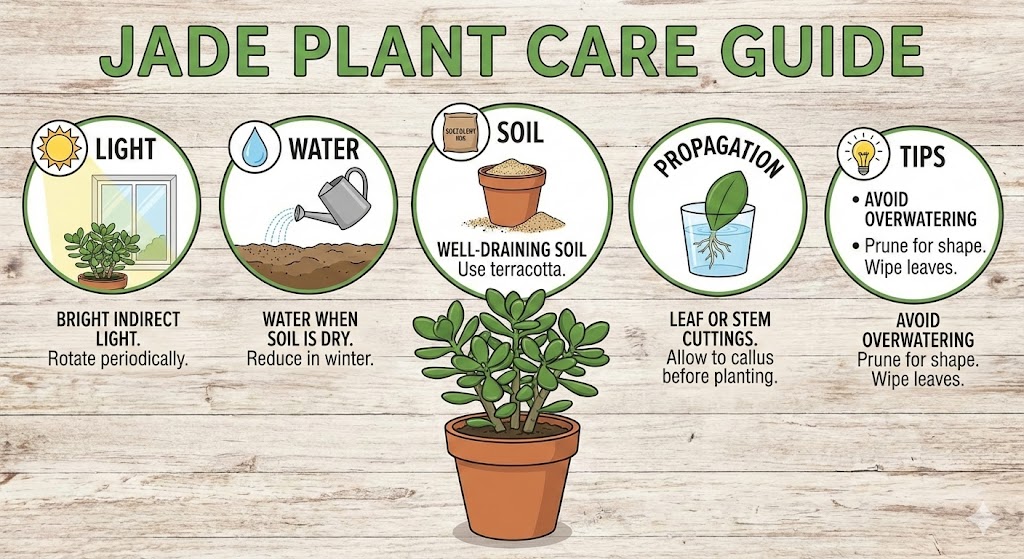
Jade Plants need plenty of bright light to remain compact and healthy. They perform best when they receive several hours of direct sunlight each day.
- Ideal light: 4 to 6 hours of direct sunlight daily
- Indoors: place near a south or west facing window
- Outdoors: morning sun and filtered afternoon light in very hot climates
Signs of low light: leggy stems, pale thin leaves, weak growth.
Signs of excessive sun exposure: scorched or browned patches on leaf surfaces.
2. Watering Instructions
As a succulent, the Jade Plant stores water in its leaves and roots, so it requires infrequent watering. Overwatering is one of the most common causes of decline.
- Allow the soil to dry out completely before watering again
- Water thoroughly and let excess water drain away
- Do not allow the pot to sit in standing water
Seasonal watering guidelines:
- Spring and summer: approximately every 2 to 3 weeks, depending on conditions
- Autumn and winter: every 4 to 6 weeks, or even less, as growth slows
Overwatering signs: soft, mushy leaves, yellowing foliage, root rot.
Underwatering signs: wrinkled or shriveled leaves (usually after prolonged neglect).
3. Soil Requirements
Jade Plants need soil that drains rapidly and does not stay wet. Heavy, compact mixes increase the risk of root rot.
- Cactus or succulent potting mix
- Standard potting soil mixed with coarse sand and perlite
- Potting soil blended with pumice for added drainage
The goal is a gritty, airy substrate that allows water to move through quickly while still anchoring the roots.
4. Temperature and Humidity
Temperature
- Preferred range: 18 to 26°C
- Minimum: avoid temperatures below 10°C
- Protect from cold drafts and frost exposure
Humidity
- Jade Plants prefer low humidity
- They do not require misting or humidity trays
- Avoid very humid environments that stay damp
5. Fertilizer Guidance
Jade Plants have modest nutrient needs and should be fed lightly.
- Apply a balanced, diluted succulent fertilizer every 2 to 3 months during spring and early summer
- Avoid high nitrogen feeds that encourage weak, soft growth
- Do not fertilize in winter when the plant is resting
6. Pruning and General Maintenance
Pruning helps maintain shape, encourage branching and create a stronger structure.
- Trim leggy stems to promote fuller growth
- Remove dead, dried or damaged leaves
- Use clean, sharp tools to prevent infection
- Rotate the pot every few weeks so the plant grows evenly toward the light
7. Repotting Instructions
Repot every 2 to 3 years or when roots have filled the pot and the plant becomes top heavy.
- Water lightly a few days before repotting to reduce stress.
- Gently remove the plant from its container, supporting the root ball.
- Brush away old soil and examine the roots, trimming any rotten sections.
- Place the plant in a slightly larger pot with fresh succulent mix.
- Fill around the roots, firm the soil gently and do not water for 5 days to allow cuts to callous.
Terracotta pots are particularly suitable because they allow excess moisture to evaporate through the pot walls.
8. Propagation Methods
Leaf Cuttings
- Select a healthy leaf and remove it cleanly from the stem.
- Allow the leaf to dry and callous for 2 to 3 days.
- Place the leaf on top of dry, well draining soil.
- Mist lightly from time to time until roots and tiny plantlets form at the base.
Stem Cuttings
- Cut a healthy stem section with several leaves.
- Let the cutting callous for 5 to 7 days in a dry, shaded spot.
- Plant the stem in dry succulent soil.
- Water lightly after about one week and then follow a normal succulent watering schedule.
Many Jade Plants also produce small offsets that can be separated and potted individually once they have their own roots.
9. Common Problems and Solutions
Soft or Mushy Leaves
Likely cause: overwatering.
Solution: allow the soil to dry out completely, check drainage and repot into fresh, gritty soil if necessary.
Leggy, Stretched Growth
Likely cause: insufficient light.
Solution: move the plant to a brighter location and consider pruning back elongated stems.
Leaf Drop
Likely causes: sudden temperature changes or overwatering.
Solution: stabilize the environment and reduce watering frequency.
Wrinkled Leaves
Likely cause: underwatering over an extended period.
Solution: water deeply, then allow the soil to dry again. Do not keep it constantly moist.
Pests
Jade Plants can occasionally suffer from mealybugs, scale or spider mites.
- Inspect stems and leaf joints regularly.
- Wipe pests with a cotton swab dipped in rubbing alcohol.
- Apply neem oil or insecticidal soap if needed.
Toxicity Information
Jade Plants are considered mildly toxic to pets. Ingestion can lead to vomiting, lethargy or digestive upset in cats and dogs. Place the plant out of reach of pets that tend to chew on foliage.
Do’s and Don’ts
| Do | Do Not |
|---|---|
| Provide several hours of direct sunlight each day | Overwater or allow soil to remain wet |
| Use fast draining, gritty succulent soil | Plant in heavy, compact mixes without drainage |
| Let the soil dry out completely before watering again | Keep the plant in low light corners |
| Choose terracotta or breathable pots | Expose the plant to frost or cold drafts |
| Prune to shape and encourage branching | Place in very humid or poorly ventilated spaces |
Seasonal Care Tips
- Spring: ideal time for repotting, light pruning and starting light feeding.
- Summer: provide bright light, monitor watering and avoid waterlogged soil.
- Autumn: gradually reduce watering and feeding as growth slows.
- Winter: keep in a bright, cool room, water sparingly and protect from cold windows.
Styling and Placement Suggestions
Jade Plants work well in bright living rooms, home offices and window ledges where they can receive strong light. Their tree like structure makes them suitable as focal points on side tables, desks or plant stands. Neutral ceramic or terracotta pots enhance their sculptural appearance and complement a wide range of interior styles.
Growth Expectations
- Height: 30 cm to over 1 meter with age
- Spread: approximately 30 to 60 cm
- Growth rate: slow to moderate, faster in strong light
- Life expectancy: several decades under good care
Frequently Asked Questions
Why is my Jade Plant turning red?
Red or bronze tinged leaf edges are usually a sign of strong sunlight. This is typically normal and can be visually attractive as long as the leaves are not scorched.
How often should I water a Jade Plant?
Water only when the soil is completely dry. In most indoor conditions this means every few weeks, with less frequent watering in winter.
Why is my Jade Plant dropping leaves?
Leaf drop is commonly caused by overwatering, sudden temperature changes or relocation to a darker area. Review both watering habits and light exposure.
Can Jade Plants grow outdoors?
Yes, in warm, dry climates where temperatures stay above 10°C. Outdoor Jade Plants still need excellent drainage and protection from frost.
Does the Jade Plant bloom?
Mature Jade Plants can produce clusters of small white or pale pink star shaped flowers, usually in cooler seasons when the plant experiences bright light and slight dryness.