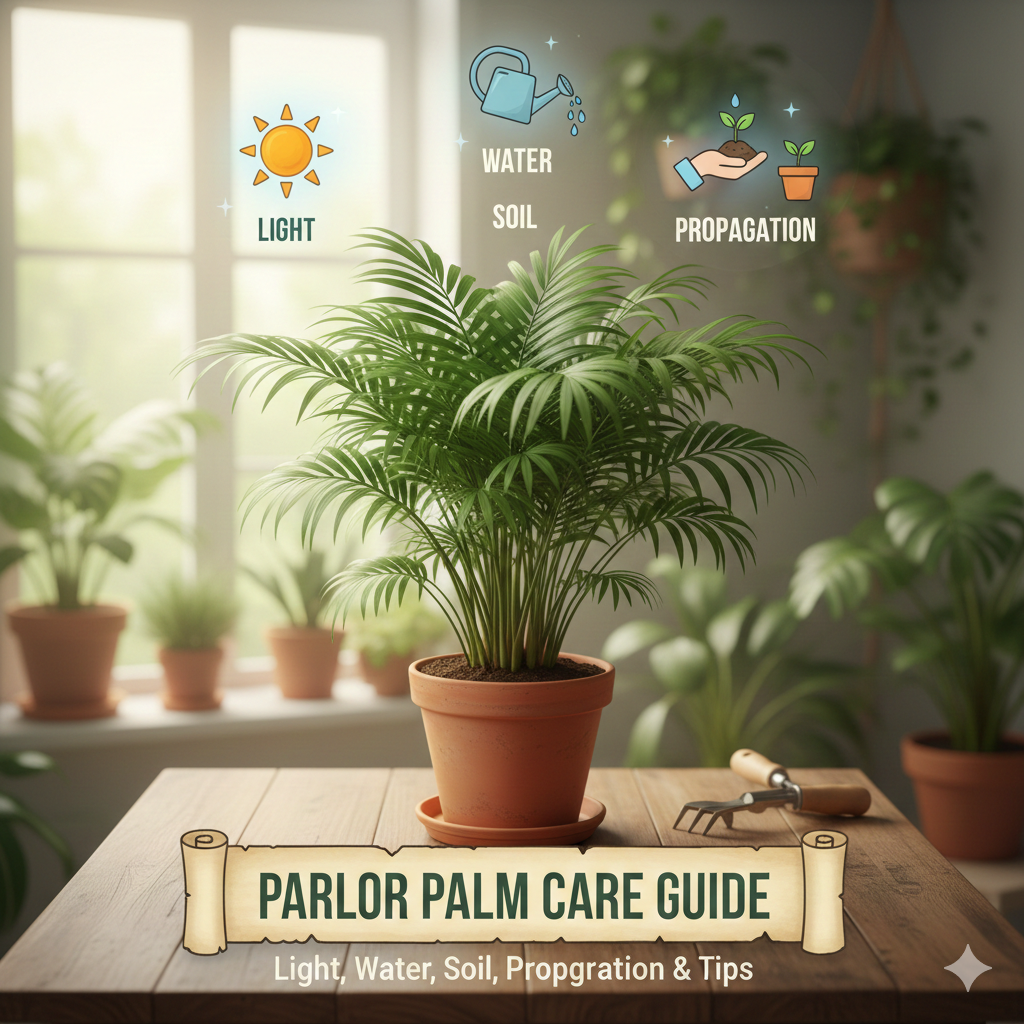

Parlor Palm Care Guide: Light, Water, Soil, Propagation and Tips
Parlor Palm (Chamaedorea elegans) is a popular indoor palm plant known for its graceful, feathery fronds and its ease of care. Ideal for low light conditions, it adds a touch of elegance to living rooms, offices, and bedrooms. With its delicate fronds and air-purifying properties, the Parlor Palm is a wonderful addition to any indoor space.
At a glance, Parlor Palm care looks like this:
- Light: Bright, indirect light is best, but it tolerates low light.
- Water: Keep the soil lightly moist, but never soggy.
- Soil: Well-draining, rich indoor potting mix is essential.
With the right attention, the Parlor Palm can thrive in your home, growing lush and graceful over time.
Parlor Palm Overview
- Botanical name: Chamaedorea elegans
- Common names: Parlor Palm, Neanthe Bella Palm, Bella Palm, Living Room Palm
- Plant type: Tropical evergreen palm from the Arecaceae family, commonly grown indoors as a houseplant.
- Difficulty level: Easy care, suitable for beginners
- Growth rate: Moderate growth indoors, can reach up to 3 to 4 feet in height with age and proper care
- Mature size indoors: Typically 2 to 4 feet tall and about 2 feet wide, though it can grow taller under optimal conditions.
- Safety and toxicity: Non-toxic to pets and humans, making it a safe choice for households with animals and children.
Quick Parlor Palm Care Summary
| Care Aspect | Requirement |
|---|---|
| Light | Bright, indirect light, tolerates low light |
| Water | Keep the soil evenly moist but not soggy |
| Soil | Well-draining, rich indoor potting mix |
| Temperature | Ideal 18–24°C (65–75°F), protect from temperatures below 15°C (59°F) |
| Humidity | Prefers moderate to high humidity, average indoor humidity is usually fine |
| Fertilizer | Light feeding in spring and summer, once a month |
| Growth habit | Upright, clump-forming with feathery, arching fronds |
| Toxicity | Non-toxic to pets and humans |
What Parlor Palm Looks Like
Parlor palms are well-loved for their elegant and graceful appearance.
- Leaves:
- Long, feathery, arching leaves that grow in dense clusters.
- Small, pinnate leaflets give the palm a soft, delicate look.
- Rich green color, although leaves may lighten slightly in lower light conditions.
- Growth habit:
- Clump-forming plant with multiple stems emerging from the base.
- Forms a bushy, elegant palm, adding beauty and airiness to any room.
- Flowers and Fruit:
- Can produce small yellow flowers followed by tiny red or orange fruits (although flowers are rarely seen indoors).
- Not particularly showy, but a sign of a healthy, mature plant.
- Size:
- Typically grows to 3–4 feet tall indoors, though it can grow taller with optimal care.
Natural Habitat
Chamaedorea elegans is native to tropical regions of Central and South America, particularly Guatemala and southern Mexico, where it thrives under the canopy of larger trees in shaded areas.
Unique Characteristics
- Known for its ability to tolerate low light and its graceful fronds.
- Has a slow to moderate growth rate but can live for many years with proper care.
- Non-toxic, making it a safe plant for households with pets or small children.
Complete Parlor Palm Care Guide
A. Light Requirements for Parlor Palm
Ideal Light
- Bright, indirect light is best for Parlor Palm.
- It can tolerate low light, but it will grow more slowly and may not bloom.
Low Light Tolerance
- Parlor Palm does well in low light but thrives with bright, indirect light.
- In low light, it grows slowly and may have fewer fronds, but it still survives well.
Signs of Too Little Light
- Slow growth or no new growth.
- Yellowing or dropping of older leaves.
- Leggy, sparse growth.
Signs of Too Much Light
- Brown, scorched tips or edges of the leaves.
- Faded or bleached leaves caused by sunburn.
Best Indoor Placement Tips
- Place near a window with filtered light, such as behind a sheer curtain.
- If the room is low light, consider moving the plant closer to a window or adding a grow light.
B. Watering Instructions
Watering is one of the most important factors for Parlor Palm care. The plant prefers evenly moist soil, but it must never be soggy.
How Often to Water
- Water when the top 2–3 inches of soil feel dry.
- In warmer months, this may be once a week; in cooler months, water less frequently.
How to Avoid Overwatering
- Ensure the pot has proper drainage and never let the plant sit in standing water.
- Allow the top of the soil to dry before watering again.
- Use a well-draining potting mix to prevent root rot.
Signs of Underwatering
- Drooping leaves that feel dry and crispy at the edges.
- Soil is extremely dry and pulling away from the pot.
Signs of Overwatering
- Yellowing leaves, especially older ones.
- Wet, soggy soil with a musty smell.
C. Soil Requirements
Parlor Palm prefers a well-draining, organic-rich soil mix.
Best Potting Mix
- Use a high-quality, well-draining indoor potting mix with added perlite or sand for better aeration.
- A mix designed for palms or tropical plants works well.
pH Level
- Prefers a slightly acidic to neutral pH, ideally between 5.5 and 7.0.
Drainage Needs
- Ensure the pot has drainage holes to avoid waterlogging, which can cause root rot.
D. Temperature and Humidity
Ideal Temperature Range
- Parlor Palm thrives at temperatures between 18°C and 24°C (65°F–75°F).
- Avoid exposing it to temperatures below 15°C (59°F).
Humidity Level
- Prefers moderate to high humidity but will tolerate average indoor humidity.
- If the air is very dry, use a humidity tray or mist the leaves to increase moisture.
Ways to Increase Humidity
- Place the pot on a pebble tray filled with water.
- Group with other plants to increase localized humidity.
- Use a humidifier in dry indoor environments.
E. Fertilizer Guidance
Parlor Palm benefits from light feeding during the growing season to encourage steady growth.
Type of Fertilizer
- Use a balanced liquid fertilizer (20-20-20) or a slow-release granule.
- Feed with half-strength fertilizer to avoid fertilizer burn.
How Often to Feed
- Fertilize every 4–6 weeks during the growing season (spring and summer).
- Reduce or stop feeding in fall and winter when the plant is resting.
F. Pruning and General Maintenance
How and When to Prune
- Prune dead or yellowing leaves at the base to keep the plant neat.
- Use clean, sharp scissors to remove spent flowers or damaged fronds.
- Prune in the growing season (spring and summer) for the best recovery.
Cleaning and Grooming Tips
- Wipe the leaves gently with a soft, damp cloth to remove dust and improve photosynthesis.
- Rotate the plant every few weeks to promote even growth.
G. Repotting Instructions
How Often to Repot
- Repot every 2–3 years or when the plant outgrows its pot.
- If the roots become crowded, or the soil dries too quickly after watering, it’s time to repot.
Signs It Needs a New Pot
- Roots growing out of drainage holes.
- Soil dries out very quickly after watering.
- The pot is bulging or cracking from root pressure.
Step by Step Repotting Process
- Choose a pot that’s 2–3 cm larger than the current pot, with drainage holes.
- Prepare fresh potting mix with good drainage.
- Gently remove the plant from the pot and inspect the roots.
- Trim any dead roots and place the plant in the new pot.
- Fill with fresh mix, water thoroughly, and allow the excess to drain.
H. Propagation Methods
Propagate Parlor Palm by division during repotting.
Best Propagation Technique
- Division of the root ball is the most effective method.
Step by Step: Propagating by Division
- Remove the plant from its pot during repotting.
- Separate the root ball into smaller sections, each with roots and leaves.
- Repot each section in its own container with fresh potting mix.
- Water lightly and place in a bright, indirect light location.
Best Season to Propagate
- Spring is the best time for propagation.
I. Common Parlor Palm Problems and Solutions
1. Yellowing Leaves
Likely causes: Overwatering, poor drainage, or natural aging of older leaves.
Solutions:
- Allow the top of the soil to dry between waterings.
- Check that the pot has drainage holes and water only when necessary.
2. Brown Tips on Leaves
Likely causes: Low humidity, over-fertilization, or poor water quality.
Solutions:
- Increase humidity around the plant and reduce fertilizer strength.
- Water with distilled or filtered water to avoid salts in tap water.
3. Drooping Leaves
Possible causes: Underwatering, root rot, or cold drafts.
Solutions:
- Check soil moisture and water thoroughly if it’s dry.
- Inspect the roots for rot if the plant is overwatered.
4. Pests
Common pests include spider mites, mealybugs, and scale.
Solutions:
- Wipe leaves with soapy water or use insecticidal soap for infestations.
- Isolate the infested plant until the problem is resolved.
J. Toxicity Information
Parlor Palm is non-toxic to pets and humans, making it a safe choice for homes with children and animals.
Do’s and Don’ts for Parlor Palm Care
Do
- Provide bright, indirect light.
- Keep soil evenly moist but not soggy.
- Use a well-draining potting mix.
- Fertilize lightly during the growing season.
- Prune dead or damaged leaves to keep it neat.
Do Not
- Expose the plant to harsh, direct sunlight.
- Let the plant sit in standing water.
- Over-fertilize, which can cause brown tips.
- Place the plant in a drafty spot.
Seasonal Care Tips
- Spring: Resume light feeding, repot if needed, and increase watering as days warm up.
- Summer: Ensure consistent watering and increase humidity if necessary.
- Autumn: Cut back on watering and stop fertilizing.
- Winter: Water less frequently, keep the plant away from drafts, and clean leaves to optimize light.
Growth Expectations
- With the right care, Parlor Palm can grow up to 3–4 feet tall indoors.
- It grows more slowly in low light, but it will thrive with proper care.
- Over time, the plant becomes bushy and graceful, adding beauty to your indoor space.
FAQs About Parlor Palm Care
1. Is Parlor Palm easy to care for?
Yes! Parlor Palm is a low-maintenance plant that does well in low to moderate light. Just make sure to water it correctly and avoid overwatering.
2. How do I get my Parlor Palm to grow faster?
Provide it with bright, indirect light, regular watering, and light fertilizing during the growing season. This will encourage healthier and faster growth.
3. How often should I water my Parlor Palm?
Water when the top 2–3 inches of soil feel dry. In warmer months, this may be once a week, but adjust based on your home’s light and temperature.
4. Why are my Parlor Palm’s leaves turning yellow?
Yellowing leaves are often due to overwatering or poor drainage. Allow the soil to dry slightly before watering again and ensure your pot has good drainage.
5. How do I propagate my Parlor Palm?
Propagate by division during repotting. Simply separate the root ball into smaller sections, ensuring each division has roots and leaves, and repot them in fresh soil.
6. Is Parlor Palm toxic to pets?
No, Parlor Palm is non-toxic to both pets and humans, making it a safe plant for homes with animals or children.